

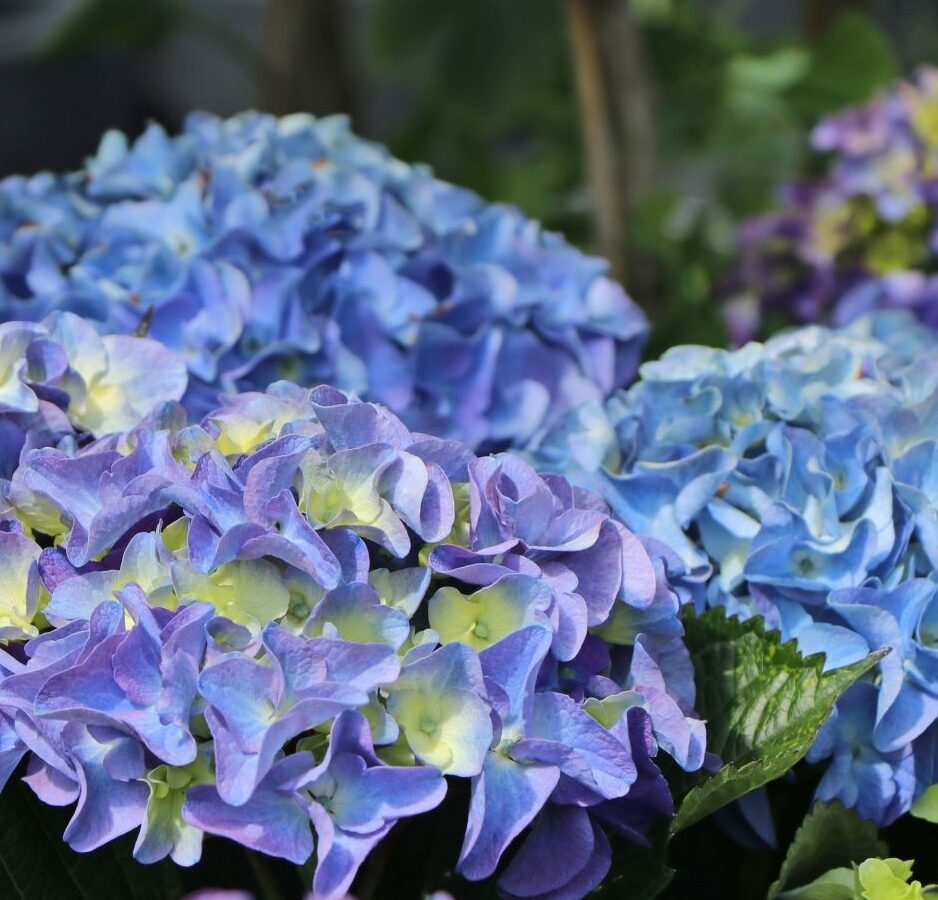
Hydrangea mac. Marine Blue
€30.00
Frequently Bought Together

Description
Quick Facts
– Botanical Name: Hydrangea macrophylla ‘Marine’
– Common Name: Mophead Hydrangea ‘Marine’
– Plant Type: Hardy deciduous shrub
– Mature Height: Approx. 120cm
– Mature Spread: Approx. 100–120cm
– Flowering Period: June to September
– Flower Colour: Blue in acidic soils; pink in neutral to alkaline soils
– Foliage Colour: Mid-green, deciduous
– Hardiness: Hardy in Ireland & the UK
– Soil Requirements: Moist, free-draining; neutral to sub-acid preferred
– Aspect: Partial shade to bright shade — avoid full sun
– Maintenance: Low to moderate
Description
Hydrangea ‘Marine’ is a classic mophead hydrangea in the very best sense — compact, well-shaped, abundantly flowering, and beautifully behaved in the border. It produces generous, rounded ball-shaped flower heads in a colour that is determined entirely by the soil in which it grows: a clear, rich blue in acidic conditions, a warm pink in neutral to alkaline soils. Either is beautiful; the blue, in particular, is one of the most sought-after colours the summer garden can offer.
At around 120cm in height and with a naturally dense, bushy habit, ‘Marine’ is one of the tidier mophead varieties — thick with growth, reliably floriferous, and rarely in need of much intervention to look its best. It is happiest in partial or bright shade where the flowers hold their colour longest and the plant settles into a long, unhurried flowering season from June through to September.
Ask our team for advice on keeping your ‘Marine’ blue whatever your soil — we’re always happy to help.
Caragh Garden Notebook
Planting:
Plant in spring or autumn into moist, free-draining soil. For blue flowers, incorporate ericaceous compost at planting and choose a spot where you can manage the growing medium — containers are particularly useful here as they give complete control over soil pH. In neutral or alkaline ground, expect the flowers to trend towards pink or mauve, which can be beautiful in its own right but will not produce the true blue the variety is capable of. Mulch well after planting to retain moisture and water in thoroughly.
Watering:
‘Marine’ likes consistent moisture, particularly through the flowering season. Water generously and regularly, especially during dry spells, but ensure drainage is always good — sitting in waterlogged soil will cause problems quickly. In containers, water thoroughly and frequently through summer; the compost should feel moist but never sodden. Wilting on a warm afternoon is common and usually rights itself overnight; wilting in the early morning is a more genuine sign that watering is needed.
Feeding:
For blue flowers, feed throughout the growing season with an ericaceous plant food — this acidifies the soil around the roots and makes the aluminium in the soil available to the plant, which is what produces the blue pigment. Begin feeding as new growth emerges in spring and continue monthly through to the end of flowering. In containers, consistent feeding is especially important as nutrients leach out with regular watering. For pink flowers in alkaline soil, a balanced general fertiliser in spring is sufficient.
Pruning:
‘Marine’ flowers on the previous year’s wood — so timing and restraint matter here. In spring, remove spent flower heads back to the first strong pair of buds below, and cut out any dead or very weak stems from the base. Avoid cutting back into old wood unnecessarily; the more of last year’s growth you preserve, the more flowers you will have this season. The old flower heads can be left on through winter — they offer some protection to the buds below and are worth keeping until new growth begins to show in spring.
Shelter & Establishment:
Newly planted specimens benefit from a sheltered position while they establish. Late spring frosts can damage emerging flower buds and reduce or eliminate flowering for that season — a position with overhead protection or proximity to a wall or fence will guard against the worst of it. Once established, ‘Marine’ is considerably more resilient and will handle typical Irish and UK conditions without difficulty.
Pests & Problems:
Generally trouble-free. Vine weevil can occasionally affect container-grown plants — treat preventatively with a biological nematode drench in late summer if you’ve experienced problems before. In very exposed or sunny positions, flowers can bleach and go over quickly; partial shade is genuinely the right aspect for this variety and makes a noticeable difference to the length and quality of the flowering season.
Design Notes:
The colour flexibility of ‘Marine’ is one of its greatest assets — it can be a bold blue statement or a soft pink companion depending on how it’s grown, which makes it one of the more versatile mopheads available. The blue works beautifully alongside silver foliage, white flowers, and soft purple perennials; the pink sits naturally into cottage-style planting with roses, geraniums, and foxgloves. The compact, well-branched habit means it fits into a mixed border without dominating its neighbours, and it combines particularly well with other shade-tolerant shrubs, hostas, ferns, and astilbes. Flowers cut and dried at the parchment stage hold for months indoors — harvest before the colour fully fades for the best results.
Additional information
| Pot Size |
|---|
Related products
-
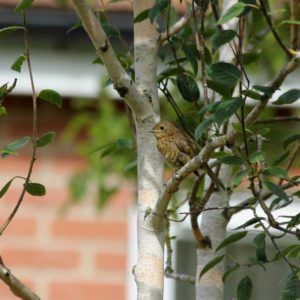
Betula Jacquemontii / Himalayan Birch
Price range: €180.00 through €600.00 Select options This product has multiple variants. The options may be chosen on the product page -
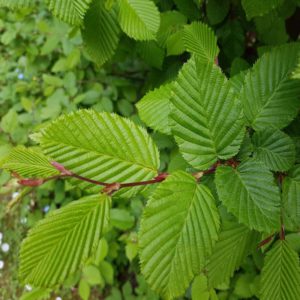
Carpinus betulus / Hornbeam
Price range: €320.00 through €750.00 Select options This product has multiple variants. The options may be chosen on the product page -
Wisteria sinensis Screen
€240.00 Select options This product has multiple variants. The options may be chosen on the product page -

Hydrangea macrophylla Firewings
€25.00 Select options This product has multiple variants. The options may be chosen on the product page