

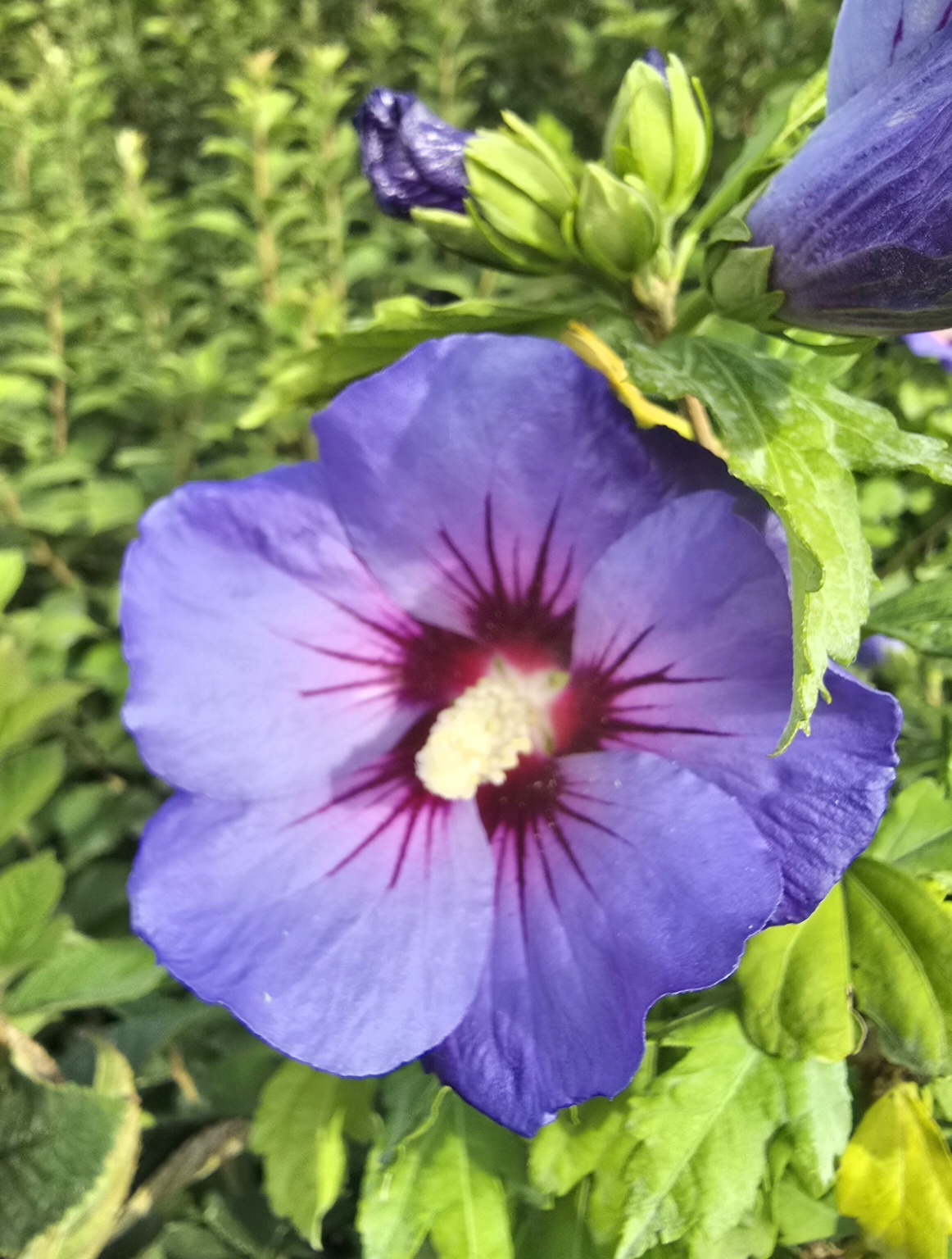
Hibiscus syr. ‘oiseau bleu’
€55.00
Frequently Bought Together
Description
Quick Facts
- Botanical Name: Hibiscus syriacus ‘Oiseau Bleu’
- Common Name: Rose of Sharon
- Plant Type: Deciduous flowering shrub
- Habit: Upright, bushy
- Height (approx.): 1.5–2.5m (can be kept smaller with pruning)
- Spread (approx.): 1–1.8m
- Flowering: Mid to late summer into early autumn
- Flower Colour: Soft lavender-blue with a deeper, wine-red eye
- Position: Full sun (best flowering)
- Soil: Fertile, moisture-retentive but free-draining
- Hardiness: Hardy in Ireland and the UK; shelter from cold, drying winds when young
- Best For: Late-season colour, sunny borders, patio pots, pollinator gardens, Mediterranean-style schemes
Description
When most shrubs have finished their show, Hibiscus ‘Oiseau Bleu’ is just getting started.
From mid-summer onwards it opens a steady stream of lavender-blue flowers, each one marked with a rich, darker eye — a colour combination that feels both soft and striking. It brings that warm-climate mood to a border, but with the reliability of a shrub that’s perfectly happy in Irish and UK gardens given sun and a little shelter.
It’s a brilliant choice for adding late-season colour near a seating area, where you’ll actually notice the flowers day after day, and it’s a real favourite with pollinators too.
Caragh Garden Notebook
Planting & position
Full sun is key for the best flowering. Choose a warm, bright spot — a south- or west-facing border, courtyard, or against a sunny wall is ideal.
Full sun is key for the best flowering. Choose a warm, bright spot — a south- or west-facing border, courtyard, or against a sunny wall is ideal.
Soil
Hibiscus syriacus likes soil that holds some moisture but drains freely. Improve poor soil with compost at planting time, and avoid very wet, heavy ground in winter.
Hibiscus syriacus likes soil that holds some moisture but drains freely. Improve poor soil with compost at planting time, and avoid very wet, heavy ground in winter.
Watering
- Water regularly in the first season while it establishes.
- Once settled, it’s fairly resilient, but it will flower best if it doesn’t dry out completely in prolonged warm spells (especially in pots).
Feeding
A spring mulch of compost and a light feed in early summer will support strong growth and better flowering.
A spring mulch of compost and a light feed in early summer will support strong growth and better flowering.
Pruning (simple and rewarding)
Hibiscus syriacus flowers on new growth, so pruning helps.
Hibiscus syriacus flowers on new growth, so pruning helps.
- Prune in late winter/early spring to shape and encourage fresh flowering shoots.
- Remove any dead, weak, or crossing stems and keep the centre open for airflow.
Winter care
Hardy once established, but young plants appreciate shelter from harsh winds. A mulch around the base helps protect roots and conserve moisture.
Hardy once established, but young plants appreciate shelter from harsh winds. A mulch around the base helps protect roots and conserve moisture.
Design notes
- Beautiful with lavender, salvias, grasses, agapanthus, and other sun-lovers
- Great in pots with underplanting of trailing thyme or seasonal colour
- A perfect “late summer hero” when borders need a second wind
Related products
-

Lagerstroemia ‘Tuscarora’ specimen multistem
€480.00 Select options This product has multiple variants. The options may be chosen on the product page -
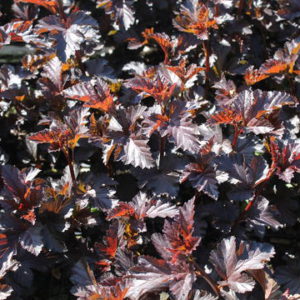
Physocarpus Midnight
€8.50 Select options This product has multiple variants. The options may be chosen on the product page -

Rosa Tranquility – David Austin Roses
€30.00 Select options This product has multiple variants. The options may be chosen on the product page -
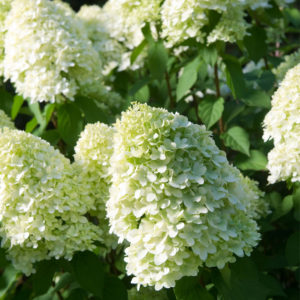
Hydrangea paniculata Limelight
€30.00 Select options This product has multiple variants. The options may be chosen on the product page