

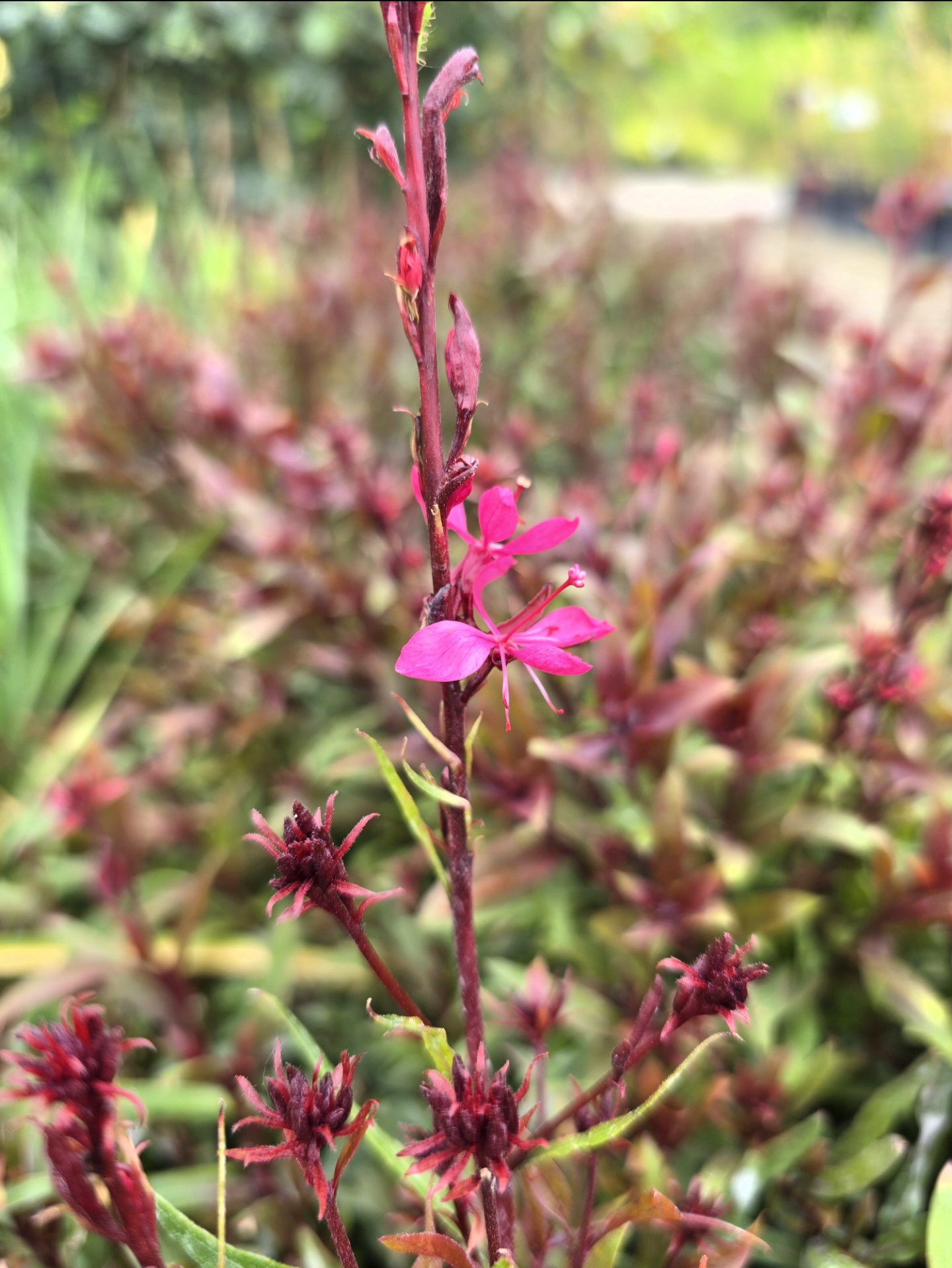
Gaura lindheimeri
€10.50
Frequently Bought Together

Description
Quick Facts
- Botanical Name: Gaura lindheimeri
- Common Name: Gaura / Beeblossom
- Plant Type: Herbaceous perennial (often semi-evergreen in mild areas)
- Habit: Airy, upright clumps with long, dancing flower stems
- Height (approx.): 60–100cm in flower
- Spread (approx.): 40–60cm
- Flowering: Exceptionally long — typically early summer to autumn
- Flower Colour: Usually white to soft pink (varies by variety)
- Position: Full sun (best flowering)
- Soil: Free-draining; drought-tolerant once established
- Hardiness: Hardy in most Irish/UK gardens with good drainage; dislikes winter wet
- Best For: Pollinator borders, cottage gardens, prairie-style planting, pots, softening edges, long-season colour
Description
Gaura is one of those plants that makes a border feel alive.
From early summer right through to autumn, it sends up slender stems dotted with delicate flowers that flutter in the slightest breeze — like tiny butterflies hovering above the foliage. The overall effect is light, relaxed, and beautifully natural, bringing movement and a long season of colour without ever feeling heavy or overdone.
It’s perfect for weaving between stronger shapes — roses, grasses, salvias — adding that soft, airy layer that makes planting feel effortless (even when it wasn’t).
Caragh Garden Notebook
Planting & position
Full sun gives the strongest stems and the longest flowering. In shadier spots it will still grow, but can become looser and less floriferous.
Full sun gives the strongest stems and the longest flowering. In shadier spots it will still grow, but can become looser and less floriferous.
Soil & drainage
Gaura thrives in free-draining soil and is happiest where the ground doesn’t stay wet in winter.
Gaura thrives in free-draining soil and is happiest where the ground doesn’t stay wet in winter.
- On heavy soil, improve drainage with grit and compost.
- In pots, use a free-draining compost mix.
Watering
- Water regularly while establishing.
- Once settled, gaura is surprisingly drought-tolerant, though pots will need watering during warm spells.
Feeding
Keep feeding light — overly rich soil can lead to soft growth and fewer flowers. A spring mulch of compost is usually plenty.
Keep feeding light — overly rich soil can lead to soft growth and fewer flowers. A spring mulch of compost is usually plenty.
Deadheading & pruning
- You can deadhead to keep it looking tidy, but it will often keep flowering regardless.
- For a fresh flush and a neater shape, give it a light trim mid-season if it starts to sprawl.
- In late autumn or early spring, cut back to encourage strong new growth.
Pests & problems
Generally trouble-free. The biggest issue is winter wet causing losses, especially on heavy soils.
Generally trouble-free. The biggest issue is winter wet causing losses, especially on heavy soils.
Design notes
- Gorgeous with salvias, nepeta, echinacea, verbena bonariensis, ornamental grasses, and roses
- Ideal for prairie-style or naturalistic planting
- Brilliant for pollinators — bees love it, and it keeps going when other plants are fading
Related products
-

Rosa Tranquility – David Austin Roses
€30.00 Select options This product has multiple variants. The options may be chosen on the product page -
Cladrastis ‘kentukea’ specimen multistem
€470.00 Select options This product has multiple variants. The options may be chosen on the product page -
Erodium var. Bishops Form
€9.50 Select options This product has multiple variants. The options may be chosen on the product page -
Magnolia grandiflora ‘little gem’
€420.00 Select options This product has multiple variants. The options may be chosen on the product page