

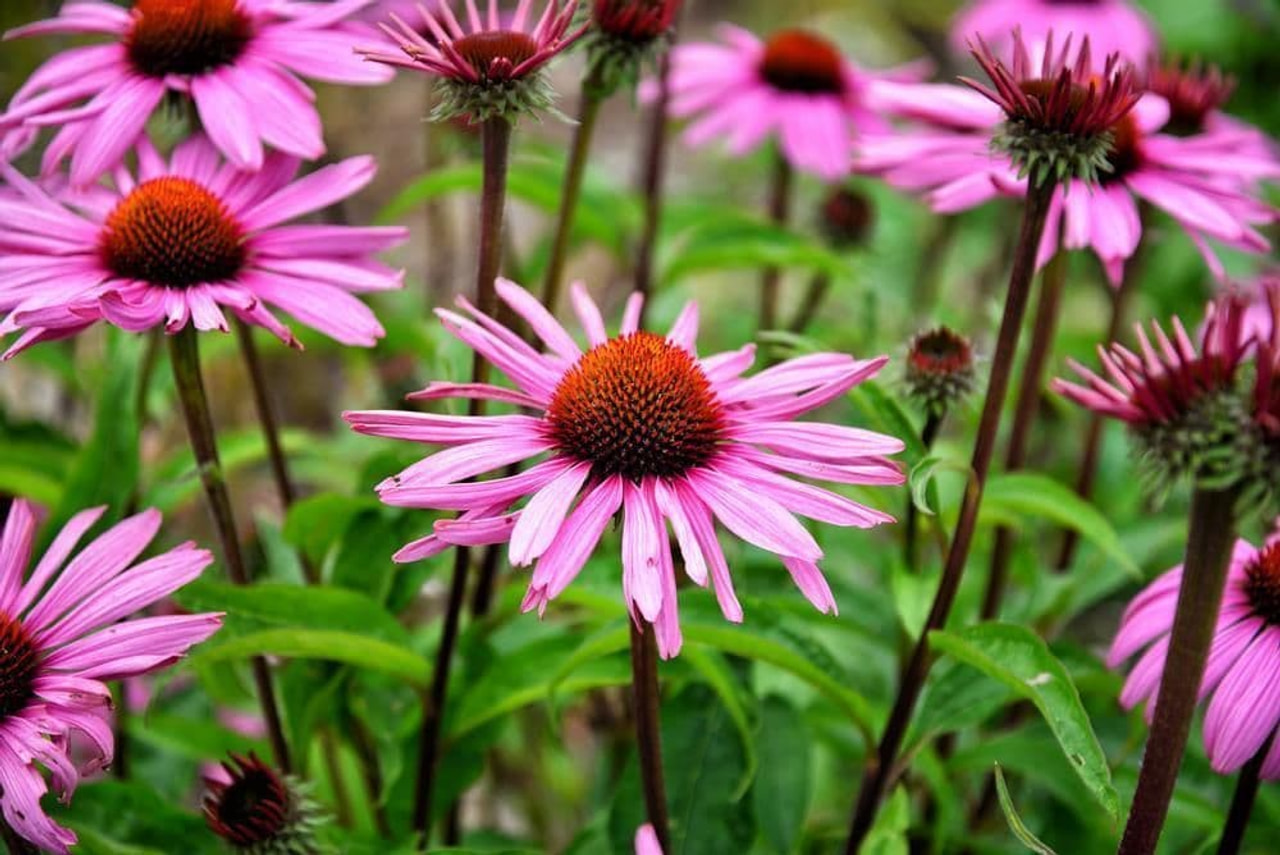
Echinacea purpurea ‘Bright Rose’
€20.00
Description
Quick Facts
- Botanical name: Echinacea purpurea ‘Bright Rose’
- Common name: Purple coneflower
- Type: Clump-forming herbaceous perennial
- Mature height and spread: Around 60–90cm tall and 40–50cm wide.
- Flowering period and colour: July to September. Rose-pink petals surrounding a raised orange-bronze central cone.
- Foliage: Rough, mid-green, lance-shaped leaves forming a tidy clump.
- Hardiness: Fully hardy in Ireland and the UK (RHS H7, to about -20°C).
- Soil: Moist but well-drained soil. Tolerates a range of soils, but dislikes waterlogging, particularly in winter.
- Aspect: Full sun.
- Maintenance: Low.
Description
A cheerful, long-flowering coneflower with rose-pink petals that sweep back from a bold orange-bronze cone. The sturdy upright stems stand well in borders from midsummer into early autumn, and the seedheads give lasting interest into winter. Easy to grow, drought tolerant once settled, and a magnet for bees and butterflies.
Caragh Garden Notebook
Planting Plant in spring or autumn in full sun and well-drained soil. Dig a hole about twice the width of the pot, keep the rootball level with the surface, firm in gently and water well. Space plants 40–50cm apart. Improve heavy clay with grit and compost.
Watering Water regularly in the first season. Once established it is fairly drought tolerant. Avoid waterlogged soil.
Feeding Little feeding is needed. A mulch of compost in spring is enough. Rich soil can lead to soft, floppy growth.
Seasonal Care and Tidy-Up Spring: Mulch, and watch for slugs on new shoots. Summer: Deadhead for more flowers if you prefer a neat look. Autumn: Leave a few of the seedheads standing for birds, particularly goldfinches, and for winter structure. Winter: Cut back old stems in late winter, before new growth.
Division Divide every 3–4 years in spring, when clumps become congested or flower less well. Lift the clump, split it into sections with healthy roots and shoots, and replant promptly.
Pests and Problems
- Slugs and snails: The main pest, especially on young shoots in spring.
- Aster yellows: A rare disease causing distorted, greenish flowers, spread by leafhoppers. Remove and dispose of affected plants.
- Powdery mildew: Can occur in dry, humid spells. Water at the base and ensure good airflow.
- Winter wet: Poor drainage is the main cause of loss.
Design Notes Lovely in sunny, prairie-style and cottage borders with ornamental grasses, rudbeckia, achillea, sedum and Russian sage. Rose-pink pairs well with purple, silver and soft blue. It also suits wildlife planting and gravel gardens.
Pollinators Highly attractive to bees, hoverflies and butterflies, and the seedheads feed birds in autumn.
Propagation Division in spring is the most reliable way to keep the plant true. Root cuttings in winter are possible. Seed-raised plants vary, so divide named cultivars and don’t grow them from seed.
Additional information
| Pot Size |
|---|
Related products
-

Geranium maculatum Espresso
€8.50 Select options This product has multiple variants. The options may be chosen on the product page -
Prunus pissardi Nigra
€750.00 Select options This product has multiple variants. The options may be chosen on the product page -
Magnolia Galaxy specimen multistem
€400.00 Select options This product has multiple variants. The options may be chosen on the product page -

Heuchera Dale’s Strain
€8.50 Select options This product has multiple variants. The options may be chosen on the product page