


Dryopteris atrata– Shaggy Shield Fern
Price range: €8.50 through €45.00
Frequently Bought Together



Description
Quick Facts
– Botanical Name: Dryopteris atrata (syn. Dryopteris cycadina)
– Common Name: Shaggy Shield Fern / Cycad Fern
– Plant Type: Semi-evergreen to evergreen fern
– Mature Height: 60–90cm
– Mature Spread: 60–90cm
– Frond Colour: Deep, glossy dark green; stems and emerging croziers heavily clothed in striking dark brown to near-black scales — the plant’s most dramatic and distinctive feature
– Habit: Upright, vase-shaped shuttlecock
– Aspect: Partial shade to full shade
– Soil: Moist, humus-rich, well-drained
– Hardiness: Very hardy in Ireland & the UK
– Awards: RHS Award of Garden Merit (AGM)
– Maintenance: Very low
Description
Dryopteris atrata is a fern that stops you in your tracks — not through colour or scale, but through a quality of detail that feels almost too exotic for a fully hardy garden plant. The stems and emerging croziers are heavily clothed in dense, dark brown to near-black scales that give the plant an extraordinary, almost prehistoric quality: dramatic at emergence in spring when the new fronds spiral upward in tight coils of darkness, and retained through the season in the scaly texture of the mature stems beneath the glossy green canopy above.
The name says it all — atrata, from the Latin for blackened or clothed in black — and it is this quality that sets the plant entirely apart from anything else in the fern family. Where Dryopteris wallichiana charms with warm golden-brown scales and Polystichum polyblepharum with shimmering gold, atrata goes darker and more dramatic, producing an effect that is quietly extraordinary in the shade garden.
The fronds themselves are bold, glossy, and deeply green — a fine backdrop for the dark stems and a plant that holds its presence through every season. Hardy, reliable, and entirely at home in the conditions where shade gardens are built.
Caragh Garden Notebook
Planting:
Plant in spring or autumn into moist, humus-rich, well-drained soil enriched with generous amounts of leafmould or well-rotted compost. A position in partial to full shade is ideal — this is a plant that is genuinely at home in the shadier parts of the garden and performs well in the conditions beneath trees and large shrubs where many plants struggle. Choose a spot where the dark scales on the stems and emerging croziers can be properly seen and appreciated — at the front or middle of a shaded border, close to a path, or alongside lower-growing companion plants that do not obscure the base of the plant. Set the crown at soil level, water in thoroughly, and mulch around the base to retain moisture.
Watering:
Water consistently through the first growing season while the root system establishes. Once settled, Dryopteris atrata is reasonably tolerant of drier shade conditions — a useful quality in the difficult ground beneath established trees — but performs best with consistent moisture through the growing season. In prolonged dry spells, a thorough watering will keep the glossy fronds at their best and maintain the healthy appearance of the scaled stems. Browning frond tips are the clearest sign that moisture levels need attention.
Feeding:
An annual mulch of leafmould or well-rotted compost applied around the crown in spring is the most natural and effective approach to feeding — it replicates the leaf litter and humus-rich conditions of the woodland floor and improves the soil structure over time. In poorer soils, a light balanced slow-release fertiliser applied in spring will support strong frond production. This is not a demanding plant in terms of nutrition; consistent organic matter in the soil is more valuable than regular feeding.
Seasonal Care & Tidy-Up:
In sheltered positions and milder gardens, Dryopteris atrata will retain much of its foliage through winter, giving the shaded border valuable evergreen structure and allowing the dark scaled stems to contribute their distinctive quality through the colder months. In harsher conditions, fronds will brown and die back partially; remove any damaged or tired growth in late winter or early spring before new fronds begin to emerge. The emerging croziers — darkly scaled and tightly coiled — are one of the most distinctive spring sights in the fern garden and deserve to be unobscured by old growth. A light, careful tidy is always preferable to a hard cut.
Division:
Dryopteris atrata is best left undisturbed once established, where it develops more presence and character with each passing year. Division can be carried out in spring if you wish to propagate or spread the plant through a shaded area. Lift the clump carefully, divide into sections each with a healthy crown and root system, and replant immediately into well-prepared, moist soil. Water in thoroughly and maintain consistent moisture through the first season after division.
Pests & Problems:
Generally very trouble-free. Slugs and snails can occasionally target the emerging fronds in spring — worth monitoring at this stage, as the new growth is both the most vulnerable and the most spectacular part of the plant’s season. The dark croziers are particularly susceptible when tightly coiled and just beginning to unfurl. In very dry conditions, frond tips may brown; in waterlogged or poorly drained soils, crown health can suffer. Both are reliably prevented by good drainage at planting and consistent moisture through summer.
Design Notes:
The dark, scaled stems of Dryopteris atrata are a genuine design element in their own right — they bring a quality of darkness and drama to the shade garden that provides contrast and depth alongside plants with brighter, lighter qualities. Plant alongside silver-leaved companions — Athyrium niponicum ‘Metallicum’, pulmonarias, or silver-variegated sedges — where the near-black scales read most clearly against lighter tones. In a collection of ferns, it provides the darkest note and is most effective positioned where the stems remain visible at ground level rather than obscured by neighbouring planting. Alongside the golden scales of Dryopteris wallichiana or Polystichum polyblepharum, it creates a striking contrast of warm and dark tones within a purely fern-based planting. The prehistoric, almost cycad-like quality of the plant makes it particularly effective in more architectural or contemporary garden settings, where that sense of drama and age is something to lean into rather than soften.
Related products
-
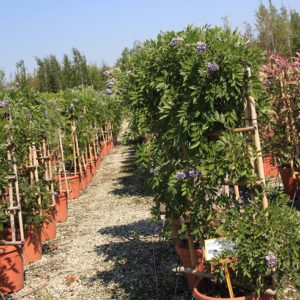
Wisteria sinensis Screen
€240.00 Select options This product has multiple variants. The options may be chosen on the product page -
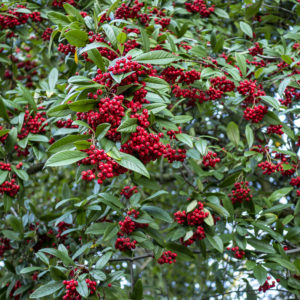
Cotoneaster ‘Cornubia’
Price range: €220.00 through €320.00 Select options This product has multiple variants. The options may be chosen on the product page -

Digitalis purpurea Alba
€8.50 Select options This product has multiple variants. The options may be chosen on the product page -
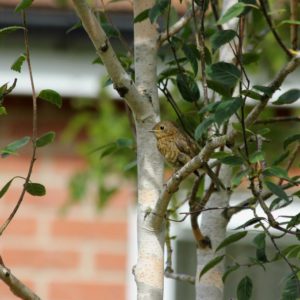
Betula Jacquemontii / Himalayan Birch
Price range: €180.00 through €600.00 Select options This product has multiple variants. The options may be chosen on the product page