
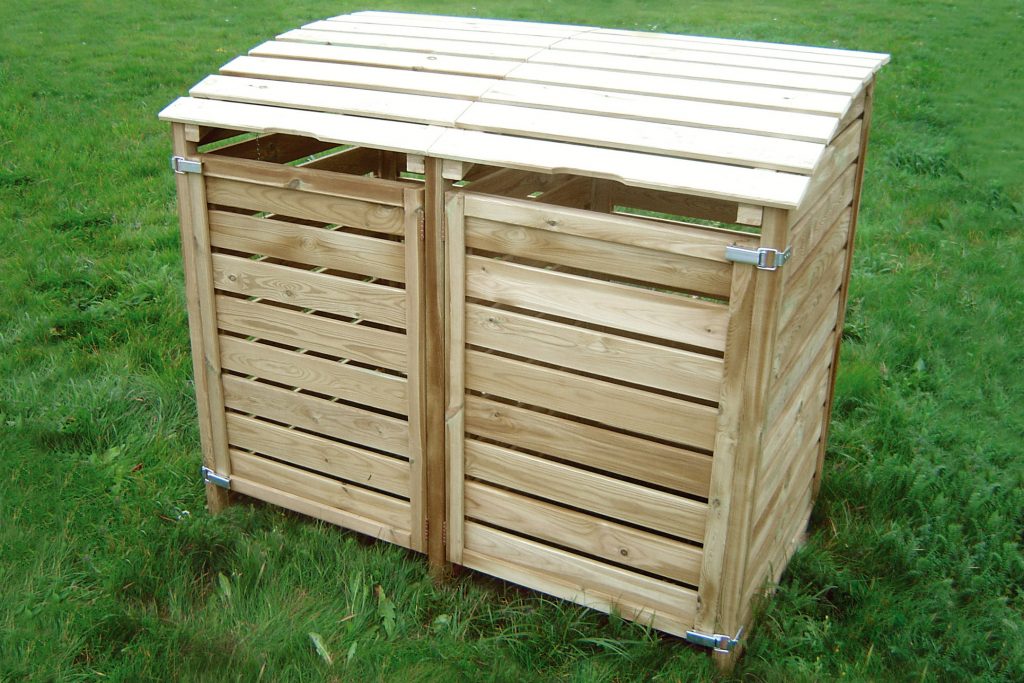
Double Dustbin Covers
€495.00
Description
Quick Facts
Product Name: Double Dustbin Cover
Material: Pressure-treated timber
Product Type: Outdoor bin storage with slatted sides and hinged lid
Dimensions: 145cm wide × 86cm deep × 110cm high (front) / 125cm high (rear)
Capacity: Two standard wheelie bins (240-litre bins, approximate)
Construction: Planed timber frame with slatted sides and sloped hinged lid and doors
Lid Design: Sloped lid (back to front) with hinges for easy access
Ventilation: Slatted sides for airflow
Assembly: Requires assembly (check on collection/delivery for details)
Material: Pressure-treated timber
Product Type: Outdoor bin storage with slatted sides and hinged lid
Dimensions: 145cm wide × 86cm deep × 110cm high (front) / 125cm high (rear)
Capacity: Two standard wheelie bins (240-litre bins, approximate)
Construction: Planed timber frame with slatted sides and sloped hinged lid and doors
Lid Design: Sloped lid (back to front) with hinges for easy access
Ventilation: Slatted sides for airflow
Assembly: Requires assembly (check on collection/delivery for details)
Description
The Double Dustbin Cover is built for hiding wheelie bins without making them awkward to access—the kind of practical garden structure that solves the problem of unsightly bins cluttering up driveways, patios, or front gardens. At 145cm wide and 86cm deep, it comfortably houses two standard 240-litre wheelie bins with enough room to open the lids and manoeuvre bins in and out without a struggle.
The hinged lid and doors give you full access to both bins without having to remove panels or wrestle with awkward fastenings. The sloped design (110cm high at the front, 125cm at the rear) sheds rain and snow effectively, keeping the interior dry and preventing water pooling on top.
The slatted sides allow airflow, which is essential for bin storage—solid sides trap odours and moisture, making the space unpleasant and encouraging mould and pests. The slats let air circulate while still screening the bins from view, so you get the best of both worlds: hidden bins that don’t become a problem.
The planed timber construction gives a clean, well-made finish that looks intentional rather than makeshift. The pressure-treated timber is built for outdoor life year-round—it’ll sit happily on driveways, patios, or tucked into corners without rotting or deteriorating. Left natural, it weathers to a soft silver-grey that blends quietly into the background. Painted or stained, it can match your house, fence, or garden scheme—dark colours make it recede, lighter colours keep it crisp and clean.
This is bin storage for people who want their outdoor spaces to look tidy and well-kept without sacrificing practicality. It’s functional, well-built, and does the job properly.
Caragh Garden Notebook
Installation & Preparation
Site Selection:
- Choose a location that’s convenient for bin collection day—ideally close to the kerb or collection point
- Position on a level, hard surface: paving, concrete, tarmac, or gravel (essential for wheeling bins in and out easily)
- Ensure there’s enough clearance in front for the lid to open fully (approximately 100–120cm)
- Consider access—you’ll be opening the lid and wheeling bins in and out regularly
- Avoid placing directly under trees where dripping water, sap, and falling leaves will make the interior damp and messy
Ground Preparation:
- Paving, concrete, or tarmac: Ideal—provides a firm, level base for easy bin movement
- Gravel: Workable, but ensure it’s well-compacted; loose gravel makes wheeling bins difficult
- Grass or soil: Not recommended—bins will sink and be difficult to move; lay paving slabs or a concrete base first
Assembly:
- Follow assembly instructions carefully; work on a flat surface
- Use galvanised screws throughout (supplied screws may need upgrading for longevity)
- Pre-drill all screw holes to prevent splitting
- Have a second person help—the structure is easier to assemble and align with assistance
- Check the frame is square and level before final tightening
- Ensure the hinged lid operates smoothly and the slope is correct (front to back) for water run-off
- Test the lid mechanism—it should lift easily and stay open securely
Securing the Structure:
- For exposed or windy sites, consider securing the bin cover to the ground or wall
- Use L-brackets or metal stakes to fix the base to paving or the frame to a wall
- This prevents the structure shifting in strong winds, especially when the lid is open
Bin Fit Check:
- Before final positioning, check that your wheelie bins fit comfortably inside
- Standard 240-litre bins should fit with room to spare, but bin dimensions vary by council
- Ensure bins can be wheeled in and out easily, and that lids can open fully inside the cover
Maintenance
Initial Treatment:
- The bin cover arrives pressure-treated and ready to use
- For enhanced protection and appearance, allow timber to weather for 6–12 months before painting or staining
- Clean with a stiff brush; apply exterior-grade timber preservative, decking oil, or wood stain
- Pay particular attention to the lid (most exposed to weather) and the base (in contact with ground moisture)
Annual Maintenance:
- Spring: Inspect the structure for stability; check fixings and tighten if needed
- Hinge check: Ensure hinges are secure and operating smoothly; oil if necessary
- Treatment: Apply a fresh coat of preservative, oil, or stain annually to maintain protection
- Cleaning: Remove debris, leaves, moss, or algae from the lid and slatted sides
- Interior: Sweep out the interior; hose down if needed to remove dirt or spills
- Lid check: Ensure the lid is shedding water correctly and isn’t sagging or damaged
Seasonal Checks:
- Autumn: Clear fallen leaves from the lid and slats before winter
- Winter: Check the lid after heavy snow; clear excessive weight if needed
- Spring: Give the interior a thorough clean after winter
Longevity:
With proper installation (level, hard base) and annual treatment, expect 10–15 years of service. The slatted construction and sloped lid help shed water and reduce rot.
Related products
-
10x10ft Summerhouse
€3,200.00 Add to cart -
Rose Arch
€145.00 Select options This product has multiple variants. The options may be chosen on the product page -
6ft x 4ft Apex Roof Shed – Painted Finish
€1,200.00 Add to cart -
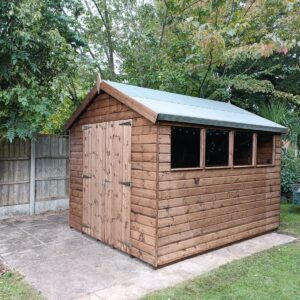
14ft x 8ft Apex Roof Shed – Treated Timber Finish
€2,650.00 Add to cart