

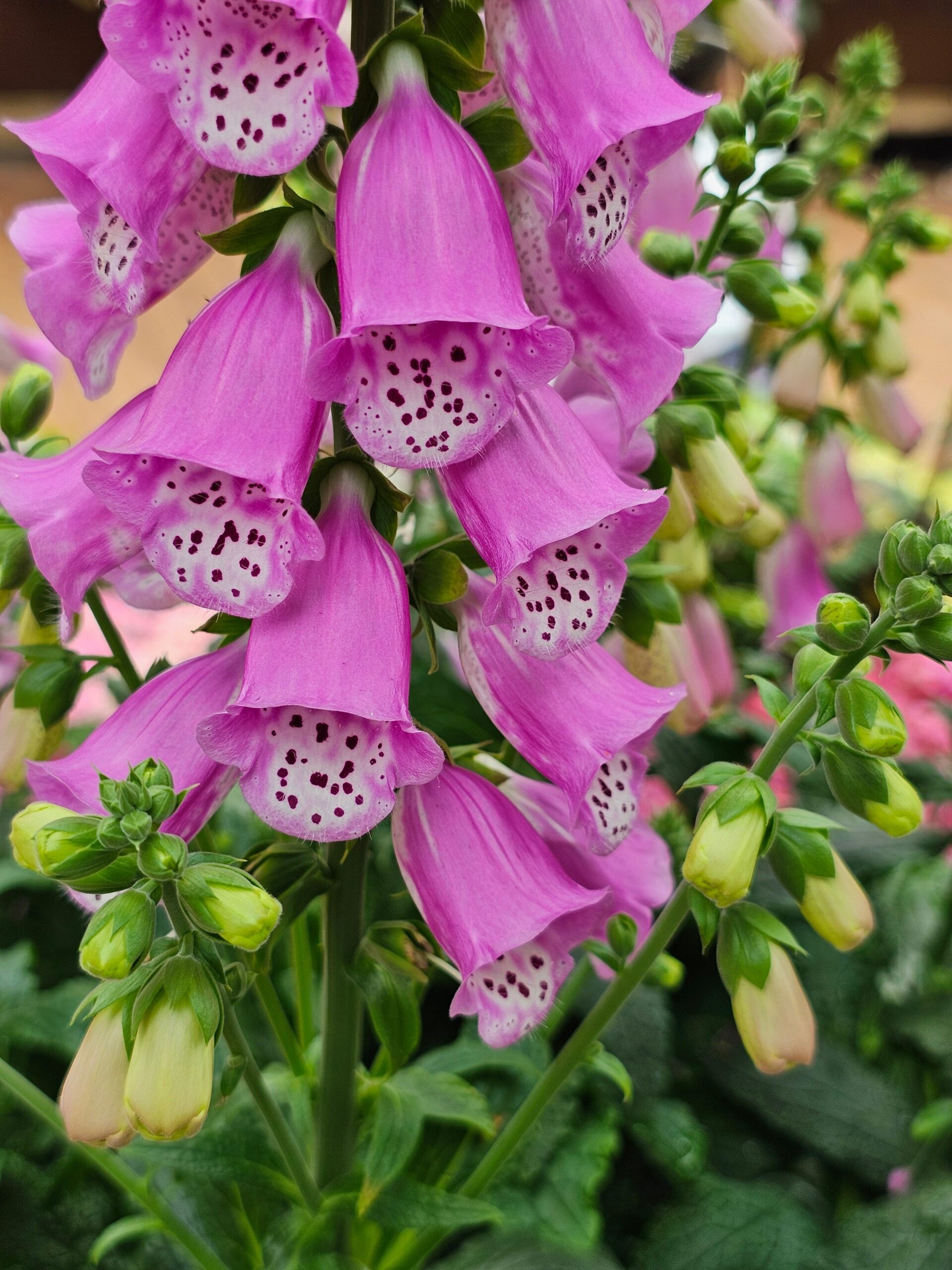
Digitalis purpurea ‘Dottie Warm Rose’
€10.50
Description
Quick Facts
– Botanical Name: Digitalis purpurea ‘Dottie Warm Rose’
– Common Name: Dottie Warm Rose Foxglove
– Plant Type: Hardy biennial / short-lived perennial (self-seeds freely)
– Mature Height: 90–120cm
– Mature Spread: 30–45cm
– Flowering Period: Early to midsummer — June to July
– Flower Colour: Tall spires of warm rose-pink, trumpet-shaped flowers with darker, spotted throats — the classic foxglove form in a rich, warm tone
– Foliage: Distinctive dark green, purple-flushed foliage at the base — attractive even before the flowers rise
– Habit: Upright; tall spikes rising from a basal rosette
– Aspect: Full sun to partial shade; flowering in shade is reliable and often longer
– Soil: Moist, well-drained, humus-rich
– Hardiness: Very hardy in Ireland & the UK
– Maintenance: Very low — deadhead or allow to self-seed
Description
The foxglove is one of the true gems of the early summer garden, and ‘Dottie Warm Rose’ brings the classic form in a particularly lovely warm rose colour. Tall, graceful spires of trumpet-shaped flowers rise in early summer, each bloom carried in warm rose-pink with darker, spotted throats — a soft glow of colour at the back of a border that is unmissable from across the garden. The dramatic flower towers are held above a rosette of dark green leaves with a purple flush, giving the plant an attractive presence even before the flowers begin to rise.
A biennial by nature, it behaves as a generous short-lived perennial in the garden, self-seeding freely to weave its way through planting and reappear in new, surprising corners year after year. In a cottage garden, a woodland edge, or a shaded border where few plants flower with such drama, it earns its place effortlessly.
Plant in flower this year, and let its seedlings carry it forward for years to come.
Caragh Garden Notebook
Planting:
Plant in spring or early autumn into moist, well-drained, humus-rich soil. Foxgloves appreciate a position in partial shade, where they are genuinely at home and often flower longer and more reliably than in full sun; full sun is tolerated with adequate moisture. Incorporate a little leafmould or compost at planting to replicate the woodland-edge conditions they naturally favour. Plant where the spires can rise gracefully above lower perennials — the middle or back of a border, beneath trees, or at the base of a hedge. Water in thoroughly after planting.
Watering:
Water consistently through the first growing season while the plant establishes. Once settled, foxgloves are reasonably tolerant but perform best with reliable moisture through the growing season; during prolonged dry spells, an occasional thorough watering will keep the flower spires at their best. In relatively moist, shaded positions they will largely look after themselves.
Feeding:
An annual mulch of well-rotted leafmould or compost applied around the plants in spring feeds gently and improves the soil over time, suiting plants that naturally grow in woodland conditions. In poor soils, a light balanced feed in spring supports strong growth. Avoid rich, heavily fed ground, which produces soft, lush foliage at the expense of the upright flowering habit.
Seasonal Care & Self-Seeding:
Allow the flower spires to bloom fully through early summer. If you want the plant to carry on through the garden, leave a few spikes to set seed at the end of the season — foxgloves self-seed freely and the seedlings will reappear in new positions the following year, weaving through the border in the natural, charming way that makes them so valued. Remove the rest of the spent spikes after flowering to keep the planting tidy. The basal rosette of leaves carries the young plant through its first year and is worth keeping tidy into winter.
Pests & Problems:
Generally very trouble-free. Foxgloves have few serious pest and disease problems. Slugs and snails can target the young rosettes and emerging foliage in spring — worth monitoring at this stage when the new growth is most vulnerable. In very dry, exposed positions the flower spires may be shorter and less generous; a partially shaded, reasonably moist position always gives the best display.
Design Notes:
‘Dottie Warm Rose’ belongs in a planting that lets its tall spires soar — the middle or back of a shady border, a woodland edge, among shrubs, or against a hedge, where the warm rose towers rise above lower planting and catch the light. It is a cottage-garden classic, and it combines beautifully with the plants that share its shady, naturalistic world: ferns, hostas, alchemilla, and hardy geraniums all make fine companions. In a partially shaded border it brings a vertical drama that few other early summer perennials can match, and the purple-flushed foliage continues to add interest at ground level. Allow it to self-seed and it becomes a permanent, wandering presence in the garden — the kind of plant that makes a border feel lived-in and natural. For pollinators, the flowers are a valuable early summer source, and the tall, warm spires are as beautiful in the garden as they are cut and brought indoors.
Additional information
| Pot Size |
|---|
Related products
-

Taxus baccata / Yew Pillows
€1,500.00 Select options This product has multiple variants. The options may be chosen on the product page -

Senecio Angel Wings
€25.00 Select options This product has multiple variants. The options may be chosen on the product page -

Salvia nemerosa Midnight Purple
Price range: €9.50 through €10.50 Select options This product has multiple variants. The options may be chosen on the product page -

Miscanthus sinensis
€9.50 Select options This product has multiple variants. The options may be chosen on the product page