

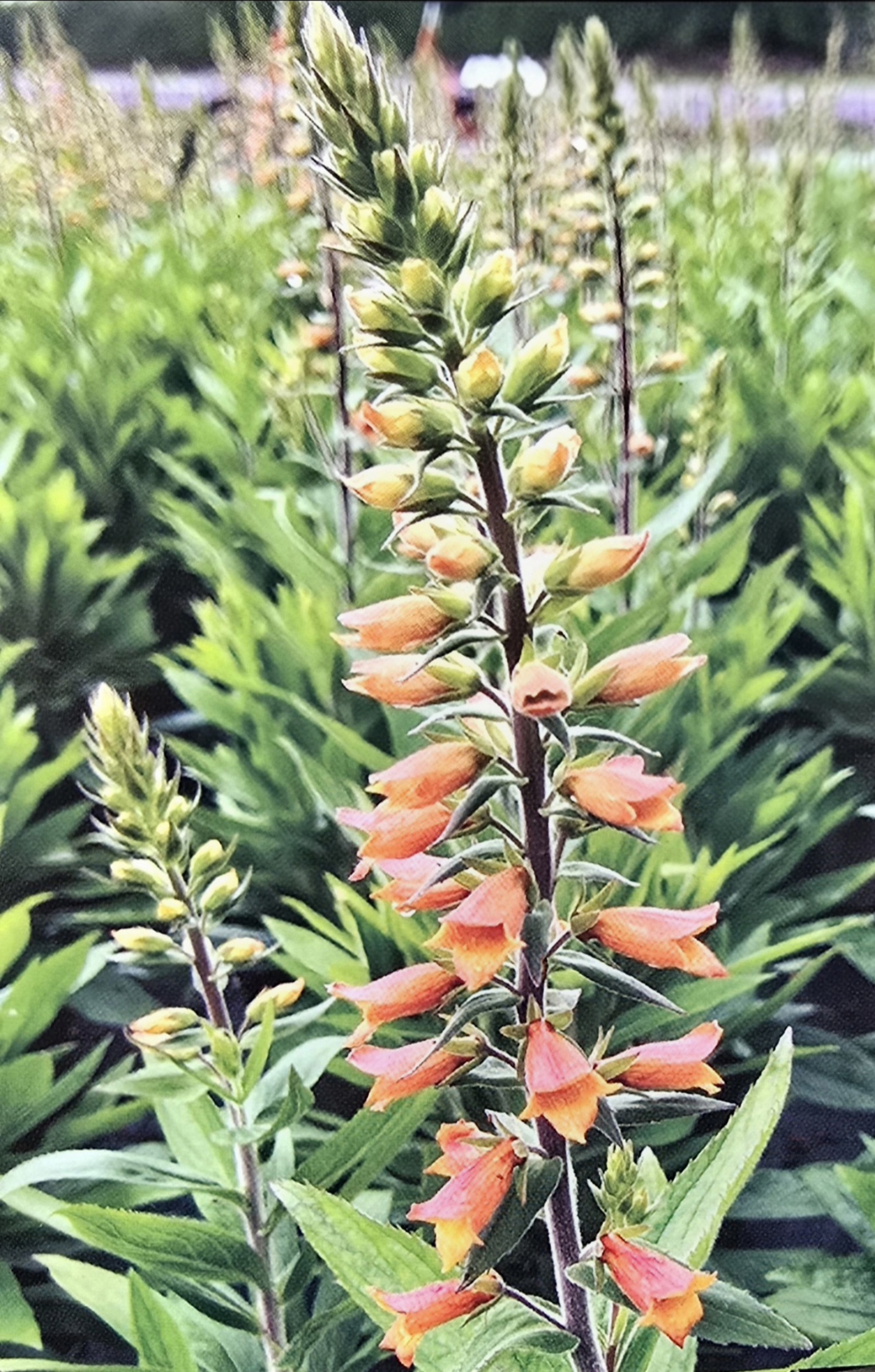
Digitalis ‘firecracker’
€12.50
Frequently Bought Together


Description
- Common Name: Foxglove ‘Firecracker’
- Botanical Name: Digitalis ‘Firecracker’
- Plant Type: Herbaceous perennial / short-lived perennial (often grown as a biennial)
- Mature Height: 60–90cm (can reach 1m in rich soil)
- Mature Spread: 30–45cm
- Flowering Period: June to August
- Flower Colour: Warm apricot to coppery-orange bells with deeper veining and speckling (often with a softly shaded throat)
- Foliage: Mid-green rosettes of softly textured leaves
- Hardiness: Hardy in UK & Ireland
- Soil Requirements: Moist, well-drained soil; moderately fertile
- Aspect: Full sun to part shade
- Maintenance: Low
Description
Digitalis ‘Firecracker’ is a foxglove that brings warmth to the border—those classic bell-shaped flowers, but in glowing apricot and copper tones that feel like late-afternoon light. It keeps the romance and height foxgloves are loved for, while offering a more unusual, modern colour that pairs beautifully with grasses, dusky pinks, deep purples, and soft creams.
Flower spikes rise above a neat rosette of green leaves, adding vertical rhythm and that “lift” through early and mid-summer. Up close, the bells are delicately patterned with deeper veining and speckling, giving the flowers a rich, layered look rather than a flat block of colour.
It’s a brilliant plant for weaving through mixed borders—popping up between roses and perennials like a little surprise—and it’s a magnet for bees, who will work their way up each spire with real purpose.
Caragh Garden Notebook
Planting:
Plant in spring or autumn. Space plants 30–40cm apart. Choose a spot with moisture-retentive, well-drained soil—foxgloves like consistent moisture, especially while establishing. Full sun is fine in Irish and UK gardens, but part shade is ideal if the spot is warm or dry.
Plant in spring or autumn. Space plants 30–40cm apart. Choose a spot with moisture-retentive, well-drained soil—foxgloves like consistent moisture, especially while establishing. Full sun is fine in Irish and UK gardens, but part shade is ideal if the spot is warm or dry.
Soil Preparation:
Improve the planting area with compost or well-rotted organic matter. Avoid very dry, sandy soil unless you can enrich it and water in dry spells. Good drainage matters, but so does steady moisture.
Improve the planting area with compost or well-rotted organic matter. Avoid very dry, sandy soil unless you can enrich it and water in dry spells. Good drainage matters, but so does steady moisture.
Seasonal Care:
Water during dry spells, especially in the first season. Deadhead the main flower spike after flowering to encourage side spikes and extend the display (or leave some seed heads if you’d like it to self-seed gently). In late autumn, tidy away spent stems.
Water during dry spells, especially in the first season. Deadhead the main flower spike after flowering to encourage side spikes and extend the display (or leave some seed heads if you’d like it to self-seed gently). In late autumn, tidy away spent stems.
Pests & Problems:
Watch for slugs and snails on young plants. Good spacing helps airflow and reduces the risk of mildew. Remove any affected leaves promptly.
Watch for slugs and snails on young plants. Good spacing helps airflow and reduces the risk of mildew. Remove any affected leaves promptly.
Design Notes:
Perfect for cottage gardens, naturalistic borders, and pollinator planting. Beautiful with roses, nepeta, salvias, geraniums, astrantia, grasses, and achillea. The warm apricot tones also look stunning with bronze fennel, dark-leaved heucheras, and purple alliums.
Perfect for cottage gardens, naturalistic borders, and pollinator planting. Beautiful with roses, nepeta, salvias, geraniums, astrantia, grasses, and achillea. The warm apricot tones also look stunning with bronze fennel, dark-leaved heucheras, and purple alliums.
Propagation:
Can be grown from seed; may self-seed in the right spot. (Seedlings won’t always come perfectly true to type with hybrids, but you’ll often get lovely variations.)
Can be grown from seed; may self-seed in the right spot. (Seedlings won’t always come perfectly true to type with hybrids, but you’ll often get lovely variations.)
Related products
-

Geum Borisii
€8.50 Select options This product has multiple variants. The options may be chosen on the product page -
Helleborus orientalis
€25.00 Select options This product has multiple variants. The options may be chosen on the product page -

Hydrangea macrophylla Firewings
€25.00 Select options This product has multiple variants. The options may be chosen on the product page -

Digitalis purpurea / Foxgloves
€8.50 Select options This product has multiple variants. The options may be chosen on the product page