

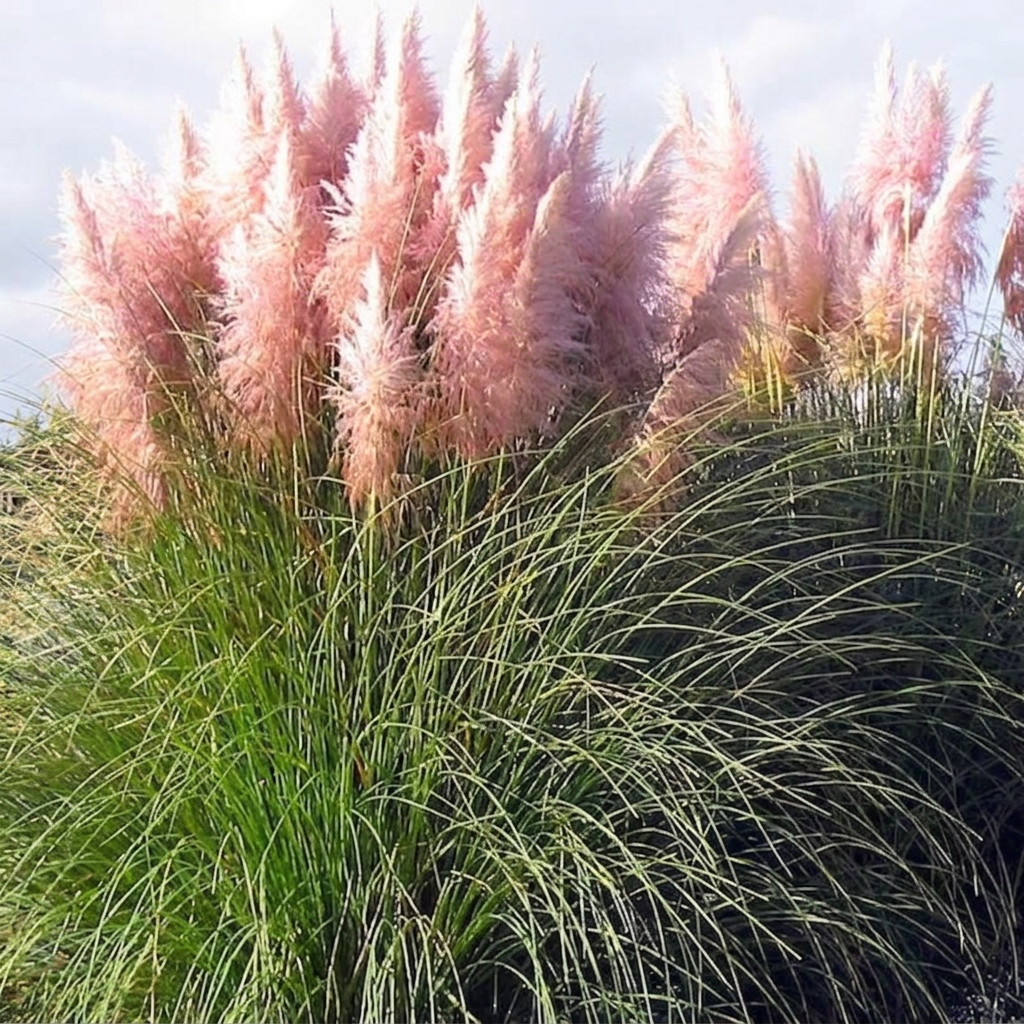
Cortaderia selloana ‘Rose Plume’
€20.00
Description
Quick Facts
- Botanical name: Cortaderia selloana ‘Rose Plume’ (compare ‘Rosea’)
- Common name: Pink pampas grass
- Type: Evergreen perennial grass
- Mature height and spread: Around 2–2.5m tall (plumes up to 3m) and 1.5m wide.
- Flowering period and colour: Late summer to winter (about August to November, with plumes lasting into winter). Feathery, pinkish plumes that fade to cream and silver.
- Foliage: Long, arching, narrow, grey-green leaves with very sharp, serrated edges, forming a dense fountain.
- Hardiness: Hardy in Ireland and the UK (around RHS H5, to about -15°C). Best in a sheltered spot in colder areas.
- Soil: Any well-drained soil. Tolerates dry soil once established. Dislikes waterlogging.
- Aspect: Full sun.
- Maintenance: Low, with an annual cut back. Wear gloves and long sleeves.
Description
A statuesque evergreen grass with long, arching, silvery-green leaves and tall, feathery pink plumes that rise above the foliage from late summer. The plumes catch the light and stay attractive well into winter. A bold focal point for large borders, gravel gardens and spacious lawns, but best kept away from natural habitats (see the notes below).
Caragh Garden Notebook
Planting Plant in spring in full sun and well-drained soil, giving it plenty of room. Dig a hole about twice the width of the pot, keep the rootball level with the surface, firm in gently and water well. Allow 1.5m or more between plants, and keep it away from paths where the sharp leaves could catch passers-by.
Watering Water regularly in the first season to establish. Once settled it is drought tolerant. Avoid waterlogged soil, particularly in winter.
Feeding Little feeding is needed. A general slow-release fertiliser in spring helps on poor soil. A mulch of compost around the base also helps.
Seasonal Care and Tidy-Up Spring: Cut the whole clump back in March or April, to about 15–30cm above the ground, and tidy out dead leaves. Summer: Little care needed. Water in prolonged dry spells. Autumn: Enjoy the plumes. Cut the flowering stems before they set seed if you want to limit seeding. Winter: Leave the plumes standing for winter interest. In cold areas, tie the foliage loosely and mulch the base.
Division Not generally needed. Established clumps can be divided in spring, but it’s heavy work. Cutting back each spring is the main task. Wear thick gloves, long sleeves and eye protection, as the leaf edges are extremely sharp. Avoid burning, which is an old method but harmful to the plant and the environment.
Pests and Problems
- Sharp leaves: The leaf edges can cut skin badly. Keep away from paths, children and pets.
- Winter wet: Poor drainage is the main cause of loss.
- Pests and diseases: Generally trouble-free.
- Invasiveness and seeding: Pampas grass can self-seed and spread in some coastal and open habitats. Plant away from natural habitat, deadhead plumes before they set seed, and dispose of waste carefully. Don’t dump garden waste in the wild.
Design Notes A bold statement plant for large gardens. It looks good with ornamental grasses, sedums, rudbeckias and asters, and as a backdrop to lower planting. It works well in contemporary and coastal-style gardens. It needs space, so avoid small gardens and tight borders.
Propagation Division in spring is possible but difficult. Seed-raised plants vary and aren’t recommended. Named forms are best propagated by nurseries.
Additional information
| Pot Size |
|---|
Related products
-
Prunus Royal Burgundy / Red leafed Cherry
Price range: €75.00 through €550.00 Select options This product has multiple variants. The options may be chosen on the product page -
Malus Rudolph / Crab apple Rudolph
€75.00 Select options This product has multiple variants. The options may be chosen on the product page -
Carpinus betulus / Hornbeam
Price range: €320.00 through €750.00 Select options This product has multiple variants. The options may be chosen on the product page -

Choisya ternata – Mexican Orange Blossom
Price range: €9.50 through €22.00 Select options This product has multiple variants. The options may be chosen on the product page