

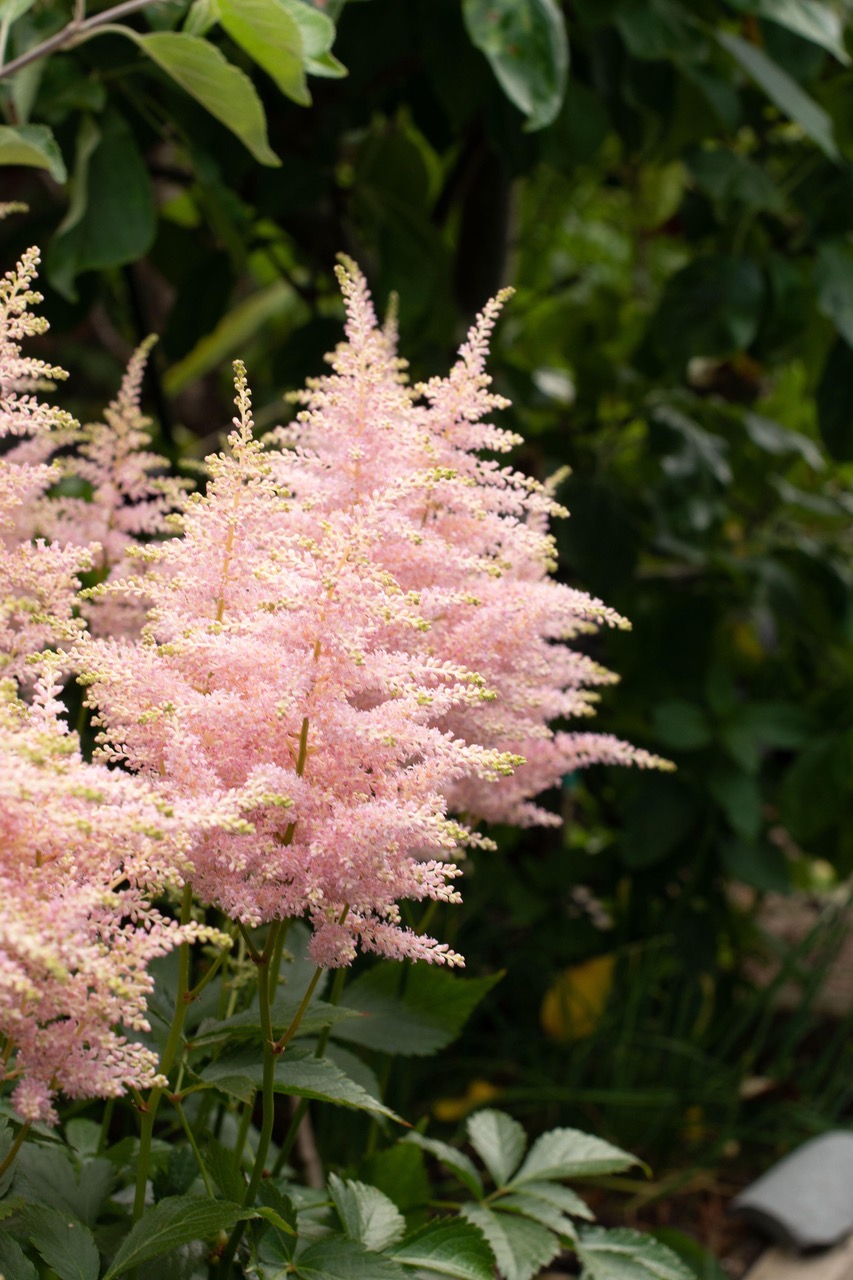
Astilbe × arendsii ‘Peaches and Cream’
€9.50
Description
Quick Facts
– Botanical Name: Astilbe × arendsii ‘Peaches and Cream’
– Common Name: Peaches and Cream Astilbe
– Plant Type: Hardy herbaceous perennial
– Mature Height: 60–75cm
– Mature Spread: 45–60cm
– Flowering Period: Summer — mid June to August
– Flower Colour: Soft plumes of white and cream with the faintest blush of peach — a delicate, luminous combination lovely against the darker foliage of the garden
– Foliage: Rich, deeply divided, mid-green leaves with a slight bronze tint on new growth; attractive through the season
– Habit: Clump-forming; sturdy upright plumes above a mound of fern-like foliage
– Aspect: Partial shade to full shade; tolerates sun in reliably moist soil
– Soil: Moist, humus-rich; thrives in damp conditions and will not tolerate drying out
– Hardiness: Very hardy in Ireland & the UK
– Maintenance: Low
Description
Astilbe ‘Peaches and Cream’ brings softness, colour, and genuine elegance to the shaded garden — a clump-forming perennial whose feathery, upright plumes rise above a mound of finely divided, fern-like foliage from midsummer. The flowers are carried in shades of white and cream with the merest hint of peach — soft, luminous tones that catch the light in a shaded border and glow against the rich green leaves below.
It is the classic astilbe in the classic summer display: generous plumes, a long flowering season, and a texture that softens any planting scheme. In partial shade, where many summer flowers struggle, ‘Peaches and Cream’ is entirely at home, and with reliably moist soil it will tolerate more sun than most shade perennials.
Clump-forming and easy, it earns its place alongside the fern family it resembles — a plant that brings calm, colour, and structure to the shadier parts of the garden with very little asked in return.
Caragh Garden Notebook
Planting:
Plant in spring or autumn into moist, humus-rich soil enriched with plenty of organic matter. Astilbe genuinely needs moisture at the root and will not perform in soil that dries out in summer — this is the single most important factor in its success. A position in partial shade to full shade is ideal; with reliably moist soil, it will tolerate more sun. Incorporate leafmould or well-rotted compost generously at planting to improve moisture retention, set the crown just at soil level, and mulch around the plant to keep the roots cool and damp. Water in thoroughly.
Watering:
Water generously and consistently — Astilbe must never be allowed to dry out in summer, and the foliage and plumes will quickly suffer if the soil dries. In partial shade with moisture-retentive soil it is relatively forgiving; in sunnier or drier positions, regular and generous watering through the growing season is essential. During hot, dry spells, a deep watering every few days is more effective than light daily applications. A mulch of compost or bark over the root zone helps retain moisture and keeps the roots cool.
Feeding:
An annual mulch of well-rotted compost or leafmould in spring feeds gently, improves the soil, and supports strong growth and abundant flowering. In poorer soils, a balanced slow-release fertiliser applied in spring will encourage vigorous plumes and healthy foliage. Avoid high-nitrogen feeds, which push leafy growth at the expense of the flower display.
Seasonal Care & Tidy-Up:
The plumes can be left in place through summer and into early autumn, where they dry naturally and add quiet texture to the border. Once they have faded, cut the spent flower stems down to the base. The foliage remains attractive through the season and should be left to die back naturally in autumn. In late winter or early spring, cut the previous year’s growth back to the base before new shoots emerge — the new growth, with its bronze tints, is one of the plant’s most appealing moments.
Division:
Divide established clumps every three to four years in early spring to maintain vigour and to spread the plant through the garden. The crowns are shallow and fibrous — lift carefully, divide into sections each with healthy buds and roots, and replant immediately into well-prepared, moist soil. Water in thoroughly and keep consistently damp through the first season. Division is also the simplest method of propagation for creating the generous drifts astilbes excel at.
Pests & Problems:
Generally trouble-free and largely pest-free. The most common problem is drought — in dry soil, the leaf edges brown and the plumes fade quickly, so consistent moisture is always the priority. Slugs can occasionally target the fresh young growth in spring; worth monitoring at this stage. In very heavy, waterlogged winter soil, the crown can rot; good drainage combined with moisture retention (organic matter, not standing water) gives the best balance.
Design Notes:
The soft white, cream, and peach tones of ‘Peaches and Cream’ make it one of the most versatile of the astilbes — it reads beautifully in a shaded border, in woodland planting, and beside water, where its plumes are reflected and its preference for moist conditions naturally matches. Plant it in drifts of three or more for the fullest effect, weaving it among ferns, hostas, and other shade-loving companions, where its feathery plumes provide soft vertical interest among broader foliage. The pale tones glow against the dark greens of the shade garden and pair beautifully with the deeper reds and pinks of other astilbes and the blues of brunnera and forget-me-nots. In a container in partial shade, kept consistently moist, it brings the same soft summer display to a patio or doorstep — a plant that rewards a damp, shaded corner with real generosity.
Additional information
| Pot Size |
|---|
Related products
-
Geranium phaeum Samobor
€8.50 Select options This product has multiple variants. The options may be chosen on the product page -

Euonymus japonicus ‘Green Spire’
Price range: €7.50 through €20.00 Select options This product has multiple variants. The options may be chosen on the product page -

Nandina Blush Pink
€15.00 Select options This product has multiple variants. The options may be chosen on the product page -
Buxus ‘Graham Blandy’
€1,200.00 Select options This product has multiple variants. The options may be chosen on the product page