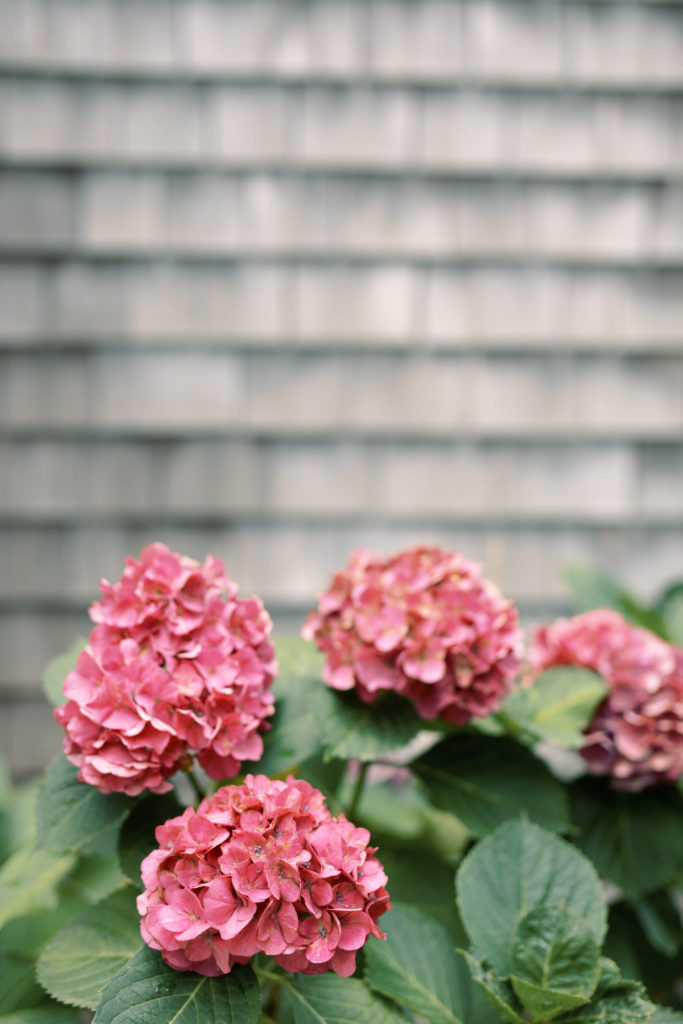

Walk through a garden centre in May and you’ll often see them: hydrangeas already in full flower. Big, blousy heads. Instant colour. Instant gratification.
And yet… if you’ve ever grown hydrangeas in your own garden in Ireland (or England), you’ll know something doesn’t quite add up.
Because hydrangeas aren’t meant to be in full flower in spring.
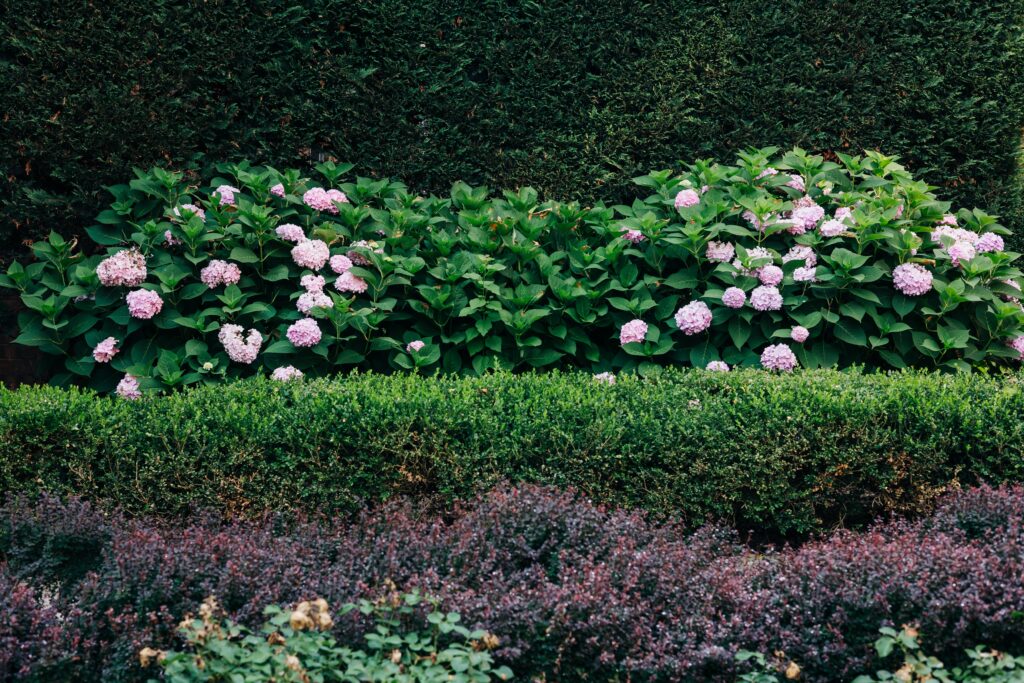
In my own garden, they don’t properly get going until July. That’s when they’re supposed to be marvellous — when the days are long, the soil is warm, and the plant has had time to grow strong enough to carry its blooms properly. That’s the rhythm of our climate. That’s nature doing what it does best.
So when a hydrangea is blooming in May, it’s worth asking a gentle question:
How did it get there?
The truth about “early” hydrangeas
A hydrangea flowering in May is rarely “ahead of itself” because it’s happy. More often, it’s been forced — grown under conditions that push it to perform early, usually for the sake of the retail calendar.
Sometimes that means controlled environments. Sometimes it means being grown in a completely different climate. And yes — often it means being grown far from here, in places where the seasons and light levels simply don’t match ours.
The result is a plant that looks sensational on the day you buy it… but it hasn’t necessarily been grown with your garden in mind.
And that matters, because hydrangeas aren’t disposable. They’re not a bunch of supermarket flowers. They’re living shrubs that should settle in, root down, and give you years of beauty — not a quick show followed by a long sulk.
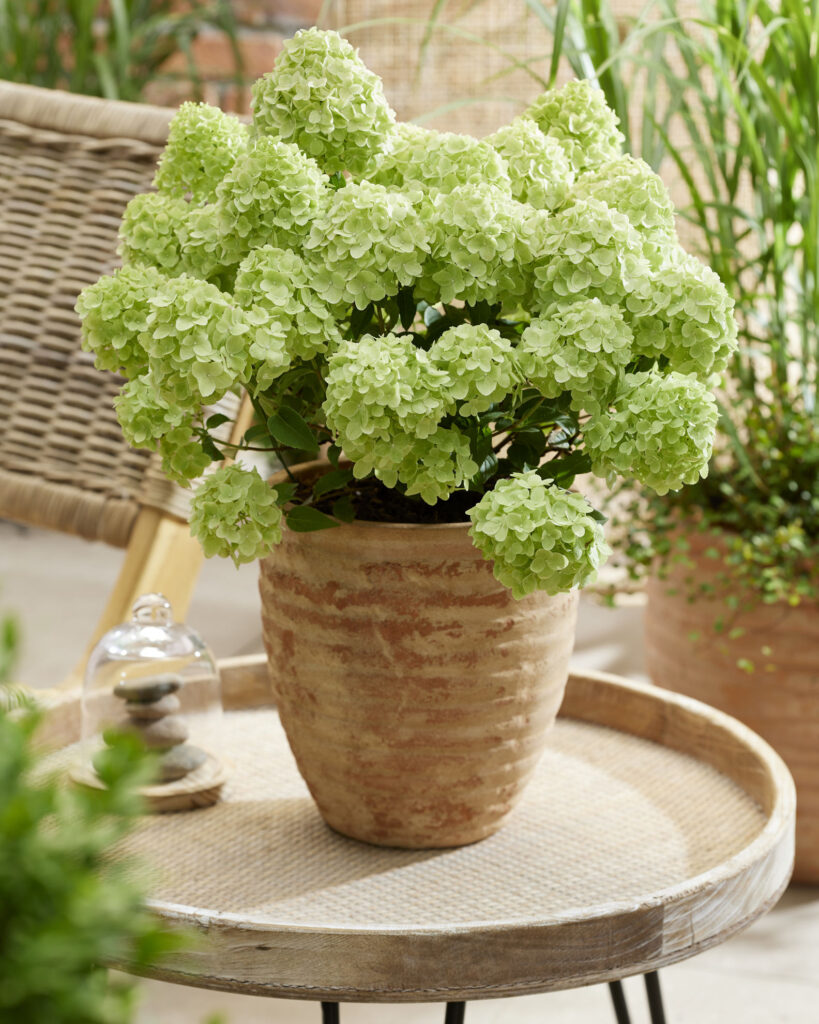
We don’t grow for the nursery. We grow for your garden.
At Caragh, we don’t force our plants to flower early just so they look their best on our benches.
We’d rather they flower when they’re meant to — in your garden, in their own time, in their own season.
Because we’re not here to “use up” the best of them on ourselves.
We’re the minders. That’s honestly how it feels: we mind them like babies. We watch them, feed them, harden them off, protect them, and give them what they need to grow into strong, resilient plants that can handle real life outdoors — Irish wind, English rain, a hot spell you didn’t expect, a cold snap you hoped was gone.
When they’re ready, they go to you.
And then they do what they were born to do.
A nursery is a place of patience
We’re growers and horticulturists, and our nursery is our life’s work — over 70 acres now, and still growing. That scale doesn’t come from shortcuts. It comes from seasons. From repetition. From doing the right thing when nobody’s watching.
There’s a quiet pride in that.
Not the flashy kind — the steady kind.
The kind that says: this plant hasn’t been rushed.
This plant hasn’t been tricked into performing.
This plant has been grown to last.
This plant hasn’t been tricked into performing.
This plant has been grown to last.
Let hydrangeas be hydrangeas
If you take one thing from this, let it be this:
A hydrangea that flowers later isn’t “behind”. It’s normal.
It’s in step with our climate. It’s building strength. It’s preparing to give you a proper show — the kind that starts in summer and carries you right through into autumn, when the garden needs it most.
So if you’re waiting for yours to bloom in July, you’re not doing anything wrong.
You’re simply letting the plant be what it is.
And honestly? There’s something comforting about that — a reminder that in gardening (and in life), things are often best when they happen as they should.
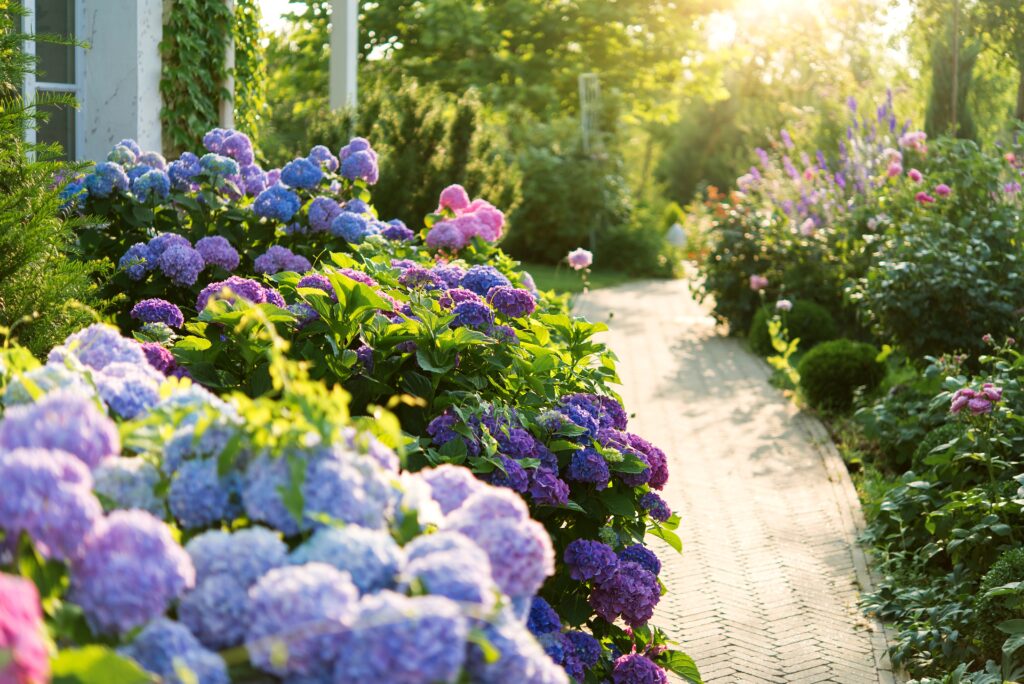
One gentle word of warning (before you fall in love)
Hydrangeas are generous plants — but they’re not mind readers. And the clue is right there in the name: Hydra. Water.
When hydrangeas are coming into bloom, they need consistent moisture to build those big flower heads properly. If they’re allowed to dry out (especially in pots, or in a warm spell), they’ll droop dramatically — and they can struggle to flower well.
So as your hydrangea starts to bud up, think of it like this; steady watering, not feast-or-famine. A good soak, regularly, is far better than the odd splash.
And while we’re at it: they’re hungry too.
To flower beautifully, hydrangeas appreciate a bit of support — a dedicated hydrangea feed is a brilliant idea, particularly through the growing season. But if you’re keeping things simple, any good organic feed will help too. You’re feeding the soil as much as the plant, and that’s what keeps them strong year after year.
Because when a hydrangea is grown in its proper season, planted well, watered well, and fed kindly… it doesn’t just flower.
It becomes marvellous.