

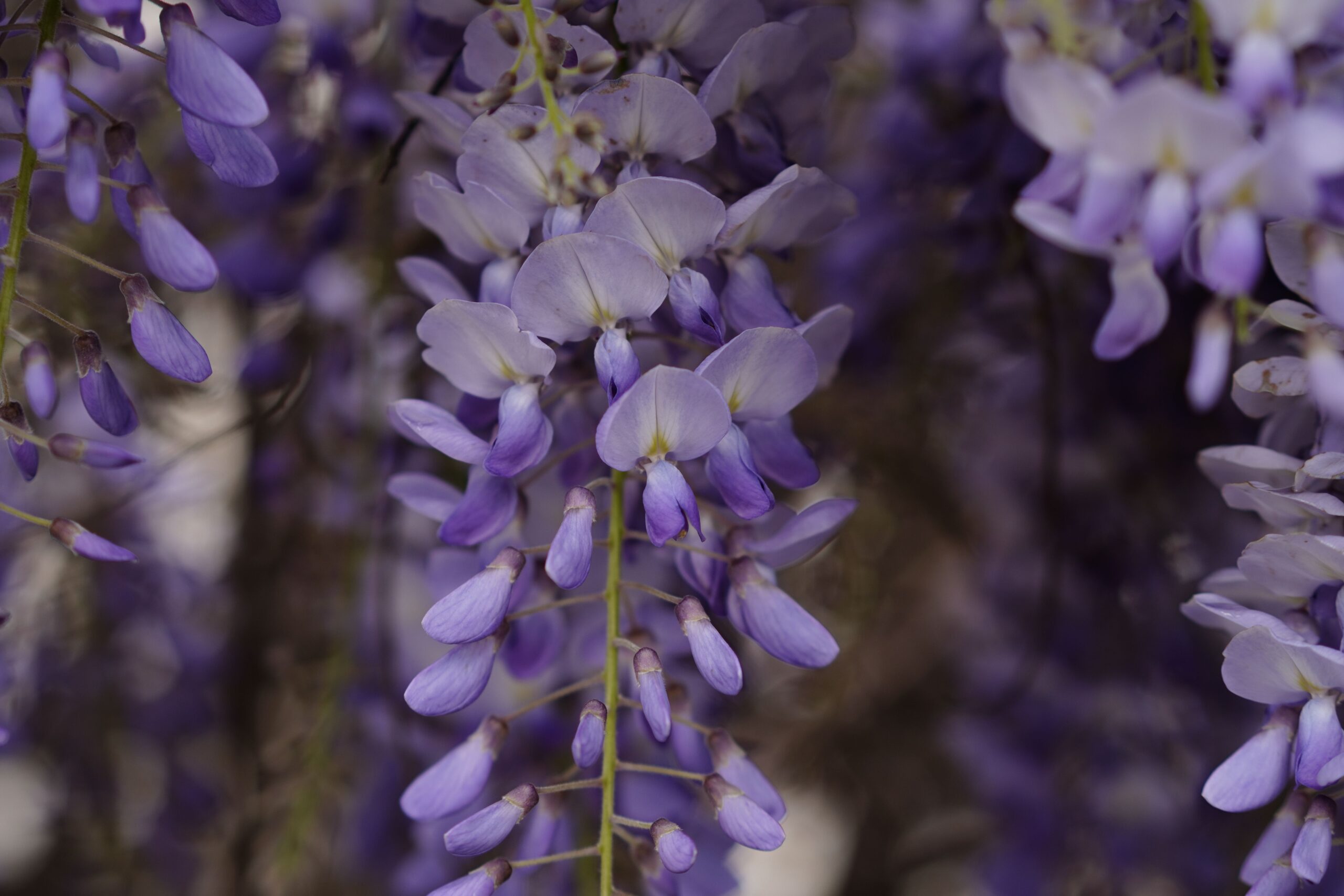
Wisteria ‘Blue Moon’
€75.00
Description
If you have ever wanted to grow Wisteria but live somewhere the winters bite hard, ‘Blue Moon’ changes everything. This remarkable American Wisteria is one of the hardiest forms available — bred to withstand temperatures that would finish off the classic Chinese and Japanese varieties — and it brings the full romance of cascading blue-violet flowers and sweet fragrance to gardens and climates where Wisteria was previously simply not an option.
But hardiness alone does not make a great plant. What makes ‘Blue Moon’ truly special is its extraordinary generosity of flowering. Where most Wisterias give you one breathtaking spring display and leave you waiting another twelve months, ‘Blue Moon’ flowers up to three times in a single season — in late spring, midsummer, and again in early autumn — filling the garden with waves of soft, silvery blue-violet blooms from May right through to September. It is, quite simply, one of the most free-flowering Wisterias you can grow.
Reliable, beautiful, and astonishingly productive — ‘Blue Moon’ is the Wisteria that keeps on giving.
Quick Facts
– Plant type: Deciduous climbing shrub
– Flowers: Soft silvery blue-violet, lightly fragrant hanging racemes — produced in up to three flushes from late spring through to early autumn
– Position: Full sun for best flowering — tolerates more exposed positions than Chinese or Japanese forms
– Soil: Moist, well-drained, moderately fertile
– Hardiness: Exceptionally hardy — one of the most cold-tolerant Wisterias available
– Eventual size: 4–6m — vigorous but more manageable than the largest Japanese forms
– Support needed: Sturdy pergola, trellis, arch, or wall wires — strong fixings essential
– Best for: Colder gardens, exposed positions, repeat flowering displays, pergolas, sunny walls, and anyone who wants Wisteria flowers across the whole season rather than just in spring
Caragh Garden Notebook
‘Blue Moon’ is a Wisteria fulgida selection — an American species developed specifically for cold-climate performance — and it is the variety we recommend without hesitation to anyone gardening in a colder or more exposed position where the classic forms have struggled or failed. Its hardiness is exceptional, its temperament is reliable, and its willingness to flower repeatedly through the season sets it apart from almost every other Wisteria in cultivation.
The soft silvery blue-violet of the flowers is a particularly beautiful shade — cooler and more refined than the deeper violet-blue of the Chinese forms, with a gentle luminosity that looks especially lovely in the low light of a summer evening. The fragrance is light and sweet rather than powerful, which suits some gardens and situations better than the more intensely scented varieties.
The repeat flowering habit means that deadheading or lightly trimming after each flush can encourage the next round of blooms to develop more freely — a small effort that keeps the display coming right through the warmer months.
In a sheltered Irish or UK garden, ‘Blue Moon’ will thrive with the same ease it brings to far colder climates — and the reward of three separate flowering seasons in a single year makes it one of the most satisfying climbers you can plant.
Caragh tip — the one that matters: The same twice-yearly pruning that applies to all Wisterias applies equally here — cut back new shoots to five or six leaves in summer and to two or three buds in winter. With ‘Blue Moon’ the repeat flowering habit means the summer prune feels especially timely — a light tidy after the first spring flush helps channel the plant’s energy into the next wave of flowers rather than into unproductive leafy extension. Get the pruning right and this plant will reward you with colour and fragrance across more of the year than you might ever have thought a single climber could manage.
Additional information
| Pot Size |
|---|
Related products
-

Syringa vulgaris Amethyst
Price range: €85.00 through €125.00 Select options This product has multiple variants. The options may be chosen on the product page -
Buddleja Black Knight
€12.50 Select options This product has multiple variants. The options may be chosen on the product page -
Picea glauca ‘Conica’ (Dwarf Alberta Spruce)
€25.00 Select options This product has multiple variants. The options may be chosen on the product page -
Ceanothus Skylark
€15.00 Select options This product has multiple variants. The options may be chosen on the product page