

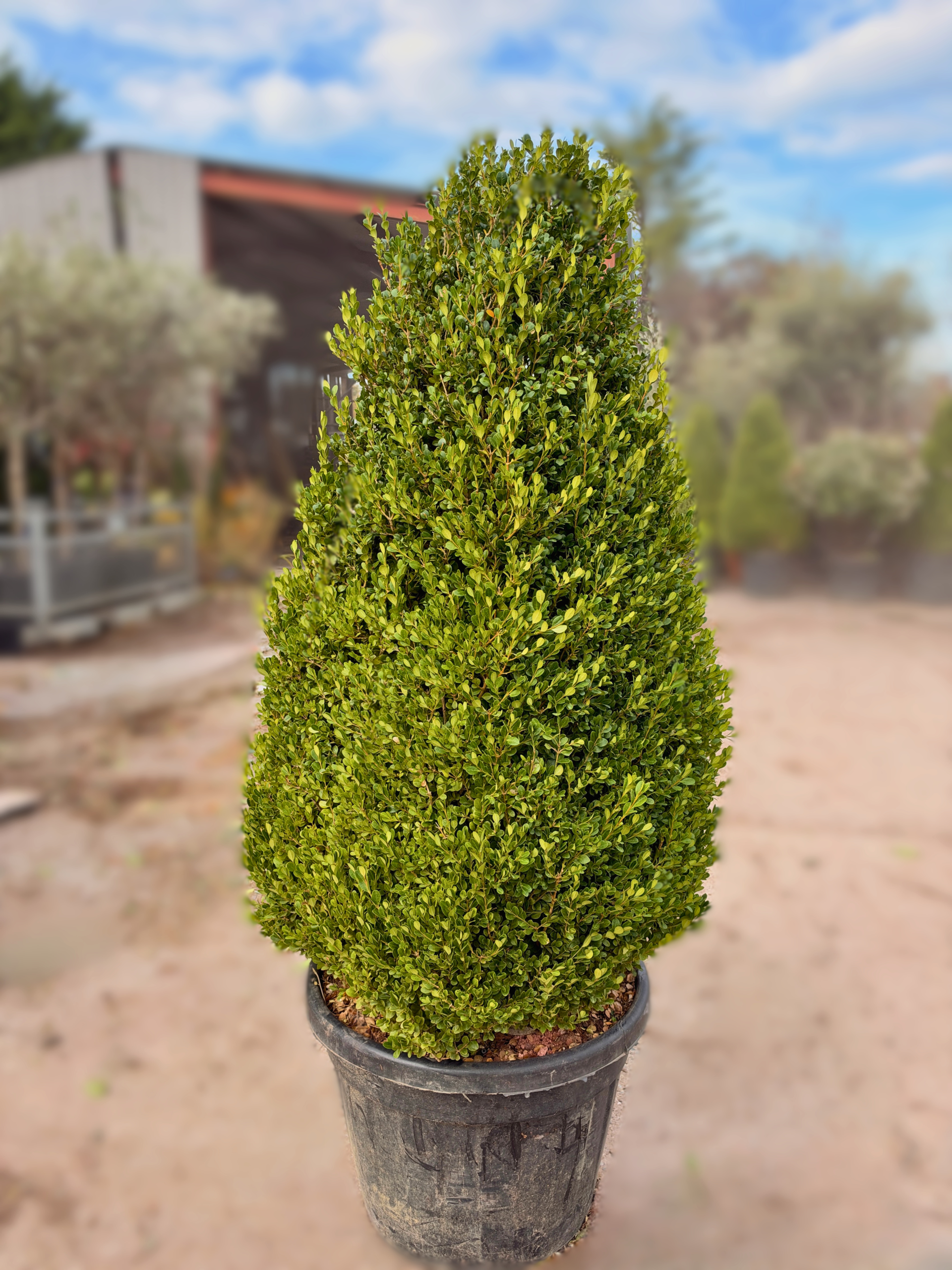
Buxus microphylla ‘Faulkner’: Pyramid
€600.00
Description
Quick Facts
– Botanical Name: Buxus microphylla ‘Faulkner’
– Common Name: Japanese Box ‘Faulkner’
– Plant Type: Evergreen shrub, clipped topiary
– Form: Pyramid, clipped with four flat faces
– Mature Height: Approx. 1-1.5m as a clipped pyramid (height is kept by clipping)
– Mature Spread: Approx. 50-80cm at the base
– Flowering Period: Spring (flowers are small and inconspicuous)
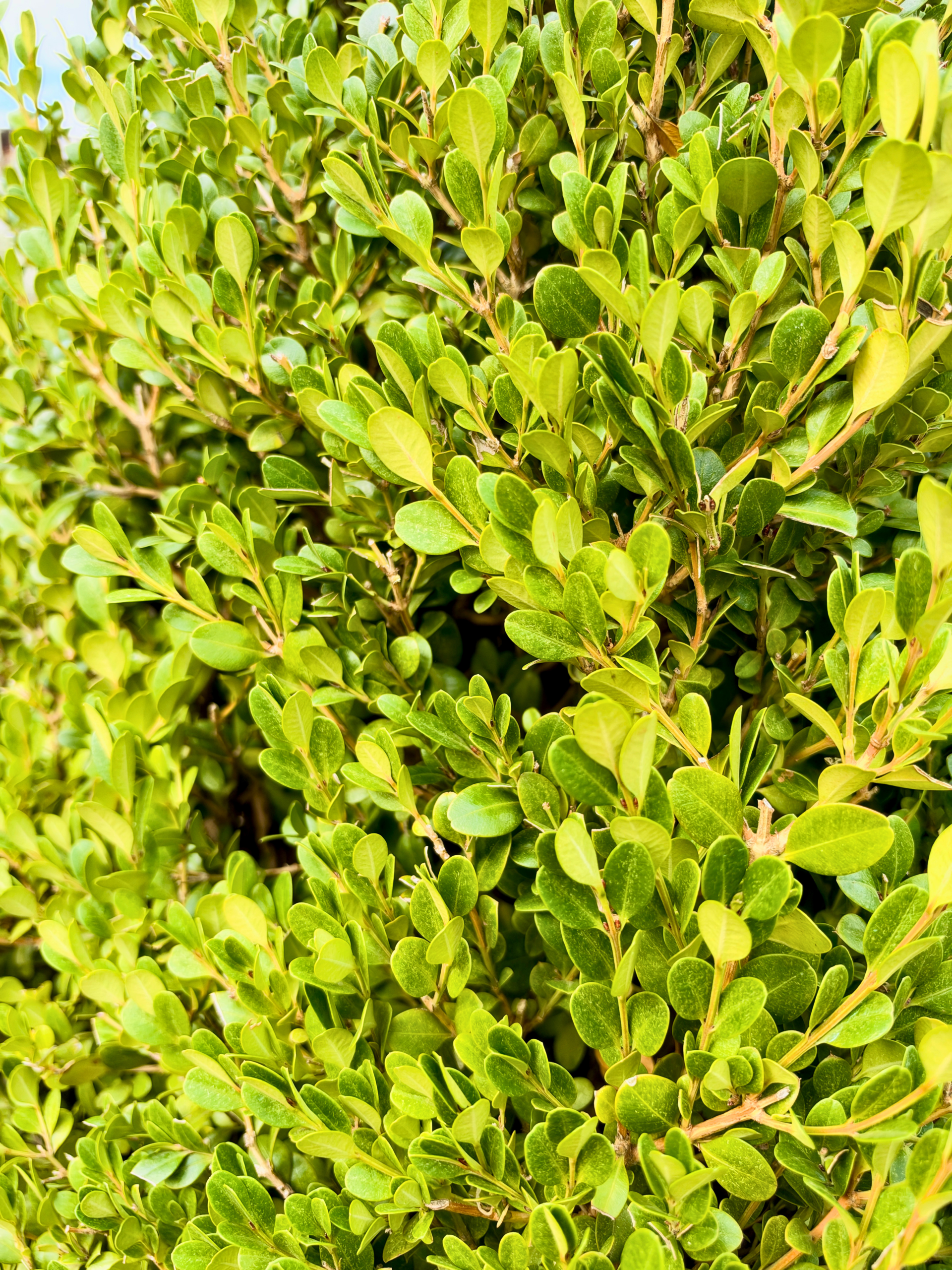
– Foliage Colour: Small, glossy, bright green leaves; dense and evergreen
– Habit: Compact and densely branched, which suits crisp, sharp clipping
– Growth Rate: Slow to moderate
– Hardiness: Fully hardy
– Soil Requirements: Moist, well-drained, reasonably fertile; tolerates chalk
– Aspect: Full sun to partial shade
– Maintenance: Moderate: clip one to two times a year
Description
Buxus microphylla ‘Faulkner’ in a four-sided pyramid is a smart, architectural evergreen that gives the garden crisp structure in every season. The small, glossy, bright green leaves are packed densely on the stems, so the clipped faces look clean and sharp, and the colour stays fresh right through winter.
It is a lovely choice for adding formality to an entrance, courtyard or border. A pair either side of a front door, gate or steps makes a classic, symmetrical statement, and a row of pyramids along a path gives a lovely sense of rhythm.
Neat, glossy and beautifully precise, this pyramid is a topiary with timeless good looks.
Caragh Garden Notebook
Planting:
Plant in autumn or spring in moist, well-drained soil, adding well-rotted compost to the planting hole. Choose a sunny or lightly shaded spot, sheltered from strong, drying winds. Plant at the same depth as the pot, firm in gently and water in thoroughly. In a container, use a loam-based compost and make sure the pot drains freely.
Watering:
Water regularly through the first two growing seasons, especially in dry spells. Box dislikes both drought and waterlogging. In containers, check the compost often and never allow it to dry out, particularly in summer.
Feeding:
Apply a balanced general fertiliser or slow-release feed in spring. Container plants benefit from a liquid feed every few weeks through the growing season to keep the foliage dense and glossy. A mulch of well-rotted compost helps retain moisture.
Seasonal Care & Tidy-Up:
Clip once or twice a year, in late spring and again in late summer if needed, to keep the four faces flat and the point sharp. Clip with the pyramid slightly wider at the base than the top, so light reaches the lower growth. Turn the plant occasionally if it is in a pot, so all four sides grow evenly.
Pests & Problems:
Box can be affected by box blight, which causes brown patches and leaf drop, and by box tree caterpillar, which strips the foliage. Good air circulation, clipping in dry weather, clearing fallen leaves and keeping the plant from drying out all help. Check regularly in summer, and act early if you see webbing or caterpillars.
Design Notes:
A pyramid is a classic way to add year-round structure and formality. Use a pair either side of a doorway, gate or steps, or place one as a focal point in a gravel garden or parterre. The dark green faces look lovely against pale stone and with seasonal planting around the base, and a pyramid looks equally smart in a large container on a terrace.
Propagation:
Semi-hardwood cuttings can be taken in late summer, but topiary forms take years to train. For a well-shaped specimen, source nursery-grown plants.
Additional information
| Pot Size |
|---|
Related products
-
Hebe ‘Red Edge’
€8.50 Select options This product has multiple variants. The options may be chosen on the product page -

Pittosporum tobira ‘Nana’ Ball / Japanese Mock Orange
Price range: €20.00 through €95.00 Select options This product has multiple variants. The options may be chosen on the product page -
Photinia Pink Marble Cones
€145.00 Select options This product has multiple variants. The options may be chosen on the product page -

Viburnum tinus Eve Price
Price range: €15.00 through €295.00 Select options This product has multiple variants. The options may be chosen on the product page