

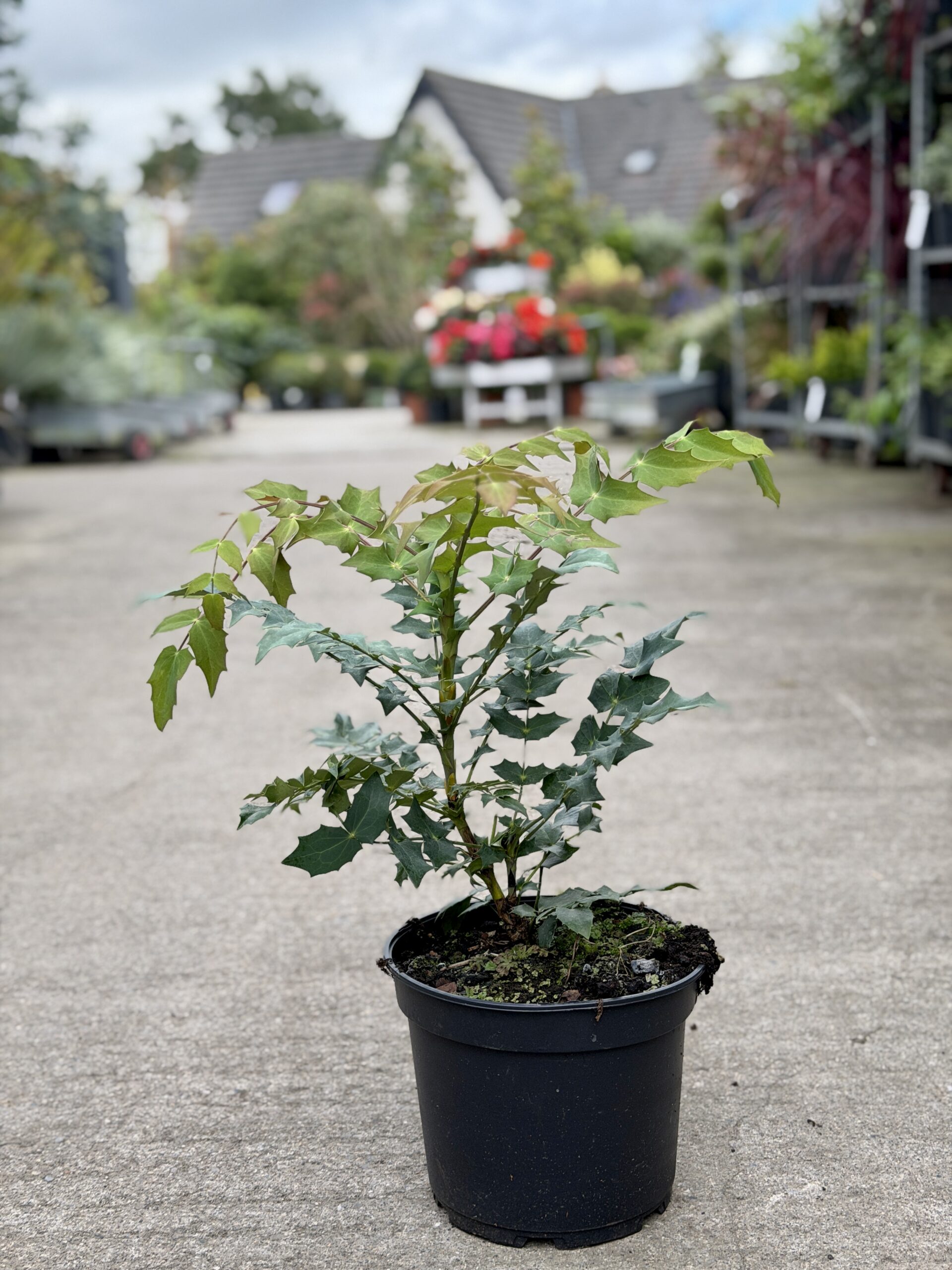
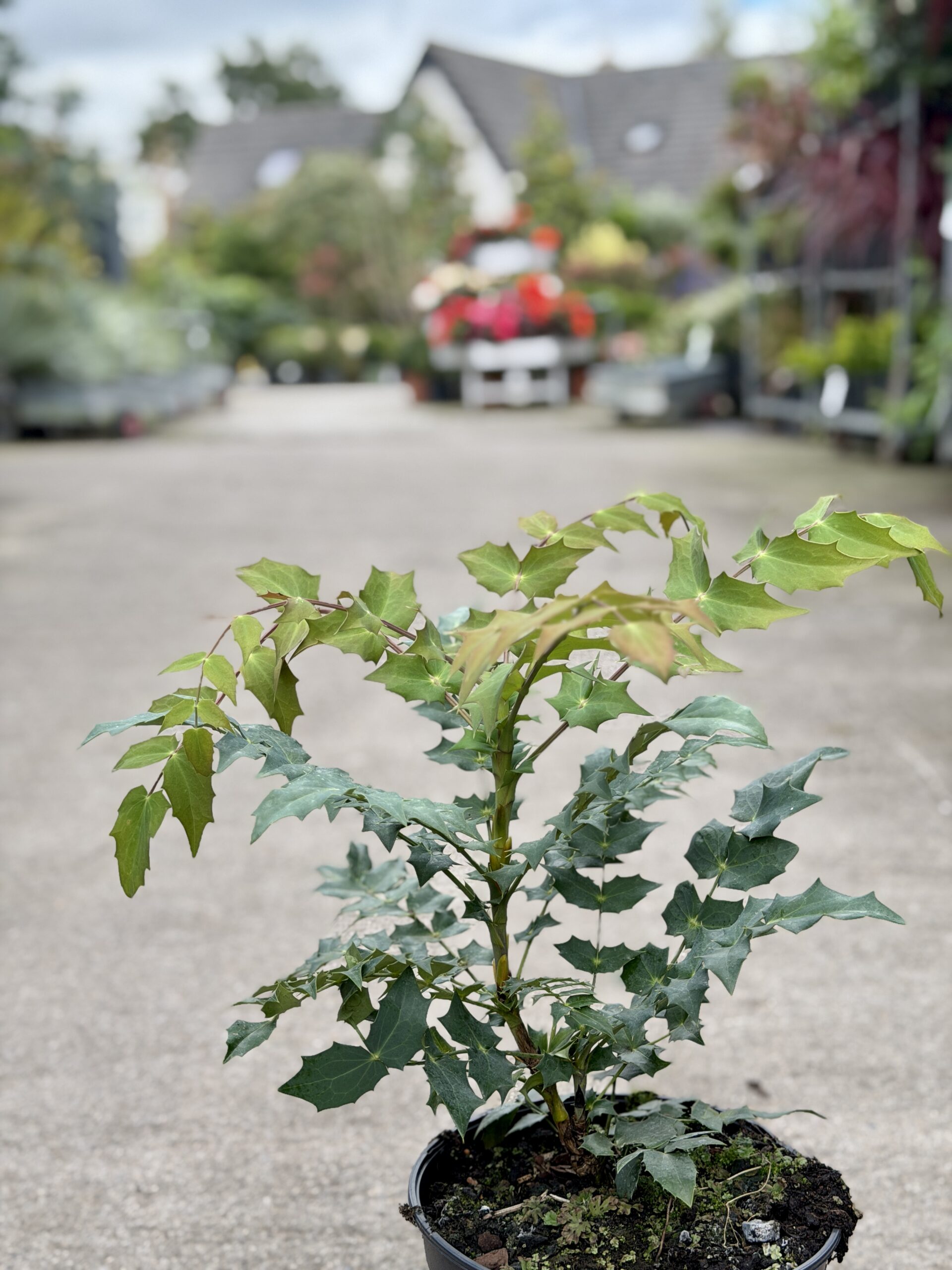
Mahonia × media ‘Winter Sun’
€25.00
Description
Quick Facts
– Botanical Name: Mahonia × media ‘Winter Sun’
– Common Name: Winter Sun Mahonia / Oregon Grape
– Plant Type: Evergreen shrub
– Mature Height: 2–3m
– Mature Spread: 2–2.5m
– Flowering Period: Late autumn through late winter — November to March
– Flower Colour: Long, upright racemes of bright golden-yellow, fragrant flowers — the ‘Winter Sun’ of the common name
– Foliage: Bold, spiky, dark green, holly-like leaves with a purple-bronze tint on new growth and in cold weather
– Fruit: Small dark blue-black berries in spring after flowering, popular with birds
– Habit: Upright, architectural, strong vertical presence
– Aspect: Full sun to deep shade — remarkably tolerant
– Soil: Moist, well-drained, humus-rich; tolerant of most soils including chalk
– Hardiness: Fully hardy in Ireland & the UK
– Awards: RHS Award of Garden Merit (AGM)
– Maintenance: Very low
Description
When the garden is dormant and colour is scarce, Mahonia ‘Winter Sun’ delivers one of the finest shows of the cold months — long, upright arches of bright golden-yellow flowers that open from late autumn and carry through the winter, often until March. The flowers are fragrant too, carrying a soft lily-of-the-valley scent on the crisp winter air, and they glow against the bold, spiky, dark evergreen foliage like sunshine held on the branches. It deserves its name, entirely.
The foliage alone would earn the plant its place: large, architectural, holly-like leaves that are deeply textured and handsome through every season, with a purple-bronze tint on new growth and through cold weather. At 2–3m it is a shrub of genuine structure and vertical presence, useful as a specimen, as part of a shady border, or beneath trees where so little will grow.
Remarkably tolerant — of sun and deep shade alike, of most soils, and of a frosty winter — it asks for very little and gives one of the most valuable winter displays in the garden.
Caragh Garden Notebook
Planting:
Plant in autumn or early spring into moist, well-drained, humus-rich soil. ‘Winter Sun’ is genuinely forgiving of position: it performs well in full sun, partial shade, and deep shade, which makes it one of the few evergreen shrubs that will flower well in the difficult darker corners of a garden, beneath trees, or along a north-facing boundary. It is tolerant of most soils including chalk, provided drainage is reasonable. Choose a position where the winter flowers can be seen and the fragrance appreciated — close to a path, doorway, or window. Water in thoroughly after planting and mulch around the base.
Watering:
Water consistently through the first growing season while the plant establishes. Once settled, ‘Winter Sun’ is reasonably self-sufficient and tolerant of drier conditions, though it performs best with consistent moisture through the growing season. In dry shade beneath trees, supplementary watering during dry spells will support strong growth and flowering. Avoid waterlogged conditions, which the plant dislikes.
Feeding:
An annual mulch of well-rotted leafmould or compost applied around the base in spring feeds gently and improves the soil over time, suiting a shrub that naturally grows in humus-rich woodland conditions. In poorer soils, a balanced slow-release fertiliser in spring will support healthy growth and a generous flower display. The plant is not demanding and performs well with minimal feeding.
Pruning:
‘Winter Sun’ requires very little pruning. After flowering has finished in late winter or early spring, lightly thin or shorten any stems that have become leggy or out of balance, cutting back to a strong side shoot. Avoid heavy pruning unless an older plant needs renovating, in which case it can be cut back hard in spring and will reshoot from the base. Remove any suckers that appear in the ground around the base of the plant.
Pests & Problems:
Generally trouble-free. The most common issue reflects the plant’s preference for shelter rather than a serious pest: in cold, exposed positions, the foliage can be damaged by severe frost or cold, drying winds, though the plant itself recovers. Rust and mildew can occasionally affect the foliage in humid conditions — good air circulation and avoiding overcrowding help prevent it. Otherwise, ‘Winter Sun’ is a dependable, long-lived shrub.
Design Notes:
‘Winter Sun’ is one of the most effective winter-flowering evergreens for adding structure, colour, and scent to the garden at the time it is most needed. Plant it where the golden racemes will be seen against a dark evergreen background, low winter light, or the late snow — the contrast is genuinely beautiful and it glows from a distance. It is superb in a shaded border or beneath deciduous trees, where its dark, architectural foliage provides evergreen structure and its winter flowers bring light to the gloomiest corner; it also works well as a specimen near a path or doorway, where the fragrance will reach you as you pass. Combine it with hellebores, snowdrops, winter heathers, and the pink of winter-flowering cherries for a shaded winter planting of real depth. The purple-bronze tint of the leaves in cold weather adds a further note of colour, and the spring berries bring the birds. Architectural, tolerant, and generous — a true winter sun.
Additional information
| Pot Size |
|---|
Related products
-
Hebe Sutherlandii
€8.50 Select options This product has multiple variants. The options may be chosen on the product page -
Photinia Pink Marble Cones
€145.00 Select options This product has multiple variants. The options may be chosen on the product page -
Viburnum tinus Eve Price
Price range: €15.00 through €295.00 Select options This product has multiple variants. The options may be chosen on the product page -

Juniper Grey Owl
€60.00 Select options This product has multiple variants. The options may be chosen on the product page