

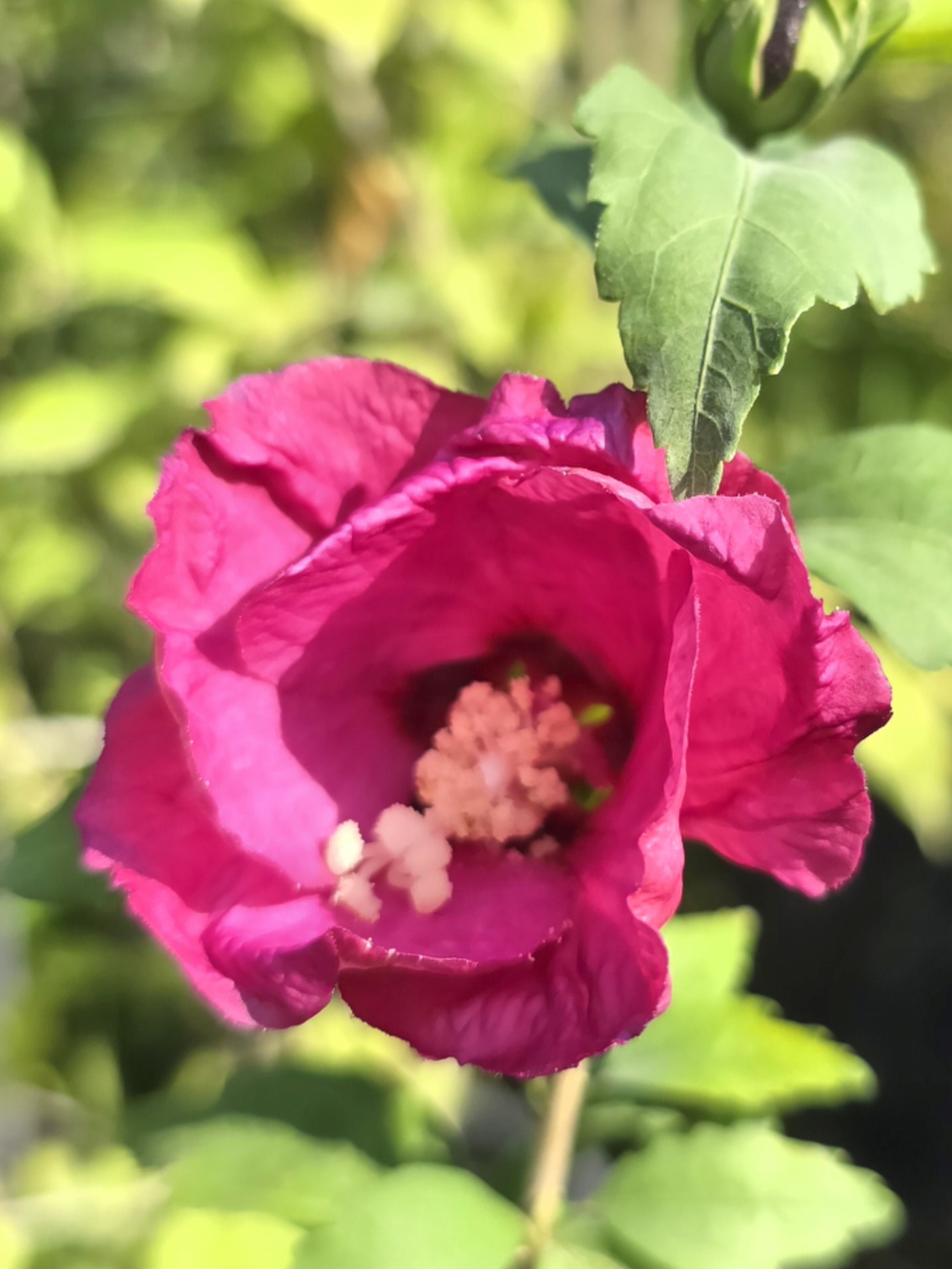
Hibiscus syr. dark pink
€55.00
Frequently Bought Together
Description
Quick Facts
- Botanical Name: Hibiscus syriacus
- Common Name: Rose of Sharon
- Plant Type: Deciduous flowering shrub
- Habit: Upright, bushy
- Height (approx.): 1.5–2.5m (can be kept smaller with pruning)
- Spread (approx.): 1–1.8m
- Flowering: Mid to late summer into early autumn
- Flower Colour: Deep/dark pink with a crisp white eye (often with a darker centre)
- Position: Full sun (best flowering)
- Soil: Fertile, moisture-retentive but free-draining
- Hardiness: Hardy in Ireland and the UK; shelter from cold, drying winds when young
- Best For: Late-season colour, sunny borders, patio pots, pollinator planting, Mediterranean-style schemes
Description
Hibiscus syriacus is one of the best ways to keep the garden flowering when summer starts to soften.
This dark pink form brings real impact: bold, silky blooms in rich pink tones, each one finished with a clean white eye that makes the colour pop from a distance. It flowers generously over weeks, not days — a steady rhythm of fresh blooms that lifts borders, brightens courtyards, and gives late-season planting a second wind.
It’s a brilliant shrub for sunny gardens in Ireland and the UK: exotic-looking, but surprisingly straightforward to grow.
Caragh Garden Notebook
Planting & position
Full sun is essential for strong growth and abundant flowering. A warm, bright border — or a spot near a sunny wall — is ideal.
Full sun is essential for strong growth and abundant flowering. A warm, bright border — or a spot near a sunny wall — is ideal.
Soil
Hibiscus syriacus likes soil that holds some moisture but drains freely. Improve poor soil with compost at planting time, and avoid very wet, heavy ground in winter.
Hibiscus syriacus likes soil that holds some moisture but drains freely. Improve poor soil with compost at planting time, and avoid very wet, heavy ground in winter.
Watering
- Water regularly in the first season while it establishes.
- Once settled, it’s fairly resilient, but it will flower best if it doesn’t dry out completely during prolonged warm spells (especially in pots).
Feeding
A spring mulch of compost and a light feed in early summer will support strong growth and better flowering.
A spring mulch of compost and a light feed in early summer will support strong growth and better flowering.
Pruning (simple and rewarding)
Hibiscus syriacus flowers on new growth, so pruning helps.
Hibiscus syriacus flowers on new growth, so pruning helps.
- Prune in late winter/early spring to shape and encourage fresh flowering shoots.
- Remove dead, weak, or crossing stems and keep the centre open for airflow.
Winter care
Hardy once established, but young plants appreciate shelter from harsh winds. A mulch around the base helps protect roots and conserve moisture.
Hardy once established, but young plants appreciate shelter from harsh winds. A mulch around the base helps protect roots and conserve moisture.
Design notes
- Gorgeous with lavender, salvias, grasses, agapanthus, and other sun-lovers
- Excellent in a large pot as a late-summer focal point
- Lovely near seating areas — it keeps giving when other shrubs are finished
Related products
-
Thymus vulgaris ‘silverqueen’
Price range: €9.50 through €12.50 Select options This product has multiple variants. The options may be chosen on the product page -

Lythrum salicaria ‘blush’
€8.50 Select options This product has multiple variants. The options may be chosen on the product page -

Enkianthus campanulatus Specimen
€900.00 Select options This product has multiple variants. The options may be chosen on the product page -

Cladrastis ‘kentukea’ specimen multistem
€470.00 Select options This product has multiple variants. The options may be chosen on the product page