

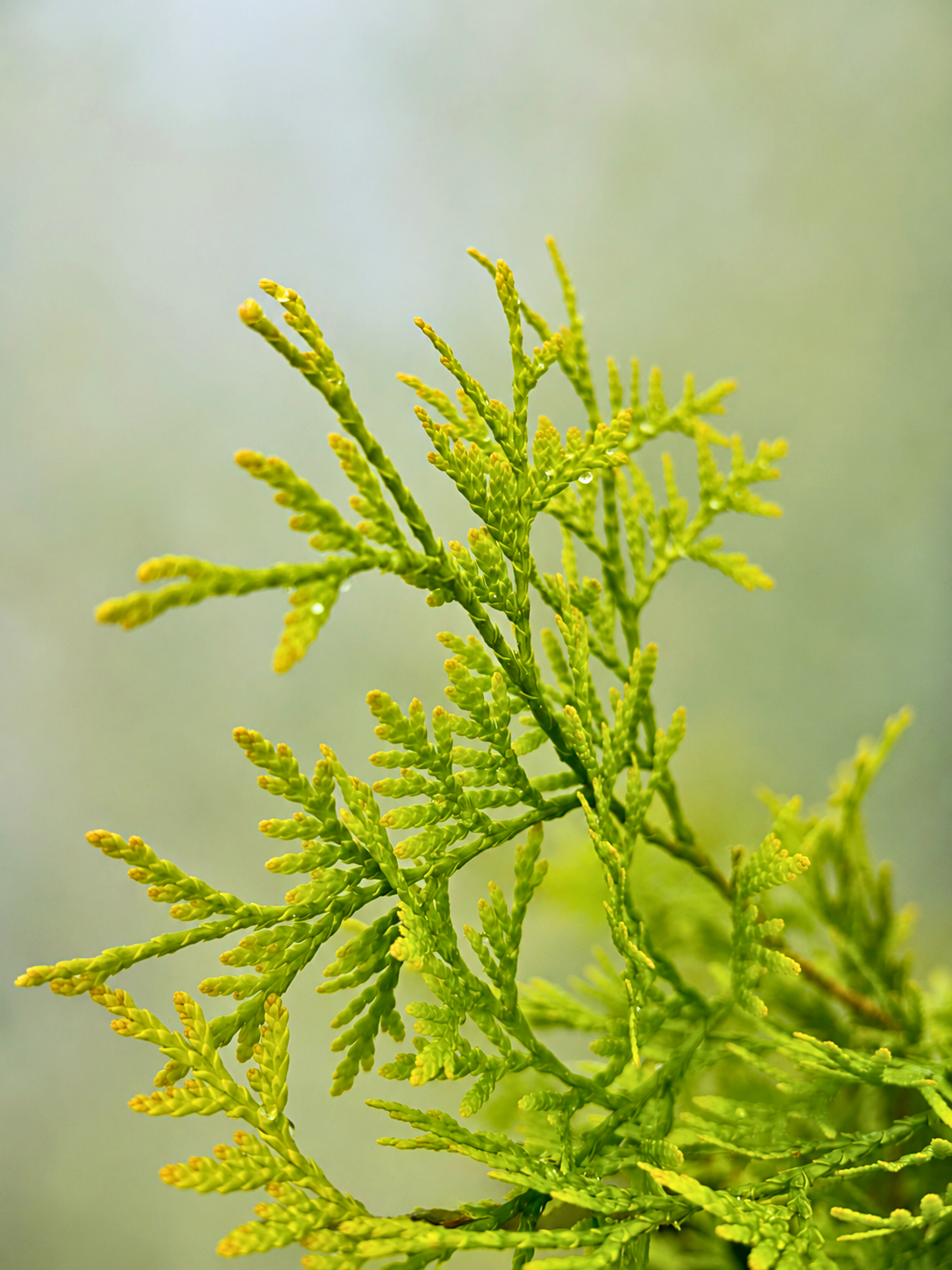
Thuja occidentalis ‘Golden Globe’
€9.50
Description
Quick Facts
– Botanical Name: Thuja occidentalis ‘Golden Globe’
– Common Name: Golden Globe Arborvitae / Northern White Cedar
– Plant Type: Dwarf evergreen conifer
– Mature Height: 60–90cm
– Mature Spread: 60–90cm
– Growth Rate: Slow — typically 5–10cm per year
– Foliage Colour: Bright golden-yellow on new growth, maturing to soft warm yellow-green; holds colour well through the seasons
– Habit: Naturally rounded, globe-shaped mound — formal without any clipping
– Aspect: Full sun to partial shade; best colour in a sunny position
– Soil: Moist, well-drained; tolerant of most soil types including clay
– Hardiness: Very hardy in Ireland & the UK
– Maintenance: Very low
Description
Thuja occidentalis ‘Golden Globe’ is one of the most charming and accommodating conifers available — a naturally rounded, globe-shaped mound of bright golden-yellow foliage that holds its colour and its shape beautifully through every month of the year. Where ‘Yellow Ribbon’ reaches upward as a narrow column, ‘Golden Globe’ stays low and rounded, forming a soft, considered sphere that brings warmth and structure to the garden without ever demanding space or attention.
The colour is the thing that sets it apart. Fresh, vivid gold on the new growth in spring, settling to a warm yellow-green through summer and holding that richness reliably through the colder months when the garden needs a lift. Unlike many golden conifers, it keeps its colour well without scorching in sun or fading in shade, and its naturally tight, globular habit means it holds its shape cleanly without any clipping — a rare and genuinely useful quality in a small evergreen.
Slow-growing, compact, and entirely self-managing — this is the conifer for the gardener who wants year-round structure and colour in a small space without the work.
Caragh Garden Notebook
Planting:
Plant in autumn or early spring into moist, well-drained soil. ‘Golden Globe’ is tolerant of most reasonable garden soils including heavier clay, provided drainage is reasonable and waterlogging is avoided. A position in full sun gives the brightest, most sustained golden colouring; partial shade is tolerated but the yellow will soften to a more muted yellow-green in shadier conditions. The compact, rounded habit makes it particularly well suited to positions where space is limited — at the front of a border, in a rockery, or in a container where its form can be properly appreciated. Water in thoroughly after planting and mulch around the base with composted bark to retain moisture and suppress competition.
Watering:
Water consistently through the first two growing seasons while the root system establishes. Once settled, ‘Golden Globe’ is reasonably self-sufficient and tolerant of drier conditions, though it performs best with reliable moisture through the growing season. In prolonged dry spells, a thorough watering will maintain the freshness and vibrancy of the golden foliage. In containers, check moisture levels regularly through summer and water thoroughly when the top few centimetres of compost feel dry — container-grown conifers dry out more quickly than those in the ground, particularly in warm or windy weather.
Feeding:
A balanced slow-release fertiliser applied in spring for the first few years supports establishment and encourages strong, healthy growth. Once established, an annual mulch of composted bark around the base in spring is usually sufficient. In containers, feed monthly through the growing season with a balanced liquid fertiliser. Avoid high-nitrogen feeds, which push soft, lush growth at the expense of the dense, rounded form and can dilute the intensity of the golden colouring.
Pruning:
‘Golden Globe’ requires no pruning to maintain its naturally neat, rounded habit — one of its greatest assets. The globe form is self-forming and will hold its shape cleanly without any intervention. If any shaping is ever desired, a light trim in late summer is the best moment, using sharp shears and avoiding cutting into old wood. Remove any reverted green shoots immediately if they appear, as these can be more vigorous than the golden growth and will eventually dominate if left unchecked.
Pests & Problems:
Generally very trouble-free. Scale insects and conifer aphids can occasionally appear — monitor in spring and treat with a horticultural oil or suitable insecticide if needed. As with all Thuja, good drainage is essential; waterlogged soils are the most common cause of poor performance. In containers, ensure the pot has generous drainage and use a free-draining compost mix to prevent the roots sitting wet through winter.
Design Notes:
The compact, rounded form of ‘Golden Globe’ makes it one of the most versatile small conifers available — it provides genuine evergreen structure and year-round colour at a scale that works in almost any garden. Use it as a low, repeated accent along the front of a border, where the rounded globes create a calm, rhythmic structure that ties taller planting together; plant a single specimen in a choice container on a terrace or doorstep for a piece of considered, year-round presence; or use it in a rockery or gravel garden alongside low-growing perennials and grasses where its form and colour provide a permanent anchor among more seasonal planting. The golden colour reads beautifully against darker evergreens, purple foliage, and blue conifers — plant alongside Thuja occidentalis ‘Yellow Ribbon’ for a Thuja pairing of contrasting form (the upright column and the low globe) with a matching golden colour, or combine with purple-leaved heucheras and blue festuca in a container for a colour combination that works through every season. Particularly useful for bringing light and warmth into a winter garden — position it where the low winter sun can catch the gold and it earns its place all over again.
Additional information
| Size | 2L 30-50cm |
|---|
Related products
-

Cupressus Castlewellan Gold / Castlewellan Gold Cypress Pom poms
Price range: €300.00 through €500.00 Select options This product has multiple variants. The options may be chosen on the product page -

Abies nordmanniana Bonsai
€2,800.00 Select options This product has multiple variants. The options may be chosen on the product page -
Cupressocyparis leylandii Castlewellan Gold Spirals
Price range: €130.00 through €470.00 Select options This product has multiple variants. The options may be chosen on the product page -

Cedrus atlantica Glauca Pendula / Blue Weeping Cedars
€180.00 Select options This product has multiple variants. The options may be chosen on the product page