

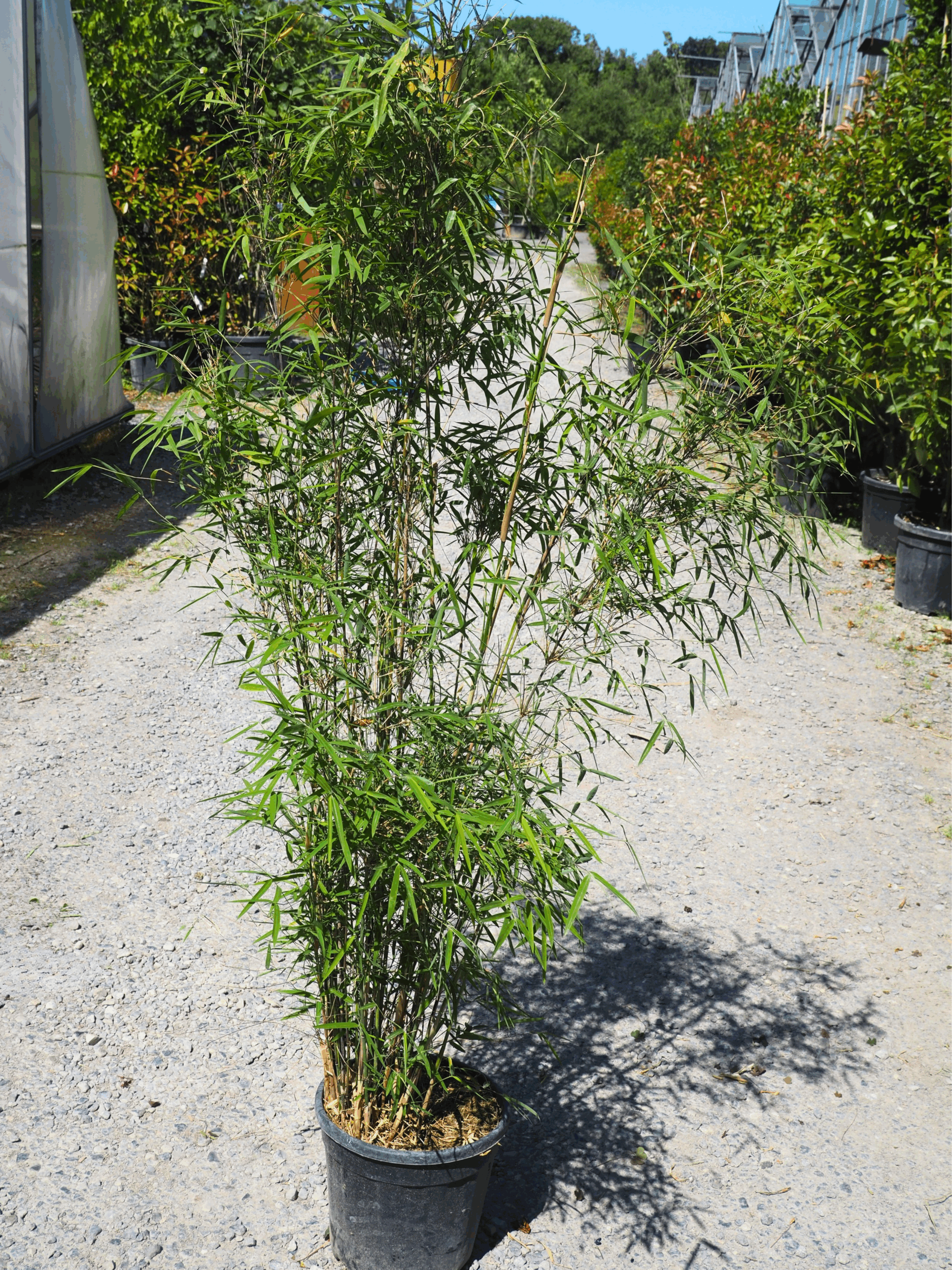
Fargesia Angustissima – Fountain Bamboo
€75.00
Description
There’s something quietly extraordinary about a bamboo that stays exactly where you put it. Fargesia angustissima — the Fountain Bamboo — is the elegant, well-behaved answer to every garden that has ever hesitated at the word ‘bamboo’. Clump-forming and completely non-invasive, it arches gracefully outward in soft cascading tiers of narrow, lance-shaped leaves, rustling gently with every breeze. It doesn’t rush, it doesn’t spread — it simply grows, season after season, into something genuinely beautiful.
This specimen is already well-established and ready to make its mark, whether that’s softening a fence line, anchoring a contemporary border, or standing alone as a living sculpture on a terrace or courtyard.
Quick Facts:
Common Name: Fountain Bamboo
Botanical Name: Fargesia angustissima
Type: Evergreen, clump-forming bamboo
Mature Height: 3–4m
Mature Spread: 1–1.5m
Growth Rate: Moderate
Sun: Full sun to partial shade
Soil: Moist, well-drained; tolerates most soils
Hardiness: Hardy (RHS H5, to -20°C)
Non-invasive: Yes — clump-forming only
Wildlife Value: Shelter for birds and beneficial insects
Caragh Garden Notebook
Planting: Best planted in spring or autumn. Dig a hole twice the width of the root ball and enrich with compost. Fargesia angustissima is adaptable but thrives in a sheltered position where wind won’t scorch the delicate leaves. Excellent in containers with a loam-based compost (John Innes No. 3).
Watering: Keep well-watered in the first season while establishing. Once settled, it’s remarkably tolerant — but don’t let container-grown plants dry out in summer heat.
Feeding: A balanced slow-release fertiliser in spring encourages lush, vigorous growth. Avoid high-nitrogen feeds which can produce soft, floppy canes.
Pruning & Care: Very little needed. Remove old or yellowing canes at the base in spring to keep the clump looking fresh and open. Thinning older growth every few years encourages new, upright canes.
Design Notes: Stunning planted in multiples along a boundary for a natural privacy screen. Equally beautiful as a solo specimen in a large glazed pot — the arching habit means it rewards height and space around it. Pairs beautifully with grasses, Japanese maples, and architectural stone features. A natural companion in contemporary, Japanese-inspired, and woodland-edge planting schemes.
Winter: Fully hardy and evergreen. In exposed gardens, a fleece wrap in the first winter will protect newly planted specimens while they settle in
Additional information
| Size | 9L |
|---|
Related products
-
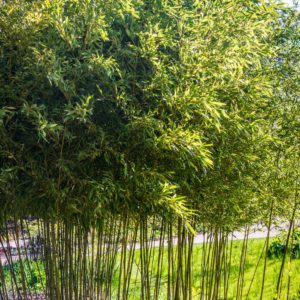
Phyllostachys Sulphurea Viridis
€225.00 Select options This product has multiple variants. The options may be chosen on the product page -

Fargesia Rufa / Bamboo
€75.00 Select options This product has multiple variants. The options may be chosen on the product page -
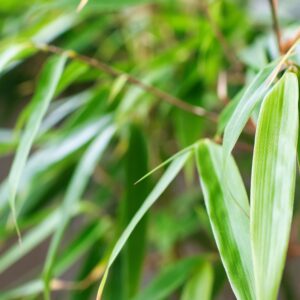
Fargesia Asian Wonder
€125.00 Select options This product has multiple variants. The options may be chosen on the product page -
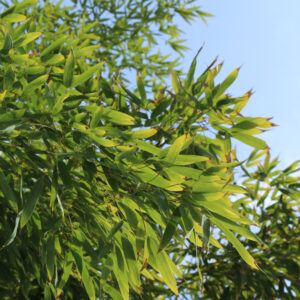
Bamboo Phyllostachys viridiglaucescens
€450.00 Select options This product has multiple variants. The options may be chosen on the product page