

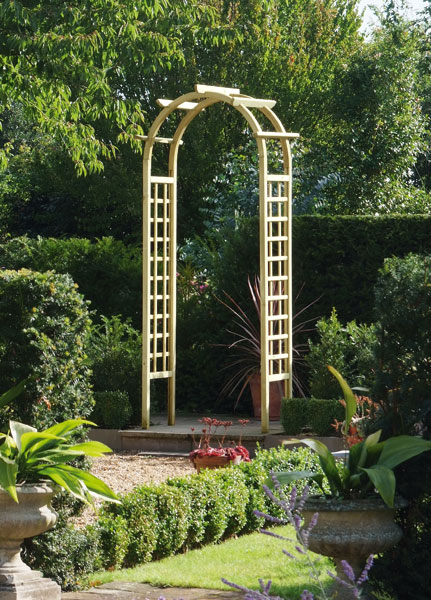
Rose Arch
€145.00
Frequently Bought Together

Description
Quick Facts
Product Name: Rose Arch
Material: Pressure-treated timber
Structure Type: Freestanding garden arch with curved top
Dimensions: 100cm wide × 40cm deep × 280cm high
Side Panels: Diamond lattice pattern (70mm apertures)
Frame: Planed timber construction
Top Design: Classic curved arch
Finish: Natural pressure-treated timber (can be painted or stained)
Durability: Pressure-treated for long-lasting outdoor use
Assembly: Flat-pack for easy transport; straightforward assembly required
Fixings: Ground spikes or concreting recommended (fixings not included)
Material: Pressure-treated timber
Structure Type: Freestanding garden arch with curved top
Dimensions: 100cm wide × 40cm deep × 280cm high
Side Panels: Diamond lattice pattern (70mm apertures)
Frame: Planed timber construction
Top Design: Classic curved arch
Finish: Natural pressure-treated timber (can be painted or stained)
Durability: Pressure-treated for long-lasting outdoor use
Assembly: Flat-pack for easy transport; straightforward assembly required
Fixings: Ground spikes or concreting recommended (fixings not included)
Description
The Rose Arch is built for smaller gardens and narrower spaces where you still want height, structure, and that classic arch profile. At 280cm tall, it’s the tallest in the range—perfect for vigorous climbers that want to grow upward—but the 100cm width and 40cm depth keep the footprint compact.
The curved top gives it that traditional, romantic look that suits cottage gardens and classic planting schemes beautifully. The diamond lattice side panels offer practical support with 70mm apertures that climbers grip easily, while the slimmer profile means it doesn’t dominate smaller spaces or narrow pathways.
At 40cm deep, it’s designed for single-sided planting or lighter climbers—roses, clematis, honeysuckle—rather than the heavy, vigorous varieties that need more depth. The narrower width (100cm) makes it ideal for paths, side passages, or anywhere space is tight but you still want that vertical interest and sense of arrival.
The pressure-treated timber weathers to a soft silver-grey if left natural, or takes paint and stain well if you want it to stand out. This is an arch that brings height and elegance without taking up much ground space—perfect for making the most of what you’ve got.
Caragh Garden Notebook
Installation
Site Selection:
Choose a location where the arch will frame a view or mark a transition—ideal for narrow paths, side passages, or smaller garden areas where a wider arch would overwhelm. The 280cm height makes it particularly good for vertical planting in confined spaces. Avoid very exposed, windy sites; the tall, narrow profile can catch the wind, especially when covered in climbers.
Choose a location where the arch will frame a view or mark a transition—ideal for narrow paths, side passages, or smaller garden areas where a wider arch would overwhelm. The 280cm height makes it particularly good for vertical planting in confined spaces. Avoid very exposed, windy sites; the tall, narrow profile can catch the wind, especially when covered in climbers.
Ground Preparation:
Option 1: Ground Spikes (Quick Installation)
- Use heavy-duty metal ground spikes (minimum 60cm long)
- Mark out the four corner positions accurately (100cm × 40cm rectangle)
- Drive spikes into firm, level ground using a sledgehammer and protective block
- Check level and alignment before inserting arch posts
- Best for lawns or firm soil
Option 2: Concrete Footings (Most Secure)
- Dig four holes at each corner: 30cm × 30cm × 60cm deep
- Add 10cm of compacted hardcore or gravel for drainage
- Position the arch posts, checking they’re level and square
- Use temporary bracing to hold the arch upright
- Fill with postcrete or concrete, tamping down to remove air pockets
- Allow 48–72 hours to cure before planting climbers
- Recommended for exposed sites or taller climbers
Assembly Tips:
- Assemble on a flat surface first to check all parts fit
- Use galvanised screws throughout; pre-drill all holes to prevent splitting
- Have a second person help—the height makes positioning easier with assistance
- Check level in both directions before securing permanently
Positioning for Paths:
The internal clearance (approximately 85cm wide × 35cm deep) is suitable for pedestrian access but tight for wheelbarrows or equipment. Allow an extra 10cm on each side once climbers are established.
The internal clearance (approximately 85cm wide × 35cm deep) is suitable for pedestrian access but tight for wheelbarrows or equipment. Allow an extra 10cm on each side once climbers are established.
Maintenance
Initial Treatment:
- Allow timber to weather for 6–12 months before painting or staining
- Clean with a stiff brush; apply exterior-grade timber preservative, oil, or stain
- Pay attention to cut ends and joints where water collects
Annual Maintenance:
- Spring: Inspect and tighten all fixings
- Treatment: Apply fresh preservative, oil, or stain annually
- Cleaning: Remove debris from joints and the curved top
- Ground contact: Ensure posts aren’t sitting in waterlogged soil or mulch
Climber Management:
- Trim back growth annually to prevent the arch becoming top-heavy
- Check ties regularly; replace any cutting into stems
- Remove dead growth to maintain airflow and reduce weight
Longevity:
With proper installation and annual treatment, expect many years of service.
With proper installation and annual treatment, expect many years of service.
Planting & Training Climbers
Best Climbers for the Rose Arch:
The tall, narrow profile suits climbers that grow upward rather than outward. The 40cm depth is best for single-sided planting or lighter varieties.
Ideal Choices:
-
Climbing Roses: ‘New Dawn’ (soft pink, repeat-flowering), ‘Compassion’ (apricot-pink, scented), ‘Gertrude Jekyll’ (deep pink, fragrant). Plant one rose per side; tie in regularly as it grows upward.
-
Clematis: ‘Jackmanii’ (deep purple), ‘Nelly Moser’ (pink striped), ‘Henryi’ (white). Weaves beautifully through lattice; prefers roots shaded, tops in sun.
-
Honeysuckle (Lonicera): ‘Serotina’ (purple-red, scented), ‘Graham Thomas’ (yellow). Fast-growing, fragrant, excellent for quick coverage.
-
Jasmine: Star jasmine (evergreen, white, scented) or common jasmine (deciduous, summer scent). Both suit the narrower profile well.
Annual Climbers:
- Sweet peas, morning glory, black-eyed Susan, nasturtiums—perfect for seasonal colour without overwhelming the structure.
Planting Tips:
- Plant 30–40cm from posts; angle toward the arch
- Dig generous holes; mix in compost for good establishment
- Water regularly in the first year
- Mulch around the base (5–7cm layer), keeping clear of stems
- Feed in early spring with balanced fertiliser or rose feed
Training Tips:
- Tie in young growth with soft garden twine
- Train stems upward and across the curved top for coverage
- Prune according to climber type
- With the narrow depth, focus on vertical growth rather than layering front-to-back
Planting Combinations:
- One climbing rose plus one clematis (same or different flowering times)
- Honeysuckle and jasmine for extended fragrance
- Single statement climber for simplicity and maximum height
Design Ideas
Narrow Paths & Side Passages:
Perfect for tight spaces where you want height and structure without blocking the path. The 100cm width fits comfortably in most side gardens or narrow borders.
Perfect for tight spaces where you want height and structure without blocking the path. The 100cm width fits comfortably in most side gardens or narrow borders.
Vertical Interest in Small Gardens:
Use the 280cm height to draw the eye upward in compact spaces. Adds drama and structure without taking up valuable ground space.
Use the 280cm height to draw the eye upward in compact spaces. Adds drama and structure without taking up valuable ground space.
Framing Small Views:
Position to frame a focal point—a bench, a small sculpture, or a particularly nice plant grouping. The curved top creates a soft, romantic frame.
Position to frame a focal point—a bench, a small sculpture, or a particularly nice plant grouping. The curved top creates a soft, romantic frame.
Path Marker:
Place at the entrance to a path or garden area to signal a transition. The tall profile makes it visible from a distance.
Place at the entrance to a path or garden area to signal a transition. The tall profile makes it visible from a distance.
Pair with Low Planting:
Flank with low perennials (lavender, catmint, hardy geraniums) to anchor the arch and create a balanced composition.
Flank with low perennials (lavender, catmint, hardy geraniums) to anchor the arch and create a balanced composition.
Colour & Finish:
- Natural timber: Weathers to silver-grey; quiet and unobtrusive
- White or pale grey: Classic cottage garden look
- Dark stain (charcoal, black): Modern, makes flowers stand out
- Soft green or blue-grey: Blends into planting
Additional information
| Size | 100cm wide × 40cm deep × 280cm high |
|---|
Related products
-
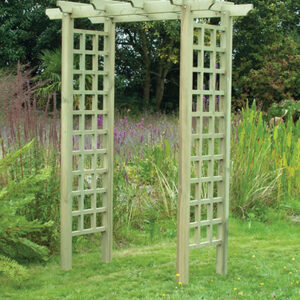
Flat Top Garden Arch
€348.00 Add to cart -
Heavy Diamond Lattice Trellis Panels
Price range: €30.00 through €110.00 Select options This product has multiple variants. The options may be chosen on the product page -
Planed Square Trellis
Price range: €14.00 through €38.00 Select options This product has multiple variants. The options may be chosen on the product page -
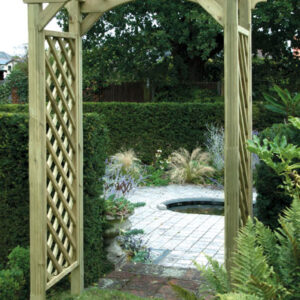
Lattice Garden Arch
€265.00 Select options This product has multiple variants. The options may be chosen on the product page