

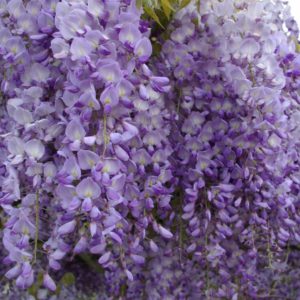
Wisteria sinensis ‘Amethyst’
Price range: €45.00 through €55.00
Frequently Bought Together

Description
Quick Facts
– Botanical Name: Wisteria sinensis ‘Amethyst’ (syn. ‘Caroline’)
– Common Name: Chinese Wisteria ‘Amethyst’
– Plant Type: Deciduous climber
– Mature Height: 7–8m
– Stem Habit: Anticlockwise twining
– Flowering Period: Late spring to early summer (May–June)
– Flower Colour: Rich violet-blue with a distinctive red-purple flush — produced in dense hanging racemes of 25–30cm
– Fragrance: Powerfully and intoxicatingly fragrant
– Foliage Colour: Fresh mid-green, pinnate leaves; clear yellow in autumn
– Hardiness: Fully hardy
– Soil Requirements: Moist, well-drained, moderately fertile
– Aspect: Full sun to partial shade — flowers best in full sun
– Support Required: Yes — robust trellis, pergola, wall wires, or sturdy structure essential
– Maintenance: Moderate — prune twice yearly for best flowering
Description
There are few more breathtaking sights in the late spring garden than a Wisteria in full flower — and ‘Amethyst’ is among the finest of them. Long, dense racemes of rich violet-blue blooms, flushed with a deep red-purple at the base, cascade in abundance from the vigorous twining stems in late spring, filling the air with a fragrance that is powerful, sweet, and genuinely unforgettable. Each raceme reaches 25–30cm in length, and when the plant is well established and in full flush, the display is nothing short of spectacular.
A robust and vigorous grower, ‘Amethyst’ will reach 7–8m given the right support, making it an outstanding choice for covering a pergola, dressing a large wall, or framing a house front with a generous curtain of colour and scent each May. Bees adore it. After flowering, attractive bean-like seed pods follow on, adding a further point of interest through summer and into autumn.
This is a plant that asks for patience in its early years and repays it with decades of extraordinary beauty.
Caragh Garden Notebook
Planting:
Plant in spring or autumn in moist, well-drained, moderately fertile soil. Full sun gives the best and most generous flowering display — a warm, south or west-facing wall is ideal and provides the heat that encourages the plant to bloom freely. Ensure a robust support structure is firmly in place before planting; Wisteria grows vigorously and becomes heavy over time, and a trellis or support system that feels adequate for a young plant may not be sufficient for an established one.
Watering:
Water well after planting and consistently through the first two to three growing seasons. Once established, Wisteria is relatively drought tolerant, though a deep water during prolonged dry spells in summer will support healthy growth and help set the flower buds for the following season.
Feeding:
Feed with a low-nitrogen, high-potassium fertiliser in spring — a tomato feed works well. Avoid high-nitrogen feeds, which push vigorous leafy growth at the expense of flowering. A generous mulch of well-rotted compost around the base in spring helps retain moisture and supports the root system.
Pruning:
Pruning twice a year is the key to a generous, well-managed flowering display. In late summer (July–August), cut back all the long, whippy new shoots to five or six leaves from the main framework. In winter (January–February), cut those same shoots back again to two or three buds. This two-stage pruning builds up the flowering spurs close to the main stems and is the single most important thing you can do to encourage a spectacular spring display.
Training:
Guide the anticlockwise twining stems carefully along wires or trellis as they grow, tying in where needed to build the framework you want. In the early years, prioritise establishing the main structural stems before allowing the plant to flower — a well-trained framework in the first three to four years results in a far more impressive and manageable plant for decades to come.
Pests & Problems:
Generally robust and trouble-free. Failure to flower is the most common complaint and is almost always caused by one of three things: insufficient sun, over-feeding with nitrogen, or inadequate pruning. Address all three and flowering will follow. Wisteria can occasionally be affected by scale insects or leafhoppers — treat with a suitable contact insecticide if needed. Seed pods and all parts of the plant are toxic if ingested — worth noting in gardens used by young children.
Design Notes:
Wisteria sinensis ‘Amethyst’ is one of the great statement climbers — a plant with genuine drama and presence that transforms whatever it grows on. Train it across a pergola or garden arch for an immersive tunnel of fragrant violet-blue in May; dress a large house wall or gable end for a display that stops passers-by in their tracks; or train along horizontal wall wires to create a structured, elegant curtain of flowers above a seating area. Underplant with Allium, Iris, and Salvia to complement the violet-blue tones and extend the season of interest. Give it space, give it sun, and give it a strong structure — and ‘Amethyst’ will reward you with one of the most magnificent flowering displays a garden can offer.
Propagation:
Take softwood cuttings in early summer or layer long stems in autumn. Named cultivars do not come reliably true from seed — always source named grafted or cutting-grown plants to ensure flowering characteristics are preserved.
Additional information
| Pot Size | 50L 400-450cm, 5L 200-250cm, 7L 200-250cm, 3L 150-200cm, 5L 100-150cm |
|---|
Related products
-
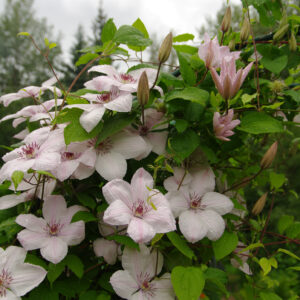
Clematis ‘Jan Pawel II’
€20.00 Select options This product has multiple variants. The options may be chosen on the product page -
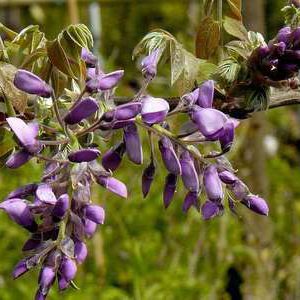
Wisteria brachybotrys Yokohama Fuji – 1/2 Standard
€270.00 Select options This product has multiple variants. The options may be chosen on the product page -
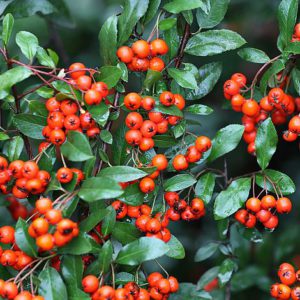
Pyracantha ‘Orange Glow’ / orange Firethorn
€20.00 Select options This product has multiple variants. The options may be chosen on the product page -
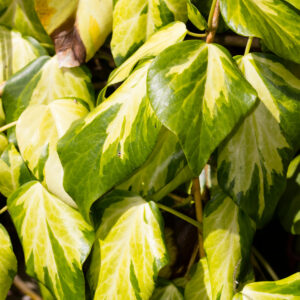
Hedera colchica ‘sulphur heart’
€20.00 Select options This product has multiple variants. The options may be chosen on the product page