
Creating Privacy with the use of a well placed tree or a row of specimen espaliered frames is what we do best. We have so many options to block unsightly views or resolving privacy issues that we can supply, deliver and plant too should you need us to. Mature trees, espalier trees and evergreen trees are all ideal for screening naturally. Well placed specimen trees can disguise an unsightly view or block a window in a neighbours house.
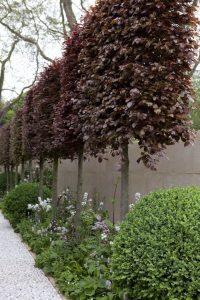
Position such trees well and they will make an ideal focal point, that they can be enjoyed now and for future generations, we can always assist you with the best options at the right size to give you the privacy & screening that you require.
Screening trees often have a clear stem to reach up to fence panel height of around 1.8-2m with a full head above. This type of screening is particularly useful if you are overlooked by neighbouring properties, would like to draw the eye towards a specific feature, or would like to retain an attractive wall or meet a hedge so as not to feel too enclosed. We can also supply feathered trees that have full growth from the ground upwards and offer the same screening ability.
- Best all‑round evergreen screen: Magnolia grandiflora (Evergreen Magnolia) — dense, glossy foliage and year‑round privacy.
- Best fast, dense screen (larger spaces): Prunus laurocerasus (Cherry Laurel) — quick coverage and very effective.
- Best formal / long‑term privacy hedge-tree: Taxus baccata (English Yew) — slowish, but unbeatable structure and longevity.
- Best “holds leaves” deciduous option: Fagus sylvatica (Beech) or Carpinus betulus (Hornbeam) — great for clipped screens; many leaves stay on through winter.
- Best for coastal/exposed gardens: Elaeagnus × ebbingei — tough, wind tolerant, evergreen screening.
- Best narrow / architectural screening: Espalier/pleached frames (where space is tight but you want height).
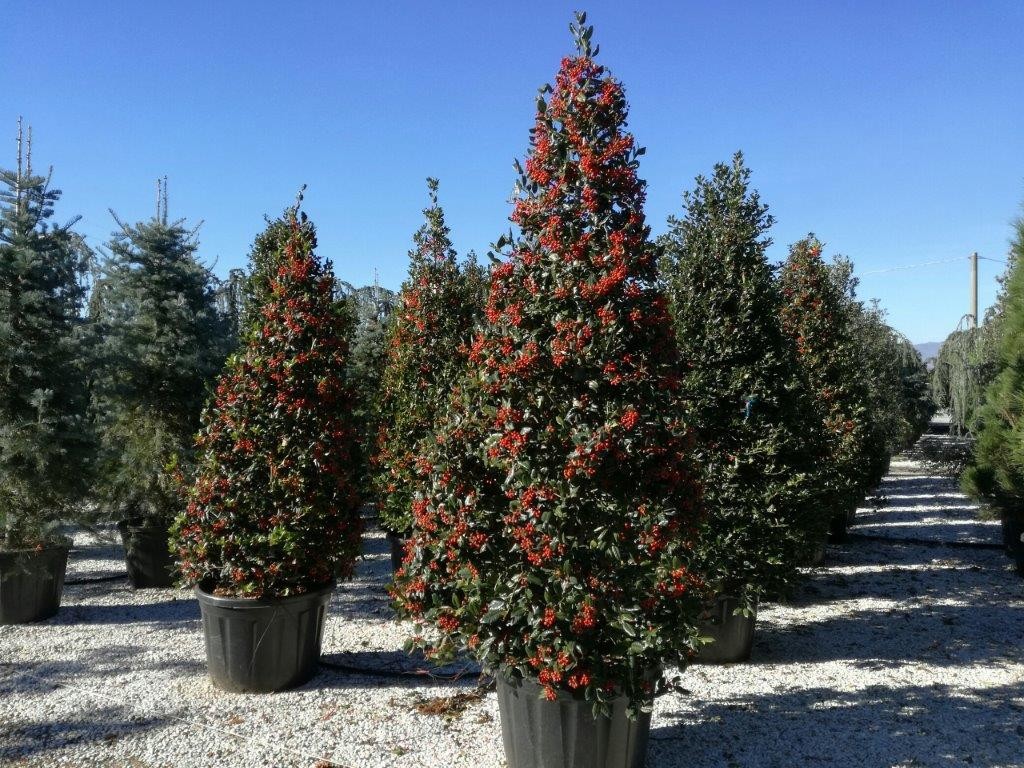
Generally, evergreens are preferred for this purpose and can be planted densely to achieve maximum effect, however, planting a selection of trees, if space allows, can provide rich contrast and seasonal interest.
We can supply a range of quality trees for privacy and screening
Here is out Top 10
- Magnolia grandiflora (Evergreen Magnolia)
- Prunus laurocerasus (Cherry Laurel)
- Quercus ilex (Evergreen Oak)
- Taxus baccata (English Yew)
- Thuja occidentalis (White Cedar)
- Fagus sylvatica (Beech Green or Purple)
- Carpinus betulus (Hornbeam)
- Ilex Aquafolium (Holly)
- Quercus Suber (Cork Oak)
- Eleagnus ebbegei
For more information or to book a consultancy visit then contact us in the usual ways
Spacing & planting tips
Spacing depends on the tree’s mature width and whether you’re planting a row or feature specimens.
- For a row of screening trees: as a general guide, plant 1.2–2.5m apart depending on the variety and the size you’re buying.
- For instant impact: choose larger, more mature trees and allow enough room for the crown to develop—crowding can reduce density over time.
- Clear stem screens: place trees so the head begins above fence height, letting light into the garden while still blocking overlooking windows.
- Feathered screens: ideal where you need privacy from ground level—great along boundaries.
- Planting basics that matter: good staking, watering in year one, and mulch to conserve moisture (especially in spring/summer planting).
If you want, tell me the typical sizes you sell for these (e.g., 2.5–3m, 3–4m, 4–5m) and I’ll tighten the spacing guidance to match your stock.
Delivery / planting / consultation CTA (paste at the end)
Need privacy quickly? We can help.
If you’re not sure which tree (or size) will give you the best screening without making the garden feel enclosed, we can advise on the right options for your space. We can supply, deliver and plant mature trees and screening rows, and we also offer consultations to help you plan the best layout for long-term privacy.
If you’re not sure which tree (or size) will give you the best screening without making the garden feel enclosed, we can advise on the right options for your space. We can supply, deliver and plant mature trees and screening rows, and we also offer consultations to help you plan the best layout for long-term privacy.
Get in touch: info@caraghnurseries.ie | 045 879170 | WhatsApp 087 112 9808
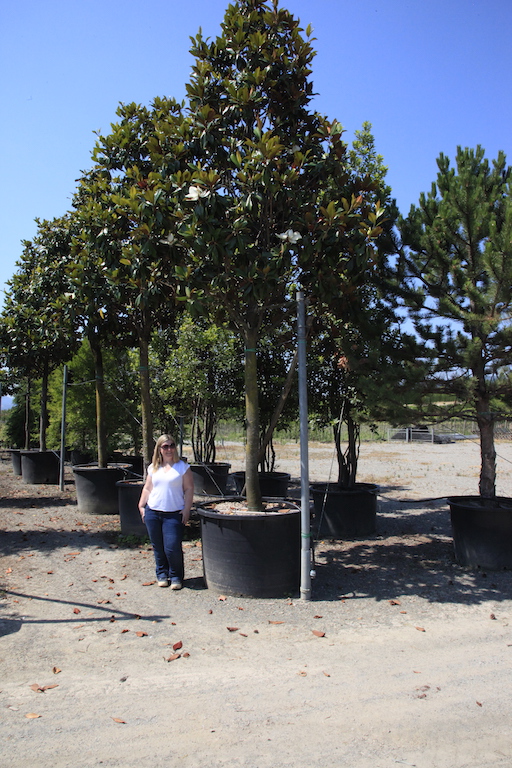 A stunning mature Evergreen Magnolia on the nursery
What makes a good screening tree?
A great screening tree does three jobs: blocks the view, suits the space, and stays attractive year-round.
- Evergreen vs deciduous: Evergreens give consistent privacy. Beech/hornbeam are brilliant if you like a softer, seasonal look and want something that can be clipped into a neat screen.
- Density of canopy: Look for trees that naturally form a thick head (or can be clipped) so you’re not waiting years for coverage.
- Clear stem vs feathered:
- Clear stem trees are ideal when you want privacy above fence height (around 1.8–2m) without closing in the garden at ground level.
- Feathered trees give screening from the ground up—perfect if you need full coverage.
- Growth habit & final size: Upright/narrow trees suit smaller gardens; broader canopies suit larger spaces.
- Site suitability: Wind exposure, coastal air, soil drainage, shade/sun—matching the tree to the site avoids disappointment later.
- Maintenance tolerance: Some screens look best with light pruning once or twice a year; others are more “leave it be”.
FAQs
1) What are the best trees for privacy and screening in Ireland?
Evergreen options like Evergreen Magnolia (Magnolia grandiflora), Evergreen Oak (Quercus ilex), Yew (Taxus baccata), Holly (Ilex aquifolium), and Elaeagnus (Elaeagnus × ebbingei) are popular because they provide year-round cover and strong structure.
2) What’s the fastest-growing tree for screening?
Fast-growing choices such as Cherry Laurel (Prunus laurocerasus) can create a dense screen relatively quickly. The best option depends on your space, soil and how formal you want the finish to look.
3) Are evergreen trees always better for privacy?
Evergreens give the most consistent screening, but Beech and Hornbeam are excellent alternatives if you like seasonal change and want a screen that can be clipped neatly—many leaves often stay on through winter, especially in sheltered gardens.
4) How far apart should I plant screening trees?
As a general guide, spacing is often around 1.2–2.5m apart for a row, depending on the variety and the size you’re planting. Wider spacing suits larger specimen trees; closer spacing creates a quicker, denser screen.
5) What’s the best screening option for a small or narrow garden?
If you need height without losing too much width, espalier or pleached frames can be ideal. They’re designed to give privacy in a slimmer footprint, making them perfect for tighter boundaries.
6) Can I create instant privacy with mature trees?
Yes—choosing mature or specimen trees can give immediate impact, especially when positioned to block overlooking windows or unsightly views. We can help you choose the right size so it looks natural and proportional.
7) Do you deliver and plant screening trees?
Yes—we can supply, deliver and plant screening trees (including larger specimens where access allows). If you’re unsure what will work best, a consultation helps us recommend the right trees and positioning.
8) What’s better: a clear stem tree or a feathered tree?
A clear stem tree is great when you want screening above fence height while keeping the garden open at ground level. A feathered tree provides screening from the ground up, which is ideal for full boundary privacy.