

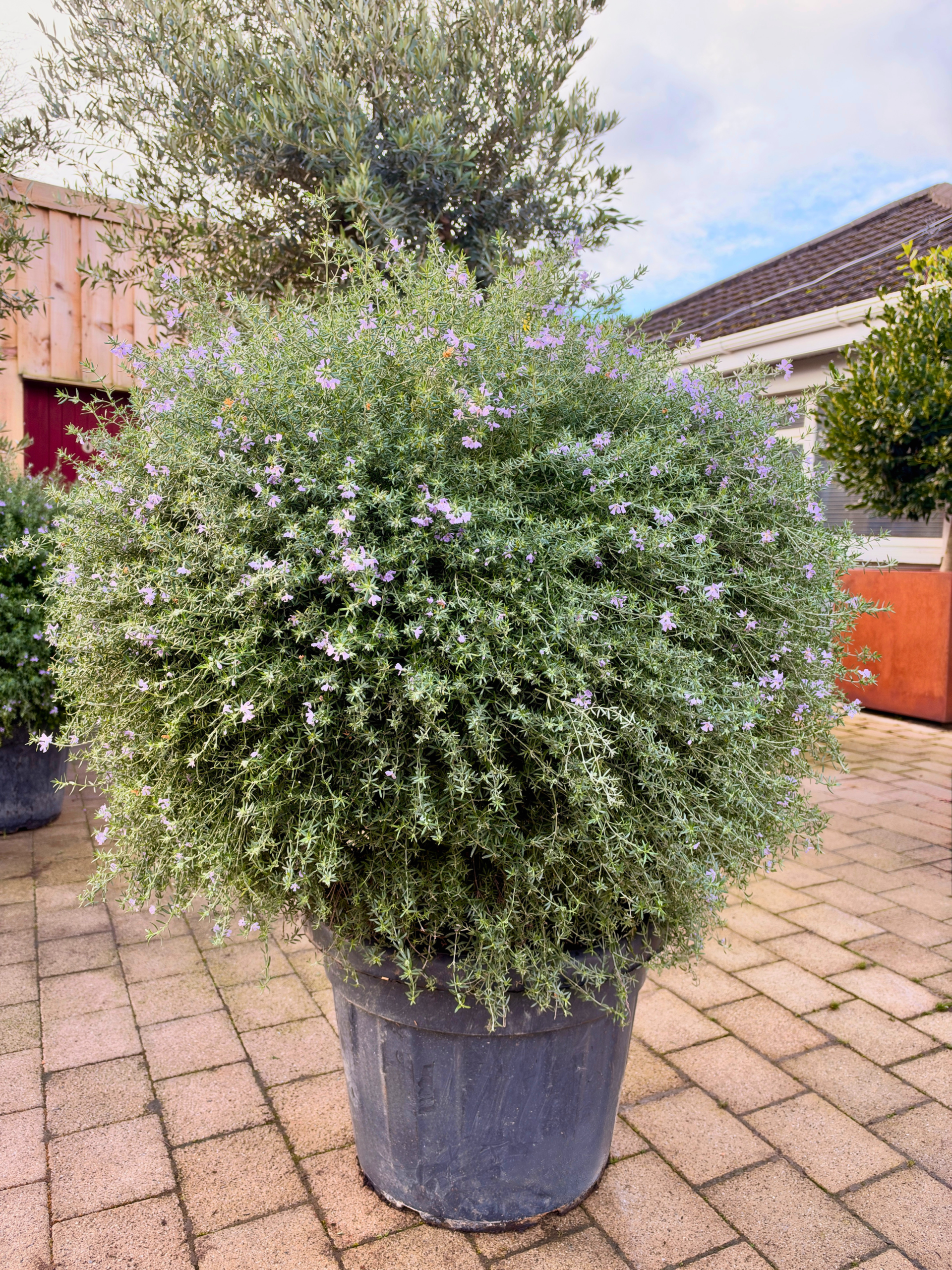
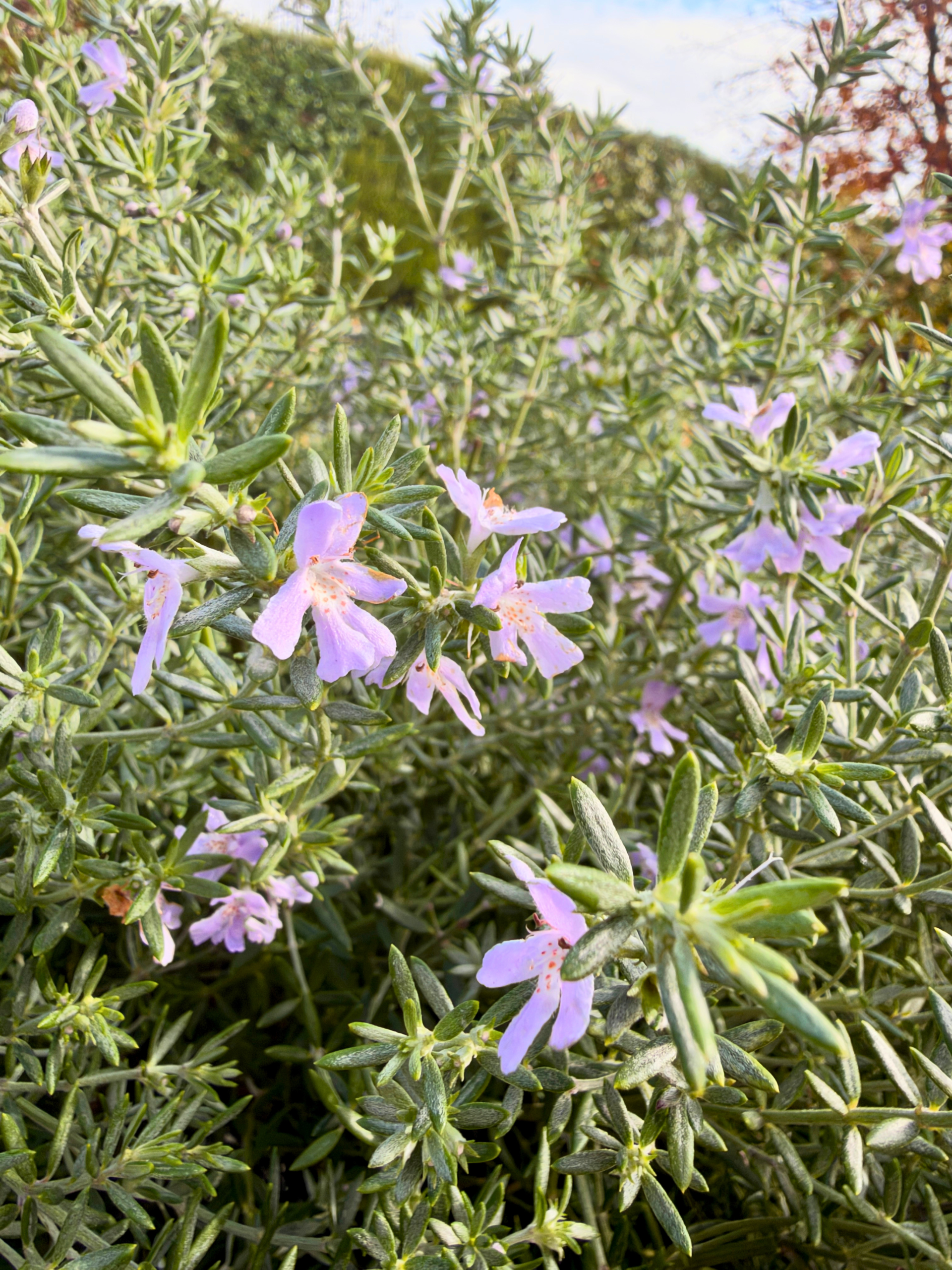
Westringia fruticosa
€330.00
Description
Quick Facts
– Botanical Name: Westringia fruticosa
– Common Name: Coastal Rosemary, Australian Rosemary
– Plant Type: Evergreen shrub
– Mature Height: Approx. 1-1.5m (occasionally up to 2m)
– Mature Spread: Approx. 1.5-2m
– Growth Rate: Moderate to fast
– Flowering Period: Late spring to autumn, with occasional flowers in mild winters
– Flower Colour: Small white flowers with delicate purple spotting in the throat
– Foliage Colour: Narrow grey-green leaves in whorls, silvery on the underside
– Habit: Dense, rounded and mounding
– Hardiness: RHS H3-H4 (hardy in mild, sheltered gardens; protect from hard frost and cold winds)
– Soil Requirements: Well-drained; tolerates poor, sandy and chalky soils
– Aspect: Full sun; tolerates coastal exposure
– Maintenance: Low
Description
Westringia fruticosa is a neat, soft-textured evergreen shrub with fine grey-green foliage that looks a little like rosemary, without the strong scent. The narrow leaves are silvery underneath, so the whole plant shimmers in a breeze and stays fresh-looking through winter.
From late spring into autumn it carries a steady scatter of small white flowers, lightly spotted with purple, which pollinators enjoy. It forms a dense, rounded mound without any fuss, and it copes well with coastal wind, dry spells and poor soil once settled.
Silvery, tidy and tough, it gives light, airy structure to sunny borders, gravel gardens and containers.
Caragh Garden Notebook
Planting:
Plant in spring, once the risk of hard frost has passed, so it has a full season to establish before winter. Choose a sunny, sheltered spot with sharp drainage. On heavy soil, add grit to the planting hole or plant on a slight mound. Plant at the same depth as the pot, firm in gently and water in well. In containers, use a loam-based compost with added grit.
Watering:
Water regularly through the first growing season. Once established it is very drought tolerant and prefers to dry out between waterings. Overwatering is a bigger risk than underwatering. Container plants need more frequent checks in summer.
Feeding:
Little feeding is needed. A light general fertiliser in spring is plenty, and too much feed will make growth soft and leggy. In pots, a slow-release feed in spring is enough.
Seasonal Care & Tidy-Up:
Trim lightly after the main flush of flowers, or in spring, to keep the plant compact and bushy. It clips well and can be shaped into a low informal hedge. Avoid cutting back hard into old wood, as it can be slow to regrow.
Pests & Problems:
Generally trouble-free. Waterlogged soil and root rot are the main risks, especially in winter. In colder areas, a layer of mulch or a fleece wrap during prolonged frost helps protect the plant. Container plants can be moved to a sheltered spot.
Design Notes:
A good choice for coastal gardens, gravel gardens and sunny borders where its silvery foliage softens harder edges. It pairs well with lavender, ornamental grasses, sedum and Mediterranean-style planting. It also works as a low informal hedge or edging along paths. In a pot on a sunny terrace it adds year-round foliage and long-lasting flowers.
Propagation:
Take semi-hardwood cuttings in late summer, which root fairly easily. For a well-shaped plant of a good size, buy nursery-grown stock.
Additional information
| Pot Size |
|---|
Related products
-

Nandina Blush Pink
€15.00 Select options This product has multiple variants. The options may be chosen on the product page -
Buddleja Snow White
€25.00 Select options This product has multiple variants. The options may be chosen on the product page -

Quercus nuttallii
€3,500.00 Select options This product has multiple variants. The options may be chosen on the product page -
Hypericum x dummeri ‘Peter Dummer’ – St John’s Wort
€9.50 Select options This product has multiple variants. The options may be chosen on the product page