

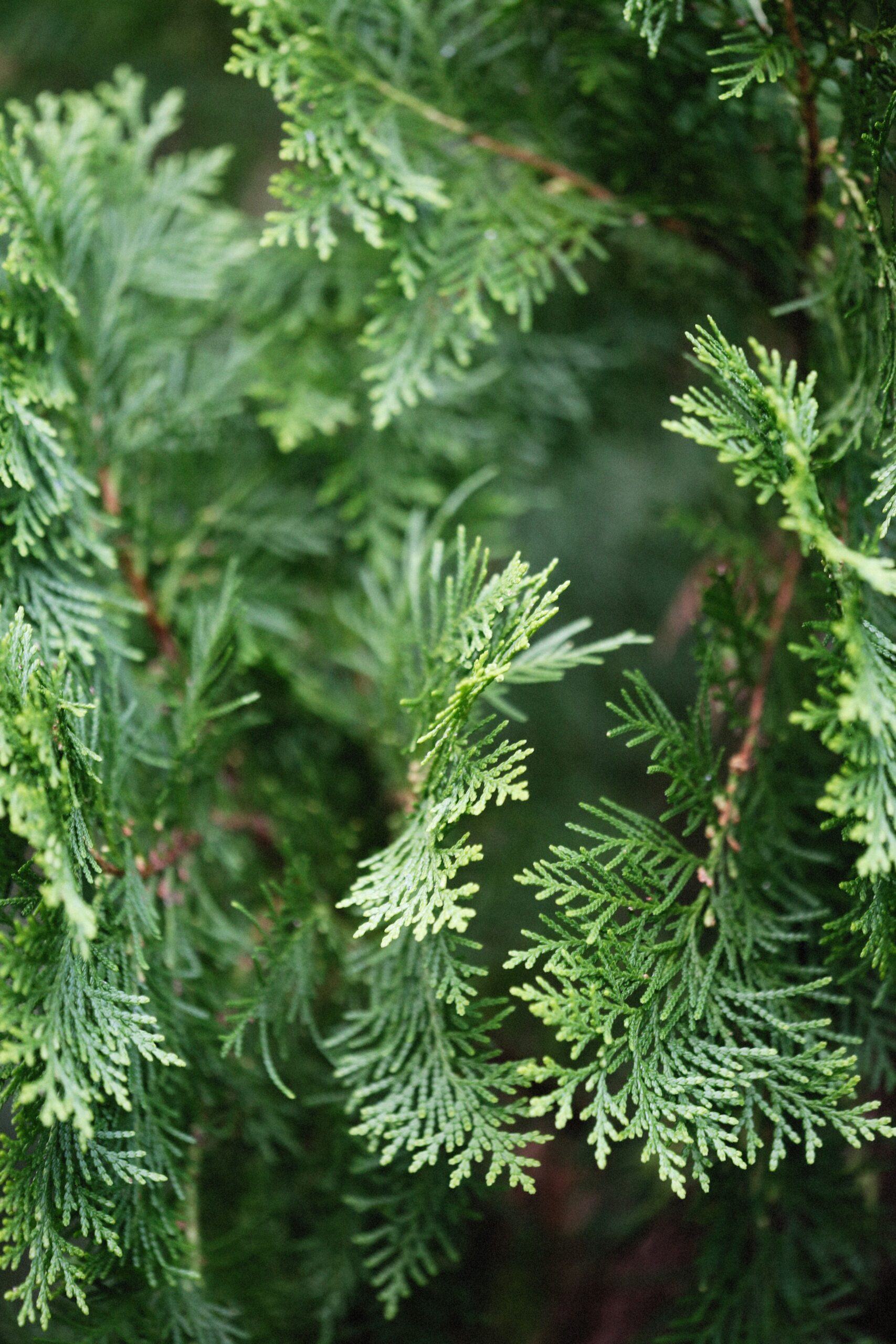
Thuja occidentalis ‘Brabant’
€95.00
Description
Quick Facts
– Botanical Name: Thuja occidentalis ‘Brabant’
– Common Name: Western Red Cedar ‘Brabant’ / Arborvitae
– Plant Type: Evergreen conifer / hedging plant
– Mature Height: Approx. 4-5m (easily kept lower with clipping)
– Mature Spread: Approx. 1-1.5m
– Foliage Colour: Fresh mid to deep green, held in flattened, scale-like sprays; fragrant when brushed
– Cones: Small, inconspicuous cones
– Habit: Dense, narrowly conical to upright, well furnished right down to the base
– Growth Rate: Fast, approx. 30-40cm a year once established
– Hardiness: Fully hardy
– Soil Requirements: Moist, well-drained, reasonably fertile; tolerates clay and chalk but dislikes waterlogging
– Aspect: Full sun to partial shade
– Maintenance: Low to moderate: clip once or twice a year to keep a neat hedge
Description
Thuja occidentalis ‘Brabant’ is one of the most popular evergreen hedging plants for good reason. The fresh green, softly scented foliage forms a dense, upright wall that stays full and well clothed right down to the ground, giving fast, reliable privacy without the heaviness of some other conifers.
It is quick to establish and wonderfully forgiving, making it a great choice for boundaries, screens and tall informal hedges. The foliage keeps its colour well through the colder months, so the hedge looks smart and green in every season, and the narrow habit means it takes up far less room than a laurel or leylandii.
Fast, fresh and dependable, ‘Brabant’ is the hedge that gets on with the job.
Caragh Garden Notebook
Planting:
Plant in autumn or spring in moist, well-drained soil, adding plenty of well-rotted compost to the planting hole. For a hedge, space plants at around 60-80cm apart for good, dense cover. Choose a sunny or lightly shaded spot and plant at the same depth as the pot. Firm in gently, water in thoroughly and mulch to keep the roots cool and moist.
Watering:
Water regularly through the first two growing seasons, especially in dry spells, as young plants establish. Thuja dislikes drying out completely, and prolonged drought can cause browning of the foliage, so a deep water in hot weather is well worthwhile. A newly planted hedge needs particular attention in its first summer.
Feeding:
Apply a balanced general fertiliser or slow-release conifer feed in spring. A mulch of well-rotted compost or bark around the base helps retain moisture and supports steady growth.
Seasonal Care & Tidy-Up:
Trim once or twice a year, in late spring and again in late summer, cutting only into the soft, green, current-season growth. Taper the hedge slightly so it is a little wider at the base than the top, which lets light reach the lower branches. Never cut back into old, brown wood, as it will not regrow and will leave permanent bare patches.
Pests & Problems:
Generally healthy in the right position. Waterlogged soil is the main risk and can lead to root rot, which shows as browning foliage and general decline. Browning from winter wind or drought is common in exposed spots, so a sheltered position helps. Wear gloves when trimming, as the foliage can irritate sensitive skin.
Design Notes:
‘Brabant’ is an excellent choice for privacy hedging, boundary screening and tall, narrow evergreen backdrops. Its slim habit suits smaller gardens where a wider hedge would feel overwhelming, and the fresh green foliage makes a smart backdrop for borders, roses and seasonal planting. It also works well in large containers as a living screen on a terrace or patio.
Propagation:
Take semi-hardwood cuttings in late summer. For uniform, reliable hedging, source nursery-grown plants.
Additional information
| Pot Size |
|---|
Related products
-

Salvia nemerosa Midnight Purple
Price range: €9.50 through €10.50 Select options This product has multiple variants. The options may be chosen on the product page -
Geranium phaeum Samobor
€8.50 Select options This product has multiple variants. The options may be chosen on the product page -
Weigela florida Alexandra
€20.00 Select options This product has multiple variants. The options may be chosen on the product page -
Buxus ‘Graham Blandy’
€1,200.00 Select options This product has multiple variants. The options may be chosen on the product page