

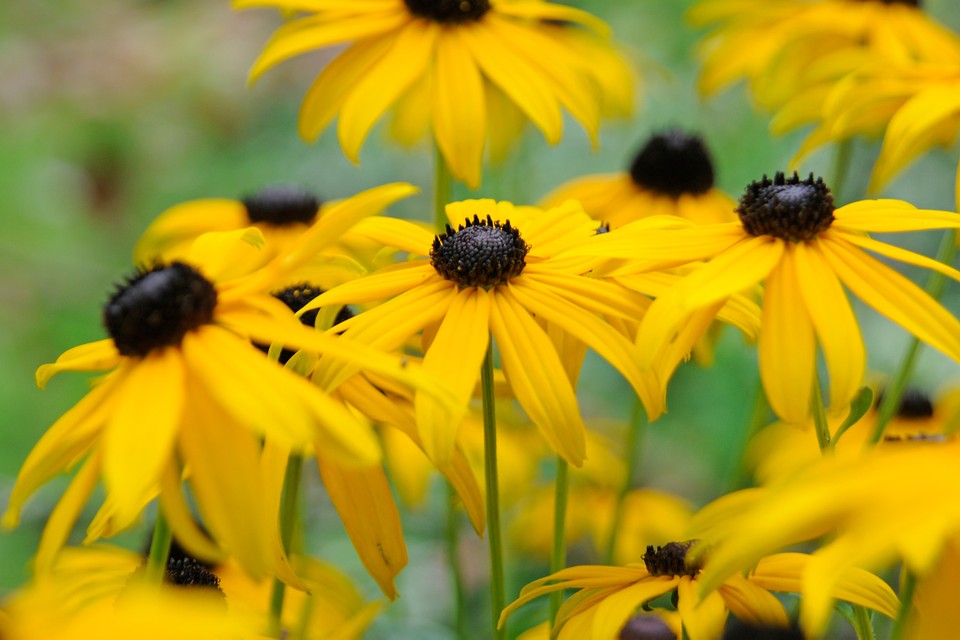
Rudbeckia Goldsturm
€8.50
Frequently Bought Together

Description
Quick Facts
– Botanical Name: Rudbeckia fulgida var. sullivantii ‘Goldsturm’
– Common Name: Black-Eyed Susan ‘Goldsturm’
– Name Meaning: ‘Goldsturm’ translates from German as ‘Gold Storm’ — a name that describes a plant in full flower with complete accuracy
– Plant Type: Hardy herbaceous perennial
– Mature Height: 60–90cm
– Mature Spread: 30–45cm
– Flowering Period: August to October
– Flower Colour: Vivid golden-yellow daisy flowers with striking cone-shaped black-brown centres
– Foliage: Mid-green, deciduous
– Hardiness: Very hardy — H6
– Aspect: Full sun to partial shade
– Soil: Well-drained to moist; tolerant of most garden soils
– Awards: RHS Award of Garden Merit (AGM)
– Maintenance: Very low
Description
When August arrives and the first flush of summer planting begins to flag, Rudbeckia ‘Goldsturm’ does the opposite — it opens. Wide, golden-yellow daisy flowers with bold, cone-shaped black-brown centres emerge in abundance and keep coming through September and into October, carrying the border through the weeks when it most needs something generous and reliable to hold it together. The name is well earned: a plant in full flower is genuinely a gold storm — vivid, unambiguous, and impossible to overlook.
It is also, reassuringly, one of the easiest perennials in cultivation. Short enough to stand without staking, slow enough in its spread not to require constant division, and tolerant enough of light shade to work in positions that would challenge a more demanding plant — ‘Goldsturm’ asks very little and delivers one of the longest and most reliable late-season displays available. Once the petals drop, the dark cone centres remain standing through winter, giving the plant a further act as a structural seed-head that provides food for birds and quiet beauty in the low winter light.
Caragh Garden Notebook
Planting:
Plant in spring or autumn into well-drained to moist, reasonably fertile soil. ‘Goldsturm’ is tolerant of most garden soils and establishes readily without special preparation, though incorporating some compost at planting will support strong growth in the first season. A position in full sun gives the most prolific and sustained flowering; partial shade is well tolerated and ‘Goldsturm’ is one of the more shade-accepting of the late-season daisies, making it genuinely useful for positions that receive only a few hours of direct sun each day. Water in thoroughly after planting and keep consistently moist through the first growing season.
Watering:
Water regularly through the first growing season while roots establish. Once settled, ‘Goldsturm’ is impressively self-sufficient and tolerates both drier and moderately moist conditions without serious complaint. In prolonged summer drought, a thorough watering will maintain the quality and abundance of the flowering; in reliably moist garden soil, no regular intervention is needed beyond natural rainfall. It is genuinely one of the less demanding perennials in terms of water management once established.
Feeding:
A light balanced slow-release fertiliser or a generous topdress of well-rotted compost applied in spring as growth begins is all that is required. ‘Goldsturm’ performs well in average garden soil and does not need rich or heavily fed conditions — in very fertile soil, it can produce lush, soft growth that is more prone to flopping, which defeats the benefit of its naturally self-supporting habit. Moderate fertility produces the sturdiest stems and the most prolific flowering.
Seasonal Care & Tidy-Up:
Deadheading through the flowering season is entirely optional — ‘Goldsturm’ will continue to flower without it, and the developing cone heads are part of the plant’s charm and its value to wildlife. After the last flowers have finished in October, the dark cone centres can be left standing through winter as a structural feature and a food source for seed-eating birds. Cut the whole plant back to the base in late winter or early spring before new growth begins. This is the one moment of decisive action the plant requires; beyond that, it is entirely self-managing through the growing season.
Division:
Divide every three to four years in spring to maintain vigour and to spread the plant through the border. ‘Goldsturm’ does not spread so rapidly that division becomes urgent, but an established clump that has been in place for several years will benefit from being lifted and refreshed — the outer portions of the clump are the most vigorous and worth replanting; the congested centre can be discarded. Replant divisions immediately into well-prepared soil and water in thoroughly. Division is also the most reliable method of propagation if you want to extend the plant through the garden.
Pests & Problems:
Generally very trouble-free and one of the most reliably healthy perennials available. Powdery mildew can occasionally affect the foliage in dry conditions, particularly towards the end of the season — ensuring reasonable moisture at the roots and good air circulation around the plant are the most effective preventatives. The late-season flowering habit means aphids and other spring and early-summer pests have largely passed by the time ‘Goldsturm’ comes into its own. Slugs may target emerging growth in spring but rarely cause serious problems on an established plant.
Design Notes:
‘Goldsturm’ is one of the signature plants of naturalistic and prairie-style planting — and one of the most effective. The pure golden-yellow with its black centre is a clean, bold, unambiguous colour that reads clearly from a distance and works with almost everything around it. Combine with ornamental grasses — Carex testacea, Miscanthus, Molinia — for a classic prairie pairing where the warm copper and gold tones reinforce each other through late summer and autumn; plant alongside Echinacea for a daisy-family combination that covers the season from July through to October; or use with purple Salvias and blue Asters for a complementary contrast that is particularly effective in the low, warm light of September and October. Repeated in groups of three or five through a sunny border, it creates a rhythm and consistency of colour through the late season that holds the whole planting together at the time of year when it is most needed. The seed heads through winter are worth as much as the flowers — leave them standing and they will reward you on every frosty morning until spring.
Additional information
| Pot Size |
|---|
Related products
-

Lupinus Gallery White
€8.50 Select options This product has multiple variants. The options may be chosen on the product page -
Jasminium Officianalis
€20.00 Select options This product has multiple variants. The options may be chosen on the product page -
Kniphofia Flamenco
€8.50 Select options This product has multiple variants. The options may be chosen on the product page -
Akebia quinata
€25.00 Select options This product has multiple variants. The options may be chosen on the product page