

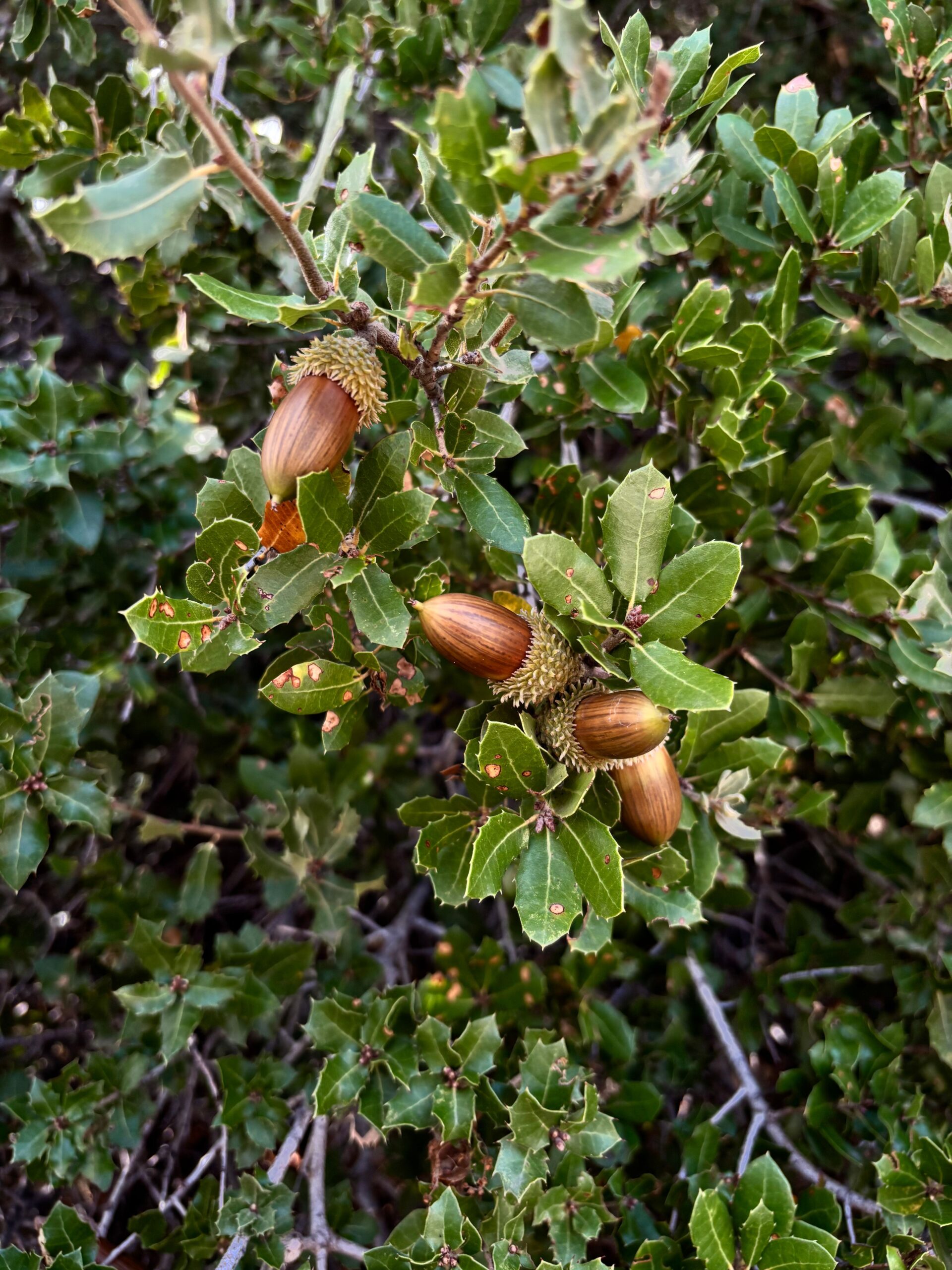
Quercus cerris
€3.50
Description
Quick Facts
– Botanical Name: Quercus cerris
– Common Name: Turkey Oak
– Plant Type: Deciduous tree
– Mature Height: 25-30m (slow to reach full size)
– Mature Spread: 15-20m
– Flowering Period: Spring (yellow-green catkins)
– Fruit: Acorns with distinctive mossy, bristly cups
– Foliage Colour: Glossy dark green, turning yellow-brown in autumn
– Hardiness: Very hardy in Ireland & the UK
– Soil Requirements: Any well-drained soil, including poor, dry and chalky ground
– Aspect: Full sun
– Maintenance: Low
Description
A big, handsome oak for those with the space. Turkey Oak grows into a broad, rounded crown with deeply lobed, glossy leaves and unusual acorns in mossy cups. It’s one of the fastest-growing oaks and copes with poorer, drier soils than most, so it’s a good choice where other trees struggle.
It suits large gardens, parkland, estates and open sites, where it gives shade, structure and good autumn colour. It’s a long-term tree that will be there for generations.
Caragh Garden Notebook
Planting:
Plant in autumn or early spring, while the tree is dormant. Dig a wide hole, but don’t add too much compost or feed, as oaks do best in ordinary soil. Stake if the site is exposed, firm in and water well. Allow plenty of room, well away from buildings, drains and boundaries.
Watering:
Water regularly through the first two or three summers, especially in dry spells. Once established, it’s very drought-tolerant and rarely needs help.
Feeding:
No regular feeding is needed. A mulch of leaf mould or bark around the base in spring, kept clear of the trunk, helps retain moisture while the tree settles in.
Pruning & Tidy-Up:
Little pruning is needed. Remove dead, damaged or crossing branches in late autumn or winter, while the tree is dormant. Avoid pruning in spring and summer.
Staking & Aftercare:
Check ties each year so they don’t cut into the trunk, and remove the stake after 2-3 years once the tree is anchored. Keep a metre of ground around the base clear of grass and weeds for the first few years.
Pests & Problems:
Generally tough and trouble-free. Turkey Oak is the host for the knopper gall wasp, which can distort the acorns of English and sessile oaks nearby. It doesn’t harm the Turkey Oak itself. Oak processionary moth is also worth knowing about in some parts of England, so check your local guidance before planting.
Design Notes:
Best as a specimen tree in a large garden, or planted in groups on open ground, in field margins or along a long driveway. It’s tolerant of wind, so it also works as a shelter planting on exposed sites. Not suitable for small or urban gardens.
.
Additional information
| Pot Size |
|---|
Related products
-
Magnolia Galaxy specimen multistem
€400.00 Select options This product has multiple variants. The options may be chosen on the product page -

Camellia japonica Rosso – 1/2 Standard
€550.00 Select options This product has multiple variants. The options may be chosen on the product page -
Magnolia Black Tulip specimen multistem
€400.00 Select options This product has multiple variants. The options may be chosen on the product page -
Magnolia stellata Standard Tree
€350.00 Select options This product has multiple variants. The options may be chosen on the product page