

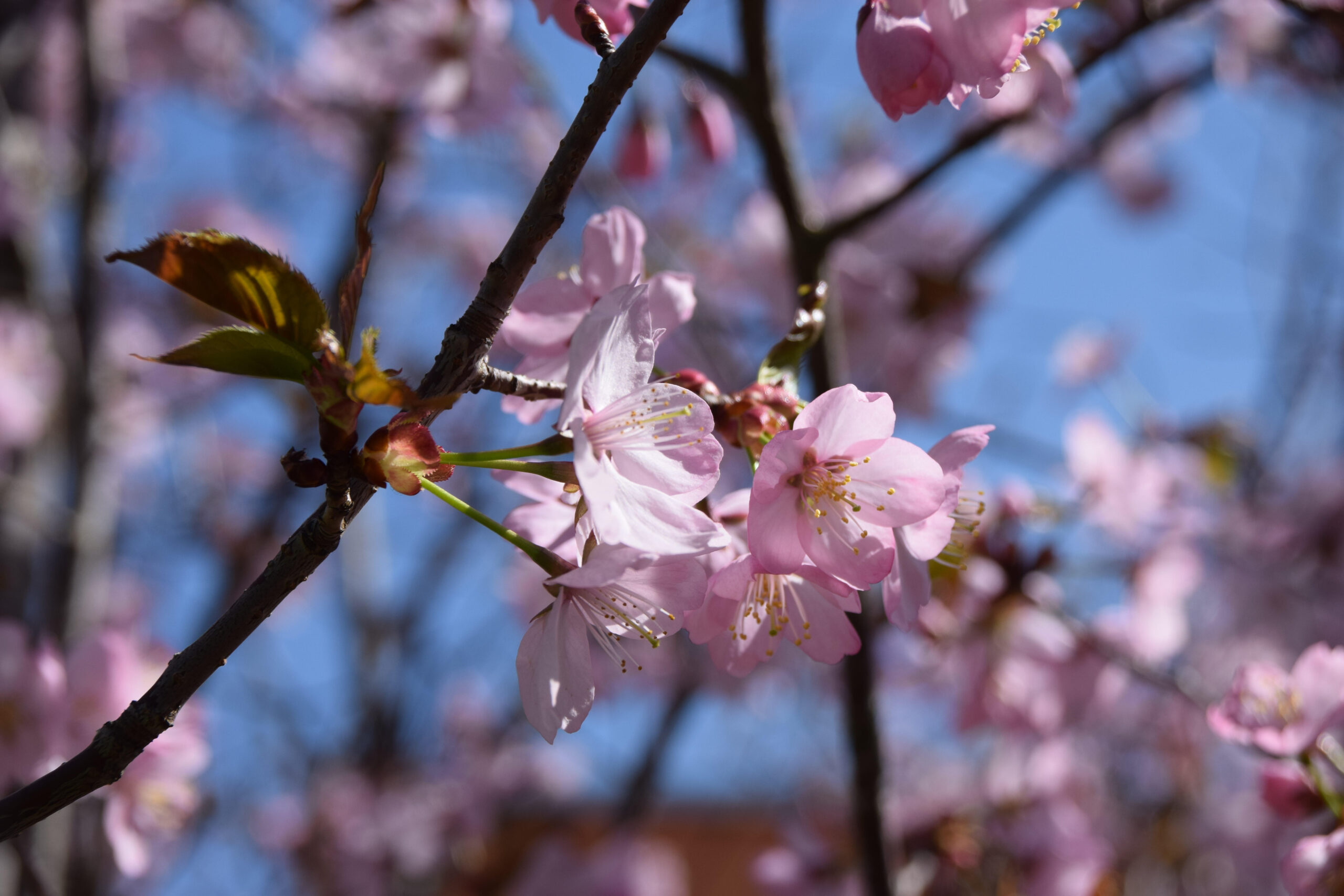
Prunus autumnalis rosea specimen multistem
€450.00
Frequently Bought Together

Description
Quick Facts
– Botanical Name: Prunus × subhirtella ‘Autumnalis Rosea’
– Common Name: Winter Flowering Cherry / Winter Pink Cherry
– Plant Type: Deciduous ornamental flowering tree
– Form: Multistem specimen — several graceful stems rising from the base, crowned with a spreading canopy
– Mature Size: 6–8m at full maturity
– Flowering Period: Late autumn through winter, in repeated flushes
– Flower Colour: Abundance of delicate pale pink flowers borne along bare stems — a welcome glow in the coldest months
– Fruit: Small black fruits in late summer, very attractive to birds
– Foliage: Small, fine green leaves, with a soft yellow autumn tint before falling
– Habit: Small, elegant, spreading — a multistem form with year-round interest
– Aspect: Full sun to partial shade
– Soil: Well-drained, fertile
– Hardiness: Very hardy in Ireland & the UK
– Awards: RHS Award of Garden Merit (AGM)
– Maintenance: Low
Description
Prunus ‘Autumnalis Rosea’ is the tree that gives colour back to the garden at the exact time it is most needed. Known as the Winter Flowering Cherry, it produces an abundance of delicate, pale pink flowers through the late autumn and winter months, in repeated flushes along its bare stems — when most of the garden is dormant and colour is at its rarest, this beautiful ornamental tree quietly carries the season.
And it refuses to rest in summer. In late summer it produces a small black fruit, which is genuinely popular with birds, adding a wildlife-friendly note to its year-round interest. The small, fine leaves turn softly yellow in autumn before falling to make way for the winter flower show — a tree that gives something in every season.
At just 6–8m at full maturity, it is a small tree with a great deal of presence, which makes it perfect for a smaller city garden or as a feature tree in a large bed. In multistem specimen form it is particularly beautiful — several graceful stems rising from the base, crowned with a canopy that carries the winter blossom in a generous, open display.
Caragh Garden Notebook
Planting:
Plant in autumn or early spring into well-drained, fertile soil. ‘Autumnalis Rosea’ prefers full sun to partial shade and is one of the easier ornamental cherries to establish in a well-prepared site. Choose the position with the winter display in mind — this tree works hardest in the cold months, so plant it where the blossom can be seen from the house or a regularly used path, particularly in a smaller garden where its winter presence will carry the space. The multistem specimen form should be staked firmly for the first two to three years while the stems establish their hold. Water in thoroughly after planting.
Watering:
Water consistently through the first two growing seasons while the tree establishes — the most important period for any newly planted cherry. Once settled, ‘Autumnalis Rosea’ is reasonably self-sufficient and requires little supplementary watering in an Irish garden beyond natural rainfall. During prolonged dry spells in the first summers, a thorough weekly watering will support establishment and healthy growth.
Feeding:
An application of a balanced fertiliser in spring supports strong growth and healthy flowering. In the first few years, feeding the young tree in spring is worthwhile while it establishes. Once established, an annual mulch of well-rotted compost or leafmould around the base in late winter or early spring feeds gently, retains moisture, and improves the soil over time.
Pruning:
‘Autumnalis Rosea’ requires very little pruning and the natural multistem form and spreading canopy are its greatest assets, so resist the temptation to shape it. Prune in early spring — as the winter flower flushes finish — to remove any dead or damaged branches, making clean cuts. Avoid hard or renovation pruning, which an ornamental cherry will not recover from gracefully. Cherry pruning in winter risks silver leaf infection, so early spring, once growth is stirring, is the safer time for this tree.
Pests & Problems:
Generally trouble-free and one of the more resilient flowering cherries. The most common concern in cherries is silver leaf disease, to which the family is susceptible — largely prevented by avoiding pruning in winter and by pruning in early spring rather than the dormant season, and by promptly removing any affected branches in summer. Aphids can occasionally appear on new growth but rarely cause serious problems on a healthy tree. Ensure good drainage at planting, as waterlogged ground is the principal site condition the tree will not tolerate.
Design Notes:
‘Autumnalis Rosea’ is a tree for the position where its winter flowers will be seen and appreciated — near a window, beside a path, or as a feature that carries a whole corner of the garden through the cold months. In multistem specimen form it is particularly beautiful as a solo feature tree: the graceful stems and winter blossom read superbly against a lawn, pale stone, or evergreen backdrop, and its modest mature size makes it perfect for a smaller city garden. In a large bed, it provides structure and year-round interest at a scale that sits comfortably among shrubs and perennials, and underplanting with hellebores, early bulbs, and winter heathers extends the seasonal display around its feet. The late-summer black fruits bring the birds, the soft autumn leaves add a quiet transition, and the winter blossom does what few trees can — it gives the garden something genuinely beautiful at its bleakest.
Additional information
| Pot Size |
|---|
Related products
-
Magnolia Honey Tulip
€65.00 Select options This product has multiple variants. The options may be chosen on the product page -

Rhododendron Red Jack
€120.00 Select options This product has multiple variants. The options may be chosen on the product page -
Prunus cerasifera Nigra / Purple Plum
Price range: €75.00 through €220.00 Select options This product has multiple variants. The options may be chosen on the product page -

Camellia japonica Rosso – 1/2 Standard
€550.00 Select options This product has multiple variants. The options may be chosen on the product page