

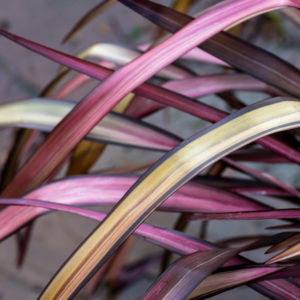
Phormium ‘Evening Glow’
€20.00
Description
Quick Facts
– Botanical Name: Phormium ‘Evening Glow’
– Common Name: New Zealand Flax ‘Evening Glow’
– Plant Type: Evergreen perennial (architectural)
– Mature Height: 90cm–1.2m
– Mature Spread: 90–1.2m
– Foliage: Arching, strap-like leaves in warm shades of bronze, copper, and coral-pink; the colour glows most richly in sun and in low light
– Flowers: Established plants send up tall, arching stems bearing tubular red-brown flowers in summer — beloved by bees
– Habit: Bold, arching, clump-forming fountain of foliage
– Aspect: Full sun to partial shade; deepest colour in full sun
– Soil: Well-drained, moisture-retentive; tolerant of most soils
– Hardiness: Hardy in milder and coastal gardens; benefits from a sheltered position and winter protection in cold, exposed areas
– Maintenance: Very low
Description
Phormium ‘Evening Glow’ is the flax that catches the last light of the day — arching, strap-like leaves in warm shades of bronze, copper, and coral-pink that seem to gather the evening sun and hold it. The colour is rich and warm rather than loud, and it deepens and glows most beautifully in full sun, making the plant one of those quiet presences that transforms a border as the light changes.
At around a metre, it is the classic architectural flax scale — bold enough to anchor a border or corner, graceful enough to plant among grasses and perennials. The arching fountain of coppery foliage holds through every season, and established plants add tall, arching stems of tubular red-brown flowers in summer, a further layer of interest that feeds the bees generously.
Hardy in milder and coastal gardens, easy to grow, and genuinely low-maintenance, it brings warmth and structure to a garden with very little asked in return — a plant that looks its most beautiful precisely when the day begins to fade.
Caragh Garden Notebook
Planting:
Plant in spring or early autumn into well-drained but moisture-retentive soil. Phormium ‘Evening Glow’ performs best in full sun, which deepens the bronze-copper colouring; partial shade is tolerated but the tones soften. Choose a sheltered, reasonably sunny position, particularly in colder or exposed gardens — in mild coastal areas it thrives with no special treatment. Give the arching clump generous space to develop its fountain form, and place it where the low light can catch the foliage, ideally where it will be seen at the end of the day. Water in thoroughly after planting and mulch around the base.
Watering:
Water consistently through the first growing season while the plant establishes. Once settled, ‘Evening Glow’ is reasonably drought-tolerant and requires little supplementary watering in an Irish garden, performing best with some moisture through summer. In containers, water regularly through the growing season and ensure the pot drains freely. In prolonged dry spells, an occasional thorough watering keeps the foliage plump and richly coloured.
Feeding:
A balanced slow-release fertiliser applied in spring supports strong, healthy growth and the best foliage colour. In containers, feed monthly through the growing season with a balanced liquid fertiliser. A spring mulch of well-rotted compost in the ground feeds gently and retains moisture. Avoid high-nitrogen feeds, which push soft, lush growth at the expense of the warm, dense colouring the plant is known for.
Seasonal Care & Tidy-Up:
Phormium requires very little maintenance. In early spring, remove any old, damaged, or weather-worn leaves by cutting them away cleanly at the base — this keeps the clump fresh and reveals the new season’s growth. Avoid cutting the foliage back hard; the evergreen arching form is the plant’s whole presence and recovers poorly from a drastic trim. Established plants will produce the tall, arching flower stems in summer — leave them for the bees, or remove them after flowering if you prefer a purely foliage specimen.
Winter Protection:
In colder or exposed gardens, protection through the hardest months is worthwhile. A sheltered planting position is the first line of defence; in very hard frosts, the leaves can be loosely gathered and tied, or covered with horticultural fleece, to protect the base and the foliage. Container-grown specimens are more vulnerable than those in the ground — move pots to a sheltered spot near a wall or wrap the pot to protect the roots through winter. In mild coastal gardens, no protection is needed.
Pests & Problems:
Generally trouble-free and long-lived. The most common issues arise in cold, wet, or very exposed conditions — frost damage to the foliage and, more seriously, root rot in waterlogged soil are the main risks. Good drainage and a sheltered position are the most reliable preventatives. Scale insects can occasionally appear in sheltered positions — treat with a horticultural oil if they cause concern. Otherwise, this is a reliable and largely self-sufficient plant.
Design Notes:
The rich bronze and copper tones of ‘Evening Glow’ make it one of the most warm and companionable of the architectural flaxes — it brings evergreen structure and a colour that deepens beautifully as the light softens. Use it where it will be seen in the low evening light — beside a terrace or seating area, at the corner of a path, or framed against a wall or hedge, where the coppery foliage glows as the sun drops; plant it among ornamental grasses, silver foliage, and the deep purples and blues of late summer perennials for a warm, naturalistic combination; or grow it in a large container for a piece of evergreen architecture on a patio. The foliage pairs particularly well with lavender, perovskia, and dark-leaved shrubs. In a coastal or contemporary garden it is entirely at home — a plant that gives warmth, structure, and its most generous moment precisely when the evening arrives.
Related products
-

Cordyline Charlie Boy
€25.00 Select options This product has multiple variants. The options may be chosen on the product page -

Polystichum polyblepharum – Tassel Fern
€8.50 Select options This product has multiple variants. The options may be chosen on the product page -
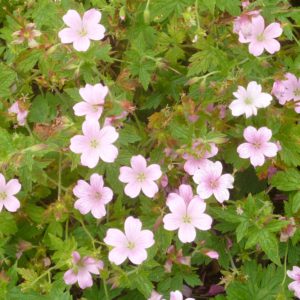
Geranium Wargrave Pink
€8.50 Select options This product has multiple variants. The options may be chosen on the product page -
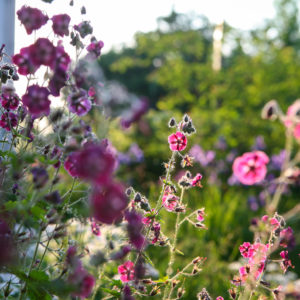
Geranium phaeum Samobor
€8.50 Select options This product has multiple variants. The options may be chosen on the product page