

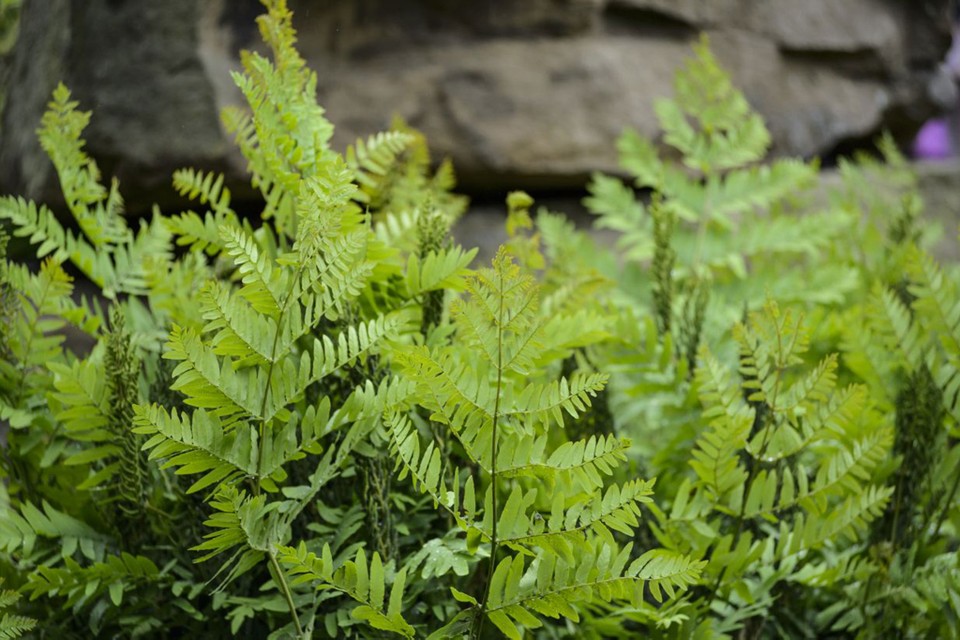
Osmunda Regalis – Royal Fern
€9.50
Frequently Bought Together


Description
Quick Facts
– Botanical Name: Osmunda regalis
– Common Name: Royal Fern
– Plant Type: Deciduous fern
– Mature Height: 1–2m (larger in ideal conditions)
– Mature Spread: 1–2m
– Frond Colour: Coppery-pink on emergence, maturing to fresh pale green, deepening to mid-green in summer; golden-orange to rich russet in autumn
– Fertile Fronds: Distinctive brown, flower-like spore-bearing pinnae at the frond tips — the source of its old name, the ‘Flowering Fern’
– Habit: Bold, upright, vase-shaped clumps building height and presence over time
– Aspect: Full sun to full shade; thrives in both with adequate moisture
– Soil: Moist to wet, humus-rich, acid to neutral; ideal for boggy ground, pond margins, and streamside planting
– Hardiness: Fully hardy — a native fern of Ireland and the UK
– Awards: RHS Award of Garden Merit (AGM)
– Maintenance: Very low
Description
Osmunda regalis is the king of hardy ferns — and the name is entirely deserved. One of the largest, most dramatic, and most ancient ferns in cultivation, the Royal Fern brings a scale and presence to the waterside or shaded garden that few other plants can match. It is a plant that changes its mood with every season: the emerging coppery-pink fronds of spring are among the finest sights in the garden calendar; the deep, fresh green of summer gives bold, architectural structure; and the golden-orange to rich russet of autumn rivals any ornamental tree for seasonal colour.
The fertile fronds, which carry distinctive brown, flower-like spore clusters at their tips, add a further layer of interest and are the origin of one of its older names — the Flowering Fern. Over time, the crown builds on a fibrous, raised rhizome base that becomes a feature in its own right, giving established plants a particularly noble, ancient quality.
It is also, importantly, a native fern of Ireland and the UK — found naturally along boggy stream banks, lake margins, and in wet woodland across the island. Growing it in a garden is not an imitation of nature but an invitation to it.
Caragh Garden Notebook
Planting:
Plant in spring or autumn into moist, humus-rich, acid to neutral soil — the richer in organic matter the better. Osmunda regalis is at its most spectacular in genuinely moist to wet conditions: at the edge of a pond or stream, in a bog garden, or in any spot where the soil stays reliably damp through the growing season. It will tolerate ordinary border conditions with regular watering but will not reach its full potential without consistent moisture. Incorporate generous amounts of leafmould or well-rotted compost at planting, and position the crown just at or slightly above soil level — over time it will build its own raised, fibrous base naturally. Mulch well around the plant to retain moisture.
Watering:
This is not a drought-tolerant fern — moisture is the one condition it genuinely needs and rewards. In wet or boggy ground it will largely look after itself; in a drier garden border, consistent and generous watering through the growing season is essential for the plant to perform as it should. During dry spells, water deeply and thoroughly rather than little and often. In the right position with adequate moisture, it is one of the most rewarding and low-maintenance plants you can grow.
Feeding:
An annual mulch of leafmould, well-rotted compost, or composted bark applied around the crown in spring is the most effective and natural approach to feeding. This replicates the rich, organic woodland or bogside conditions the plant naturally favours and gradually builds the soil quality over time. In poorer soils, a light application of a balanced slow-release fertiliser in spring will support strong frond production. Avoid alkaline or lime-rich fertilisers — this is an acid-loving plant and the soil chemistry matters.
Seasonal Care & Tidy-Up:
As a deciduous fern, the old fronds will brown and die back naturally in late autumn and winter. These can be left in place through the colder months — they protect the crown and add winter texture — and removed in early spring before the new coppery fronds begin to emerge. This is the moment to appreciate the fibrous, raised crown before the new season’s growth obscures it. Beyond this annual tidy, the plant requires very little intervention.
Division:
Osmunda regalis is long-lived and very slow-growing — established plants are best left undisturbed and will develop more character and presence with each passing year. Division is possible in early spring but is not straightforward, as the fibrous rhizome base is dense and firmly established. It is worth attempting only when a plant has become very large or when propagation is the specific goal. Replant divisions immediately into well-prepared, moist soil and keep consistently watered through the first season.
Pests & Problems:
Remarkably trouble-free — one of the most pest-resistant ferns available. The coppery new fronds in spring can occasionally attract slugs and snails, worth monitoring at this stage as the emerging growth is the most vulnerable. In dry soils or during extended droughts, fronds may brown at the tips — the most reliable solution is always more moisture. In exposed positions, large fronds can be damaged by strong winds; a sheltered spot is always preferable for a plant of this scale.
Design Notes:
Osmunda regalis demands space and moisture — and when both are given, it rewards with one of the most spectacular presences in the garden. At the edge of a pond or along a stream, reflected in still water, it is genuinely breathtaking, particularly in the coppery emergence of spring and the golden fire of autumn. In a larger shaded border with reliably moist soil, it works as a commanding specimen or as the tallest layer in a naturalistic planting of ferns, hostas, primulas, and irises. The scale of the mature plant — potentially 2m in both directions in ideal conditions — means it works best where it has room to develop properly and where its seasonal transformation can be seen from a distance. For an Irish garden in particular, there is something deeply right about growing the Royal Fern: it belongs here, it has been here for thousands of years, and in the right spot it will outlast everything else in the garden.
Additional information
| Pot Size |
|---|
Related products
-
Acer campestre / Field Maple
€450.00 Select options This product has multiple variants. The options may be chosen on the product page -
Betula Jacquemontii / Himalayan Birch
Price range: €575.00 through €600.00 Select options This product has multiple variants. The options may be chosen on the product page -

Carpinus betulus Fastigiata / Upright Hornbeam
Price range: €180.00 through €750.00 Select options This product has multiple variants. The options may be chosen on the product page -
Quercus rubra / Red Oak
€225.00 Select options This product has multiple variants. The options may be chosen on the product page