


Olea europaea Bonsai Shape / Olive Bonsai
€800.00
Frequently Bought Together


Description
Ancient Japanese craft. Mediterranean soul. The Olive Bonsai is where two of the world’s great horticultural traditions meet — and the result is unlike anything else we grow.
These are not small trees in small pots. Standing 160–200cm in generous containers, each specimen is a living sculpture: a powerful, gnarled trunk thick with age and character, from which multiple arms have been carefully trained and positioned over years to achieve perfect balance. Each branch culminates in a dense, floating cloud of silvery-green foliage — almost ethereal against the light, and as beautiful in the stark silhouette of winter as in the full, shimmering growth of summer.
This is the ancient art of bonsai practised at a scale that fills a space. Contemplative, architectural, and utterly extraordinary.
Quick Facts:
Common Name: Olive Tree – Bonsai Form
Botanical Name: Olea europaea
Form: Bonsai — sculptural trunk, trained arms, dense foliage clouds
Height: 160–200cm
Position: Full sun, sheltered
Hardiness: Hardy to -10°C
Growth Rate: Slow — form maintained by careful annual pruning
Drought Tolerant: Yes — once established
Origin: Italy, certified Xylella-free
Certification: Pre-export tested and certified free from Xylella fastidiosa
Best For: Terraces, courtyards, roof gardens, formal entrances, minimalist contemporary spaces
Caragh Garden Notebook
Container Care: Plant or maintain in a large, well-draining container using quality loam-based compost mixed with horticultural grit. Container-grown specimens need more attentive watering than ground-planted trees — check regularly through the growing season and water when the top few centimetres of compost are dry, allowing slight drying between waterings. Never allow the roots to sit in waterlogged compost.
Feeding: Feed monthly with a balanced liquid fertiliser from spring through early autumn to support healthy growth and maintain the density of the foliage clouds. A consistent feeding programme makes a visible difference to the vigour and appearance of container-grown bonsai specimens.
Pruning & Shaping: The bonsai form requires careful annual pruning in late spring to maintain its sculptural quality. Trim new growth to preserve the dense, rounded foliage clouds while respecting the architectural branch structure that defines each tree’s character. Pinch growing tips regularly through the growing season to encourage density and keep the form tight. Resist the urge to over-prune — restraint is everything in bonsai.
Repotting: Repot every 3–4 years, or when the tree becomes visibly root-bound. Use fresh, well-draining compost and take the opportunity to inspect the root system, removing any circling or damaged roots before repotting into a container of the same size or one size larger.
Rotation: The artistic nature of the bonsai form benefits from occasional turning — rotating the container ensures even light exposure, balanced growth, and allows different angles of the tree’s extraordinary structure to be appreciated throughout the season.
Winter Care: Hardy to -10°C, but the bonsai form benefits from a sheltered position during harsh winter winds, which can desiccate the foliage and stress the tree. During prolonged hard frost, move container-grown specimens to a sheltered spot — against a warm wall, into an unheated greenhouse, or a frost-free porch. Protect the root zone with fleece during the coldest spells.
Placement & Design: The Olive Bonsai is one of the most versatile specimen plants we offer. A single tree as a centrepiece on a terrace commands complete attention — the sculptural trunk and floating foliage clouds reward every angle and every hour of light. A matched pair flanking an entrance creates formal symmetry with genuine presence. Grouped with other architectural plants — Agaves, ornamental grasses, large-leaved Fatsia — it anchors a contemporary Mediterranean scheme beautifully. The contained root system makes it ideal for roof gardens, courtyards, and any space where permanent planting isn’t possible but maximum impact is everything.
Xylella Certification: All our olive trees are tested and certified free from Xylella fastidiosa prior to leaving Italy.
Related products
-
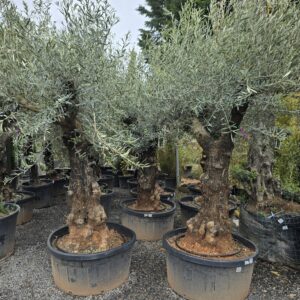
Olea Europaea / 60-80cm Mature Gnarled Trunk
€1,150.00 Select options This product has multiple variants. The options may be chosen on the product page -

Photinia serr. ‘Corallo’ Pom Pom
€495.00 Select options This product has multiple variants. The options may be chosen on the product page -
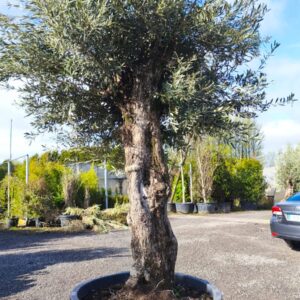
Olea europaea / Mature Olive Tree 80cm girth
Price range: €1,400.00 through €1,800.00 Select options This product has multiple variants. The options may be chosen on the product page -
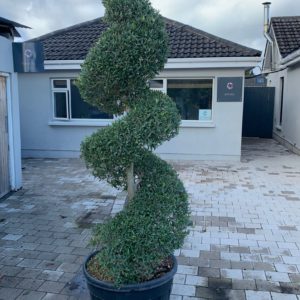
Olea europaea / Olive Spirals
€750.00 Select options This product has multiple variants. The options may be chosen on the product page