

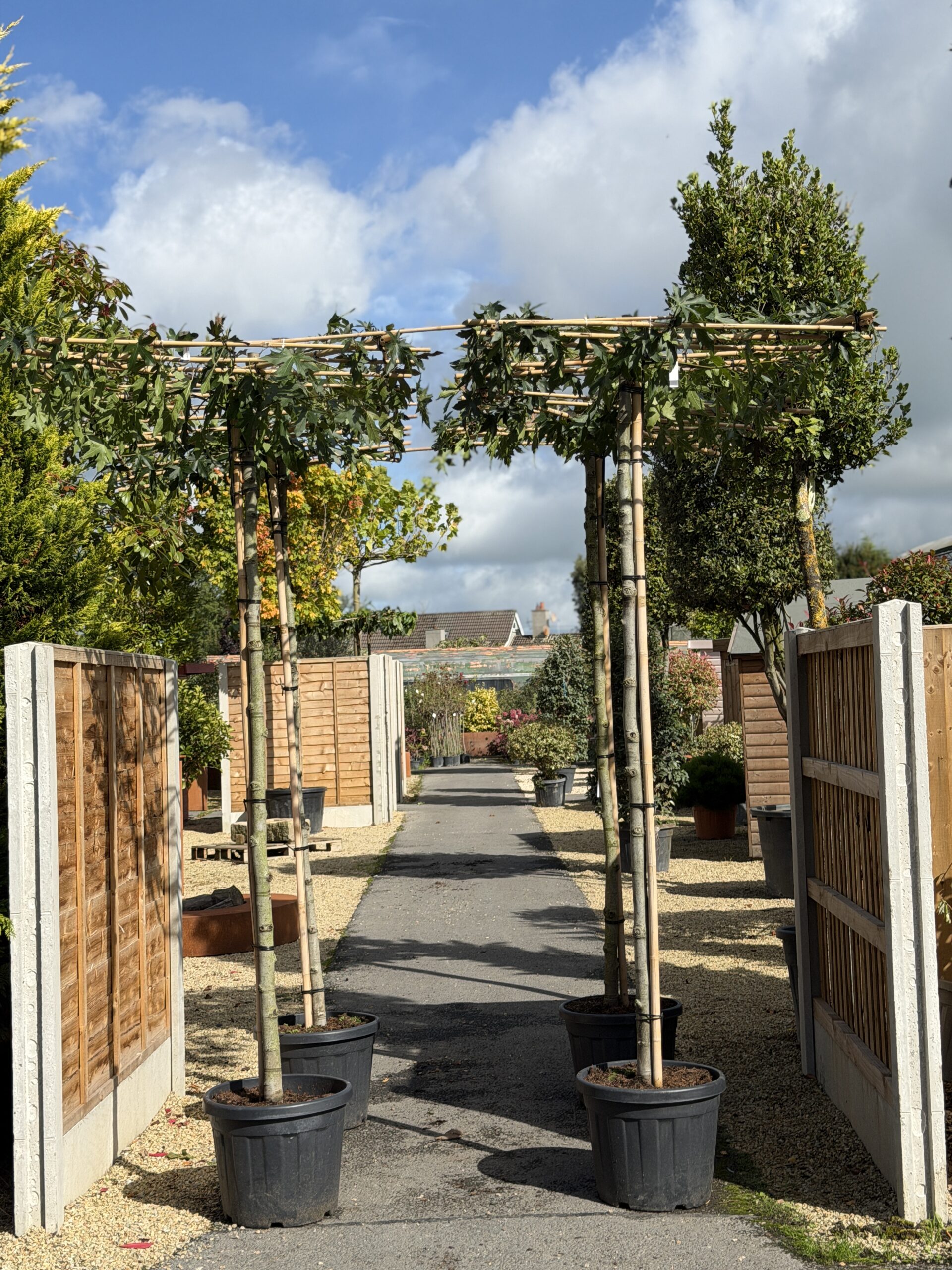
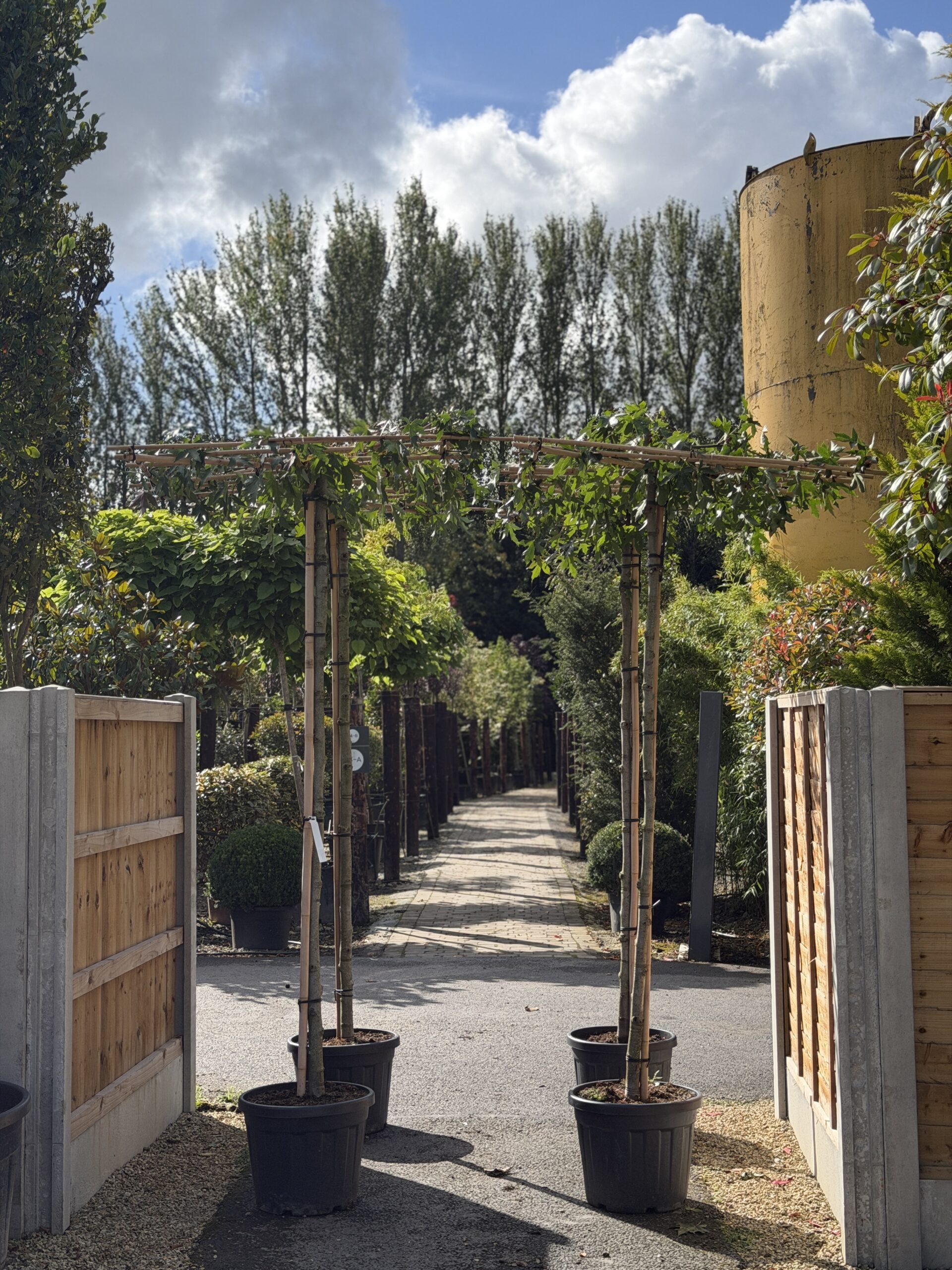
Liquidambar styraciflua ‘Worplesdon’ Roof Form
€500.00
Description
Quick Facts
– Botanical Name: Liquidambar styraciflua ‘Worplesdon’
– Common Name: Sweet Gum — Roof Form
– Plant Type: Deciduous tree, trained roof form
– Mature Height: Variable depending on clear stem height; canopy trained flat and wide
– Mature Spread: Approx. 3m–5m (canopy frame, expanding with age)
– Flowering Period: Spring — flowers are inconspicuous
– Flower Colour: Inconspicuous
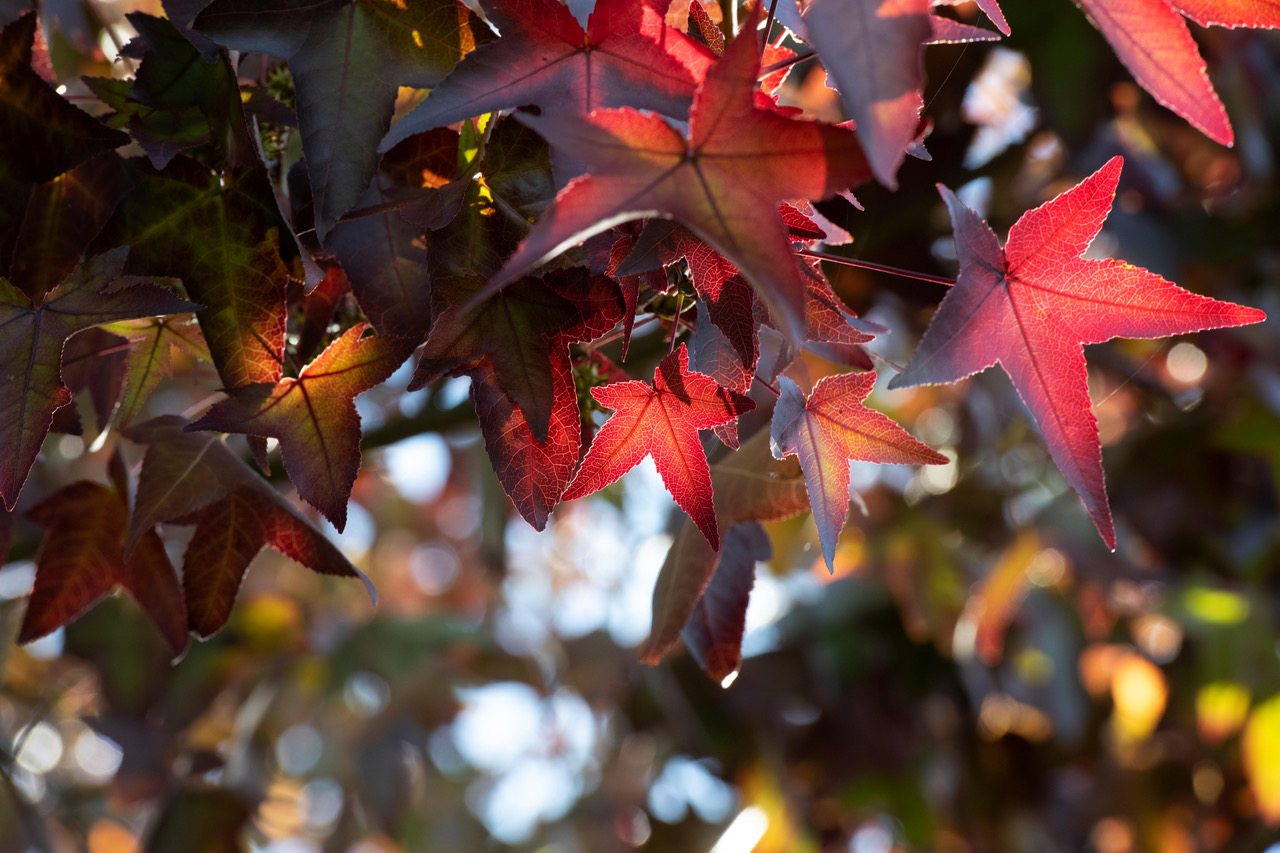
– Foliage Colour: Glossy green, turning rich shades of red, orange and purple in autumn
– Hardiness: Hardy
– Soil Requirements: Moist, well-drained soil
– Aspect: Full sun
– Maintenance: Low to moderate — annual formative pruning to maintain the roof canopy
Description
Liquidambar styraciflua ‘Worplesdon’ is a tree of real presence and beauty, and in its roof form it becomes something truly extraordinary. Trained on a clear stem with branches extended outward and flat to create a broad, horizontal canopy, it delivers all the elegance of this celebrated cultivar in a striking architectural format. The large, glossy, star-shaped leaves form a rich green canopy through summer, casting beautiful dappled shade below, before the season’s finest moment arrives in autumn — a breathtaking display of deep red, burnt orange and warm purple that few trees can rival. A genuinely show-stopping specimen for gardens where structure and seasonal drama matter in equal measure.
Caragh Garden Notebook
Planting:
Plant in spring or autumn in moist, well-drained, preferably slightly acidic soil. Choose a sunny, open position with plenty of room for the canopy to spread. Avoid shallow chalk soils, which can inhibit establishment and reduce the intensity of autumn colour.
Watering:
Water well after planting and consistently through the first two to three growing seasons. Liquidambar appreciates reliable moisture, particularly during dry summers, so do not allow the root zone to dry out completely while the tree is establishing.
Feeding:
Apply a balanced fertiliser or a generous mulch of well-rotted compost in early spring to support healthy canopy growth and encourage the rich foliage colour that makes this tree so distinctive.
Seasonal Care & Tidy-Up:
Prune annually in late winter or early spring before buds break. Remove any upward-growing shoots that break from the flat plane of the canopy, and tie in lateral growth along the framework to preserve the clean horizontal profile. Consistent, light annual pruning is far preferable to harder, infrequent cuts.
Division (to keep plants vigorous):
Not applicable. As with all trained roof forms, remove vigorous upright water shoots promptly to protect the canopy’s flat, architectural shape and direct the tree’s energy into the horizontal framework.
Pests & Problems:
Generally healthy and reliable. Liquidambar has no serious pest or disease issues. Ensure good drainage is in place, as waterlogged soils can cause stress and poor growth.
Design Notes:
The roof form Liquidambar is an exceptional choice for creating a dramatic living canopy above a terrace, seating area, or garden path — combining architectural precision with one of the most spectacular autumn colour displays available in a hardy tree. The clear stem draws the eye upward, framing views and creating a natural sense of enclosure from above. Pair with evergreen underplanting to provide a rich, year-round backdrop that allows the autumn colour to truly sing.
Propagation:
Grafted trained form — propagation is not recommended at home. Always source named grafted stock to ensure the cultivar’s characteristic autumn colour and roof form are preserved.
Additional information
| Size | 50L, 240cm stem, 14-16 cm girth, 120 X120 H |
|---|
Related products
-
Malus ‘Golden Hornet’ Crab Apple
Price range: €45.00 through €450.00 Select options This product has multiple variants. The options may be chosen on the product page -

Malus sylvestris / Crab Apple Tree
€320.00 Select options This product has multiple variants. The options may be chosen on the product page -
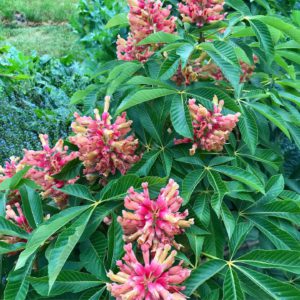
Aesculus Pavia
€150.00 Select options This product has multiple variants. The options may be chosen on the product page -
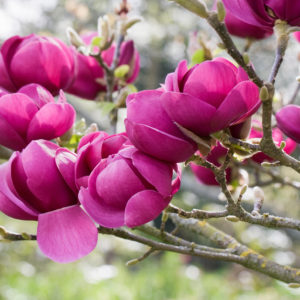
Magnolia Black Tulip specimen multistem
€400.00 Select options This product has multiple variants. The options may be chosen on the product page