

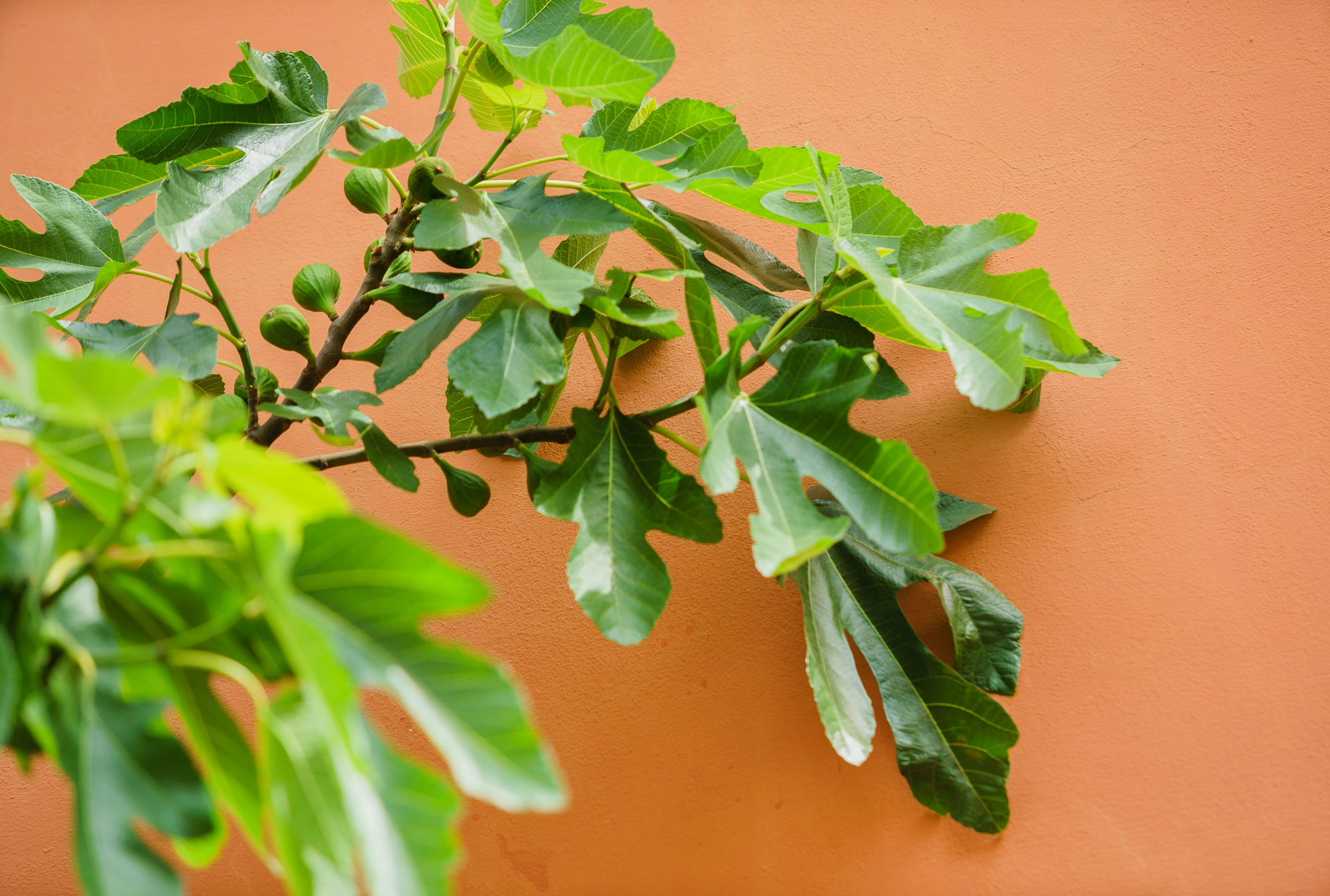
Ficus carica ‘Noire de Caromb’
€450.00
Description
Quick Facts
– Botanical Name: Ficus carica ‘Noire de Caromb’
– Common Name: Noire de Caromb Fig / Black Caromb Fig
– Plant Type: Hardy deciduous fruit tree / shrub
– Mature Height: 2.5–4m (easily restricted by container growing)
– Mature Spread: 2–3m
– Fruit: Generous crops of dark purple-black figs with deep red, rich, sweet flesh — one of the finest-tasting figs available
– Cropping: Reliable, with both a main crop and, in favourable conditions, a second crop later in the season
– Foliage: Large, deeply lobed, handsome mid-green leaves — a beautiful foliage plant in its own right
– Habit: Spreading, open, often multistemmed
– Aspect: Full sun; warm, sheltered position essential
– Soil: Well-drained, fertile; figs thrive with restricted roots in well-drained, slightly alkaline conditions
– Hardiness: Hardy in Ireland & the UK with some winter protection in colder areas; best trained against a warm wall
– Maintenance: Moderate — pruning and watering to taste
Description
There is nothing quite like eating a fig you have grown yourself — sun-warmed, fully ripe, and still carrying the heat of the day and ‘Noire de Caromb’ is one of the finest varieties you can grow for that pleasure. It is the classic Southern French fig, raised in the Rhône valley, and it produces generous crops of dark, purple-black fruits with deep red flesh of remarkable sweetness and richness. They are, quite simply, among the best-tasting figs in cultivation.
As a garden plant it earns its space twice over. The large, deeply lobed leaves are bold and handsome, giving the plant a genuinely Mediterranean character against a warm wall, and the fruits follow in generous succession. In an Irish or UK garden, the key to real success is the position: full sun, shelter, and — classically — a warm south- or west-facing wall, where the restricted roots and reflected heat encourage the excellent cropping this variety is known for.
A fig of real pedigree, for the gardener who wants to grow something extraordinary.
Caragh Garden Notebook
Planting & Position:
Plant ‘Noire de Caromb’ in the very best position you have — full sun, sheltered, and ideally against a warm south- or west-facing wall, where the reflected heat ripens the fruit properly and protects the plant through winter. Figs perform remarkably well in containers and with restricted roots — in fact, restricted rooting concentrates the tree’s energy into fruiting rather than leaf growth, which is exactly what you want. In the ground, plant in well-drained, moderately fertile soil; against a wall, plant the root ball in an open or lined pit to restrict root spread. Plant bare-root or potted trees in late winter or early spring, water in thoroughly, and give young trees the protection of the wall while they establish.
Watering:
Figs need consistent moisture through the growing season, particularly once the fruits begin to swell — a dry spell after the fruit has set can cause premature drop. Water regularly through spring and summer in dry conditions, but harden off through late summer and reduce watering into autumn once the crop is gathered. In containers, water regularly through the growing season and never allow the pot to dry out completely. Avoid waterlogged conditions, which figs dislike.
Feeding:
Feed moderately. An application of a high-potash fertiliser in spring, and again as the fruits begin to swell, supports good cropping; a winter mulch of well-rotted compost around the base in the ground feeds the soil gently. In containers, feed fortnightly with a balanced liquid feed while the fruits are developing. Avoid excess nitrogen, which produces lush leaf growth at the expense of fruiting.
Pruning:
Figs fruit on the previous season’s growth, so pruning is best carried out in winter or early spring while the tree is dormant — the window in which figs can be pruned without bleeding sap excessively. In late winter, remove crossing, dead, or damaged wood and prune to maintain an open, well-spaced framework. If you are fan-training against a wall, tie in new shoots and remove surplus growth through the season. In containers, prune to a balanced open shape, keeping the tree compact. Remove any large, late-season figs that will not ripen before winter leaving them only weakens the plant and protect the early figs that will carry the following season’s crop.
Winter Protection:
In colder gardens, winter protection is essential to carry the plant through the worst of the weather. Fan-trained trees against a warm wall are largely protected by their position, but young trees and container specimens in exposed spots benefit from a fleece covering over the framework in severe frosts, with a mulch of straw or fleece around the base to protect the roots. In containers, move the pot to a sheltered spot near a wall or into a cold, frost-free position. The wall is the great advantage in Ireland and the UK — use it.
Harvesting:
The figs are ready to pick when they are fully coloured, slightly soft to the touch, and the stalk bends back easily — the fruit should feel heavy and yield gently to pressure. Figs do not ripen after picking, so patience is everything. Eat them within a day or two of picking, at their very best — sun-warmed and fresh from the tree is the way they are meant to be enjoyed.
Pests & Problems:
Generally trouble-free once established. The main challenges are environmental: cold winters, wet roots, and insufficient sun, all of which are addressed by the right position and winter care. Birds can take the fruit as it ripens, and netting or careful harvesting timing is sometimes needed. In containers, remember that pots freeze more readily than the ground — protect the roots through winter. With the right spot, ‘Noire de Caromb’ is rewarding and dependable.
Design Notes:
The large, deeply lobed leaves of ‘Noire de Caromb’ give it a genuinely Mediterranean presence, and fan-trained against a warm wall it is one of the most handsome fruit trees a garden can carry — beautiful foliage, a proud architectural form, and the deep, almost-black fruits set against the green leaves and the wall behind. Use it as the centrepiece of a sheltered, sunny corner; train it against a south-facing wall, where the reflected heat does the work; or grow it in a large container on a sunny terrace, where the restricted roots suit it perfectly. Underplant with Mediterranean companions — lavender, rosemary, and thyme — to complete the scene, and position it where the ripening fruits and bold foliage can be seen and enjoyed through the season. A fig of real character, for the gardener who wants to grow something genuinely special.
Additional information
| Size | 150l 200 – 250cm |
|---|
Related products
-
Ficus carica Brown Turkey (Fig Tree)
Price range: €450.00 through €800.00 Select options This product has multiple variants. The options may be chosen on the product page -
Crataegus Pauls Scarlet / Red Hawthorn
Price range: €45.00 through €240.00 Select options This product has multiple variants. The options may be chosen on the product page -
Prunus Victoria
Price range: €45.00 through €60.00 Select options This product has multiple variants. The options may be chosen on the product page -
Laburnum x watereri Vossii / Golden Rain Tree
Price range: €245.00 through €580.00 Select options This product has multiple variants. The options may be chosen on the product page