

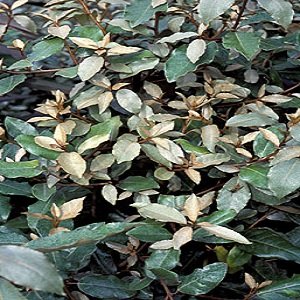
Elaeagnus ebbengei Compacta
Price range: €30.00 through €125.00
Frequently Bought Together
Description
Quick Facts
– Botanical Name: Elaeagnus × ebbingei ‘Compacta’
– Common Name: Compact Ebbing’s Silverberry
– Plant Type: Evergreen shrub
– Mature Height: 2.5–3.5m
– Mature Spread: 2–3m
– Flowering Period: October to November — inconspicuous but exceptionally and surprisingly fragrant
– Flower Colour: Small, silvery, bell-shaped flowers carried in clusters — beautiful fragrance, modest appearance
– Fruit: Small oval orange or red fruits in spring — a charming bonus
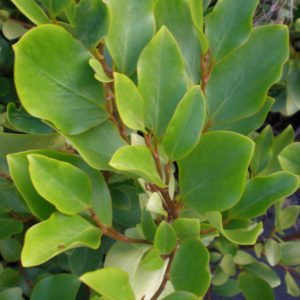
– Foliage: Large, leathery, metallic grey-green above with a striking silver underside; young leaves almost entirely silver
– Habit: Dense, bushy, upright — naturally well-clothed from base to top
– Aspect: Full sun to partial shade; excellent in exposed and coastal positions
– Soil: Well-drained; tolerant of most soils including poor, sandy, and coastal ground
– Hardiness: Very hardy in Ireland & the UK
– Hedging rate: 2 plants per metre
– Awards: RHS Award of Garden Merit (AGM)
– Maintenance: Low — clip once a year for a formal hedge; little needed as a specimen
Description
Elaeagnus × ebbingei ‘Compacta’ is one of the most quietly distinguished of the evergreen hedging and screening shrubs — a plant that is striking in appearance, extraordinary in autumn fragrance, and impressively tough in almost any condition you can offer it. The large, leathery leaves are metallic grey-green above with a silver underside that flashes and shimmer in every breeze, and on young growth the silver is almost total — one of the most luminous effects in the winter garden.
The surprise comes in October and November, when small, silvery, bell-shaped flowers open in clusters among the foliage. You are unlikely to see them at a glance; you will almost certainly smell them — the fragrance is unexpectedly powerful for such modest blooms, sweet and warm on the autumn air at a time when the garden has very little else to offer by way of scent. In spring, small oval fruits in orange or red follow, adding a further, cheerful detail to a plant that contributes through every season.
Tough, wind-resistant, coastal-tolerant, and genuinely ornamental — a hedge or specimen of real character.
Caragh Garden Notebook
Planting:
Plant in autumn or early spring into well-drained soil. ‘Compacta’ is tolerant of most soil types, including poor, sandy, and coastal ground, and is one of the most adaptable of the large evergreen shrubs. It performs in full sun to partial shade and is an outstanding choice for exposed or coastal positions where the salt-laden air and wind defeat many alternatives. For hedging, plant at 2 per metre for a dense, well-filled hedge — space evenly, water in thoroughly, and mulch along the hedge line to retain moisture through the first season. As a specimen, give it room to develop its naturally dense, bushy form.
Watering:
Water consistently through the first growing season while the plant establishes. Once settled, ‘Compacta’ is impressively drought-tolerant and requires little supplementary watering in an Irish garden. It manages exposed, dry, and coastal conditions with a resilience that most evergreens cannot match. During prolonged dry spells in the first summer, regular watering will support establishment; thereafter, natural rainfall is usually more than adequate.
Feeding:
A light balanced fertiliser in spring supports steady, healthy growth — particularly in the first few years while the hedge or specimen is filling out. Once established, an annual mulch of well-rotted compost along the base feeds gently and improves the soil over time. The plant is not demanding and performs well with minimal feeding.
Pruning & Clipping:
For a formal hedge, clip once a year in late summer or early autumn — after the current season’s growth has matured and before the autumn flowers begin, so you enjoy both a tidy shape and the full fragrance display in October and November. For an informal specimen, very little intervention is needed beyond an occasional tidy; the plant’s natural form is dense and well-clothed. If a plant ever becomes overgrown or bare at the base, it can be cut back hard in spring and will reshoot vigorously — one of its most useful qualities.
Pests & Problems:
Generally very trouble-free and one of the toughest evergreen shrubs available. It is tolerant of wind, salt, exposure, pollution, and most soil types — the plant that will thrive where others decline. Scale insects can occasionally appear; treat with a horticultural oil if they cause concern. In waterlogged or very poorly drained soils the plant will underperform; good drainage is the one condition it genuinely requires.
Design Notes:
The metallic, silver-shimmer foliage of ‘Compacta’ makes it one of the most visually interesting of the large hedging evergreens — a hedge that catches the light and changes as the breeze moves through it, in a way that clipped yew or laurel never quite achieves. Use it as a dense, wind-resistant hedge along an exposed boundary, where its toughness and ornamental quality earn their place simultaneously; plant it as a specimen in a border, where the silver foliage provides a luminous, year-round backdrop to darker planting; or use it in a coastal garden where its tolerance of salt and wind makes it one of the most reliable large evergreens available. Position it where the October and November fragrance can be caught as you pass — near a path, beside a gate, or close to a frequently used entrance — and you will look forward to those months all year. The spring fruits add a seasonal detail that delights anyone who notices them.
Related products
-
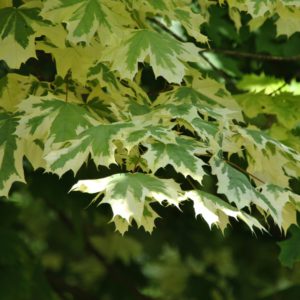
Acer plat. ‘drummondii’
Price range: €320.00 through €600.00 Select options This product has multiple variants. The options may be chosen on the product page -

Elaeagnus ebbengei – 1/2 Standard and 3/4 Standard Espaliers
€350.00 Select options This product has multiple variants. The options may be chosen on the product page -
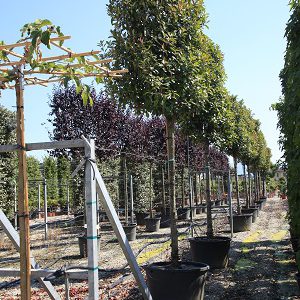
Photinia Red Robin Standard Pleached / Espalier
Price range: €390.00 through €550.00 Select options This product has multiple variants. The options may be chosen on the product page -
Griselinia littoralis
€280.00 Select options This product has multiple variants. The options may be chosen on the product page