

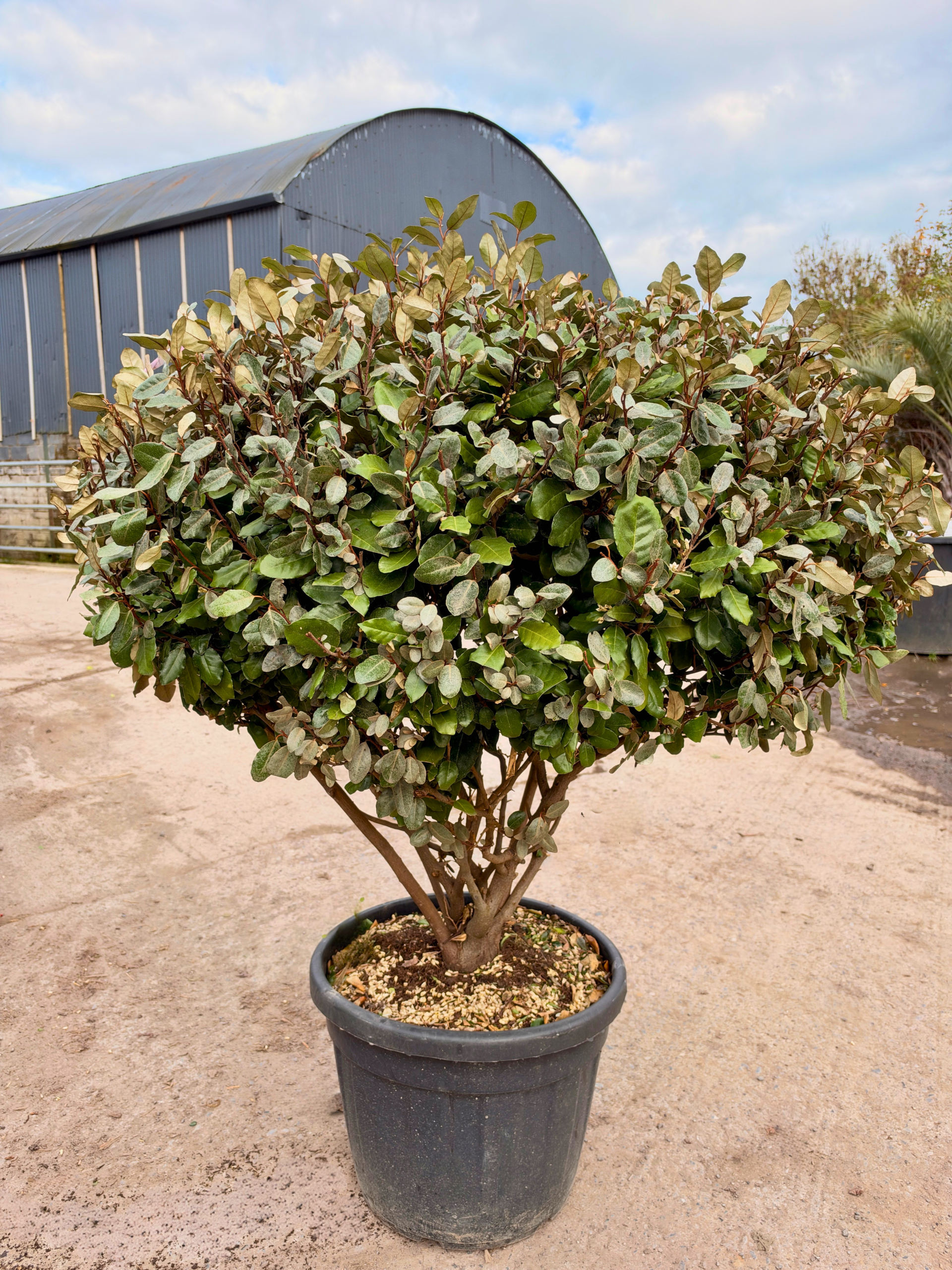
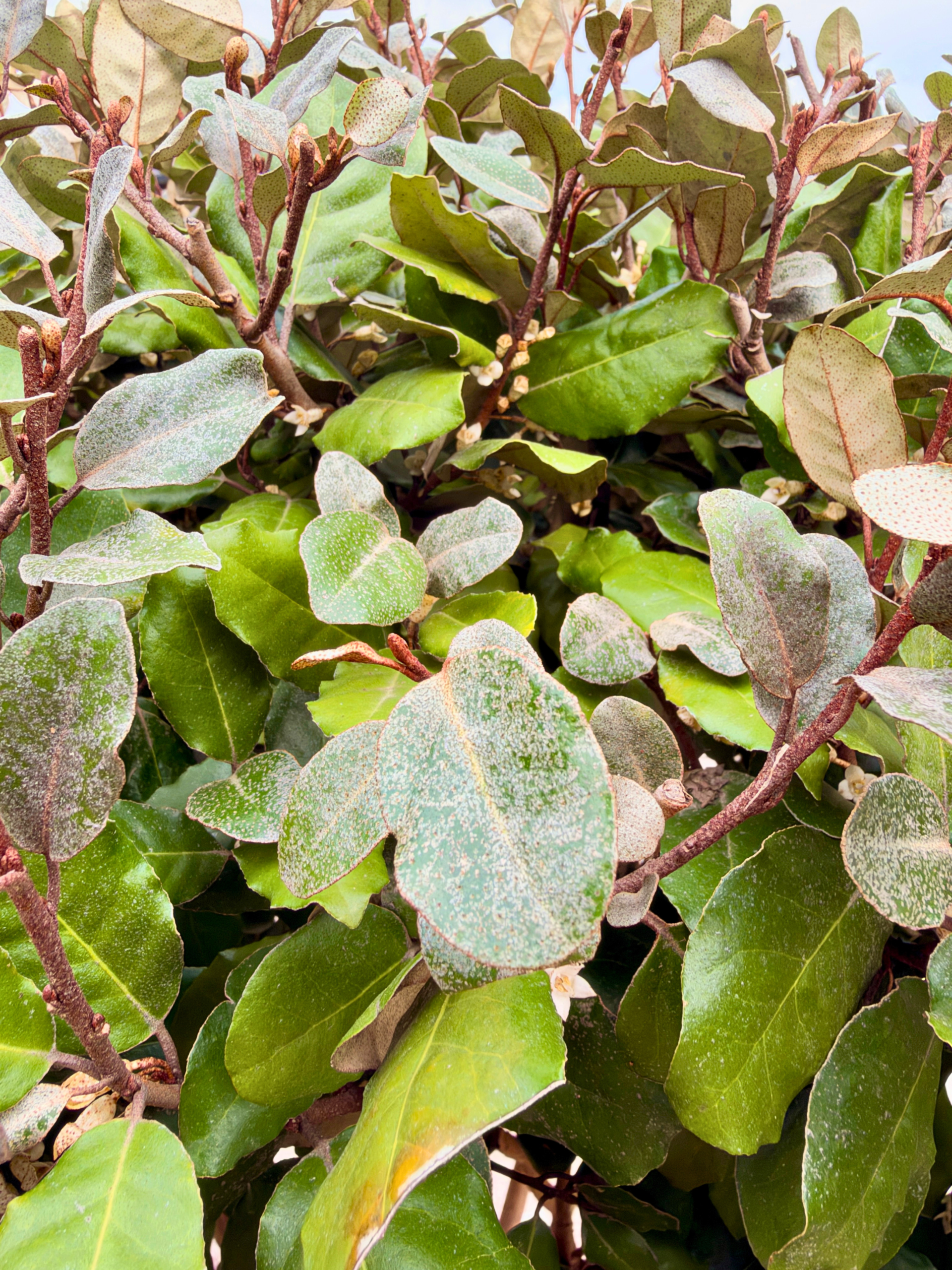
Elaeagnus × ebbingei – Large Cloud
€540.00
Description
Quick Facts
– Botanical Name: Elaeagnus × ebbingei
– Common Name: Ebbinge’s Silverberry, Oleaster (cloud-pruned)
– Plant Type: Evergreen shrub, trained as cloud-pruned topiary
– Form: Large, sculpted cloud form with layered foliage pads
– Mature Height: Maintained by clipping to the supplied form (a free-growing plant reaches 2.5-3m or more)
– Growth Rate: Fast
– Flowering Period: October to November
– Flower Colour: Tiny, silvery-white bells with a sweet fragrance, easily missed but noticed by scent
– Foliage Colour: Leathery, dark green leaves with a silvery sheen, silver on the underside
– Fruit: Small orange-red fruits in spring
– Hardiness: RHS H5 (fully hardy)
– Soil Requirements: Well-drained; tolerates most soils including chalk, sand and clay
– Aspect: Full sun to partial shade; tolerates exposure and coastal conditions
– Maintenance: Moderate: clip two to three times in the growing season
Description
Elaeagnus × ebbingei, shaped into a large cloud, is a bold, sculptural evergreen with plenty of presence. The layered, rounded pads of foliage give a modern, Japanese-inspired look that works in both contemporary and traditional gardens.
The leathery leaves are dark green on top and silvery underneath, so the whole plant shimmers when the wind moves through it. In autumn, tiny silvery flowers open and release a rich, sweet fragrance, a lovely surprise when little else is in bloom.
Tough, evergreen and sculptural, it gives structure and a strong focal point all year round.
Caragh Garden Notebook
Planting:
Plant in autumn or spring in well-drained soil, adding well-rotted compost to the planting hole. Choose a sunny or lightly shaded spot, with room for the full spread of the cloud. Plant at the same depth as the pot, firm in gently, water in well and mulch. Stake if needed until it is anchored. In containers, use a loam-based compost and a large, heavy pot with good drainage.
Watering:
Water regularly through the first two growing seasons, especially in dry spells. Once established, it is very drought tolerant. In containers, water when the top of the compost feels dry.
Feeding:
Little feeding is needed. A balanced general fertiliser or a mulch of well-rotted compost in spring is plenty.
Seasonal Care & Tidy-Up:
Clip two to three times in the growing season to keep the cloud pads neat and defined, using sharp shears or secateurs. Avoid clipping in late autumn, as this can remove the flower buds. Remove any plain green shoots that grow strongly out of the shape, cutting them back to their source. It regrows well after pruning.
Pests & Problems:
Generally trouble-free. Honey fungus can occasionally affect established plants and leaf spot may appear in wet seasons. Waterlogged soil is the main risk, so good drainage matters.
Design Notes:
A good choice as a focal point in a gravel garden, courtyard or contemporary border, or in a large container on a terrace. The silvery foliage pairs well with ornamental grasses, lavender, box and darker evergreens. A pair either side of a gate or entrance makes a smart, striking feature.
Propagation:
Take semi-hardwood cuttings in late summer, though cloud forms take years to train. For a well-shaped specimen, source nursery-grown plants.
Additional information
| Pot Size |
|---|
Related products
-

Salix vitellina
Price range: €380.00 through €850.00 Select options This product has multiple variants. The options may be chosen on the product page -
Quercus Crimson Spire /Crimson Spire Oak
Price range: €175.00 through €195.00 Select options This product has multiple variants. The options may be chosen on the product page -

Prunus Maackii
€120.00 Select options This product has multiple variants. The options may be chosen on the product page -
Prunus Novita Hedging
Price range: €15.00 through €400.00 Select options This product has multiple variants. The options may be chosen on the product page