

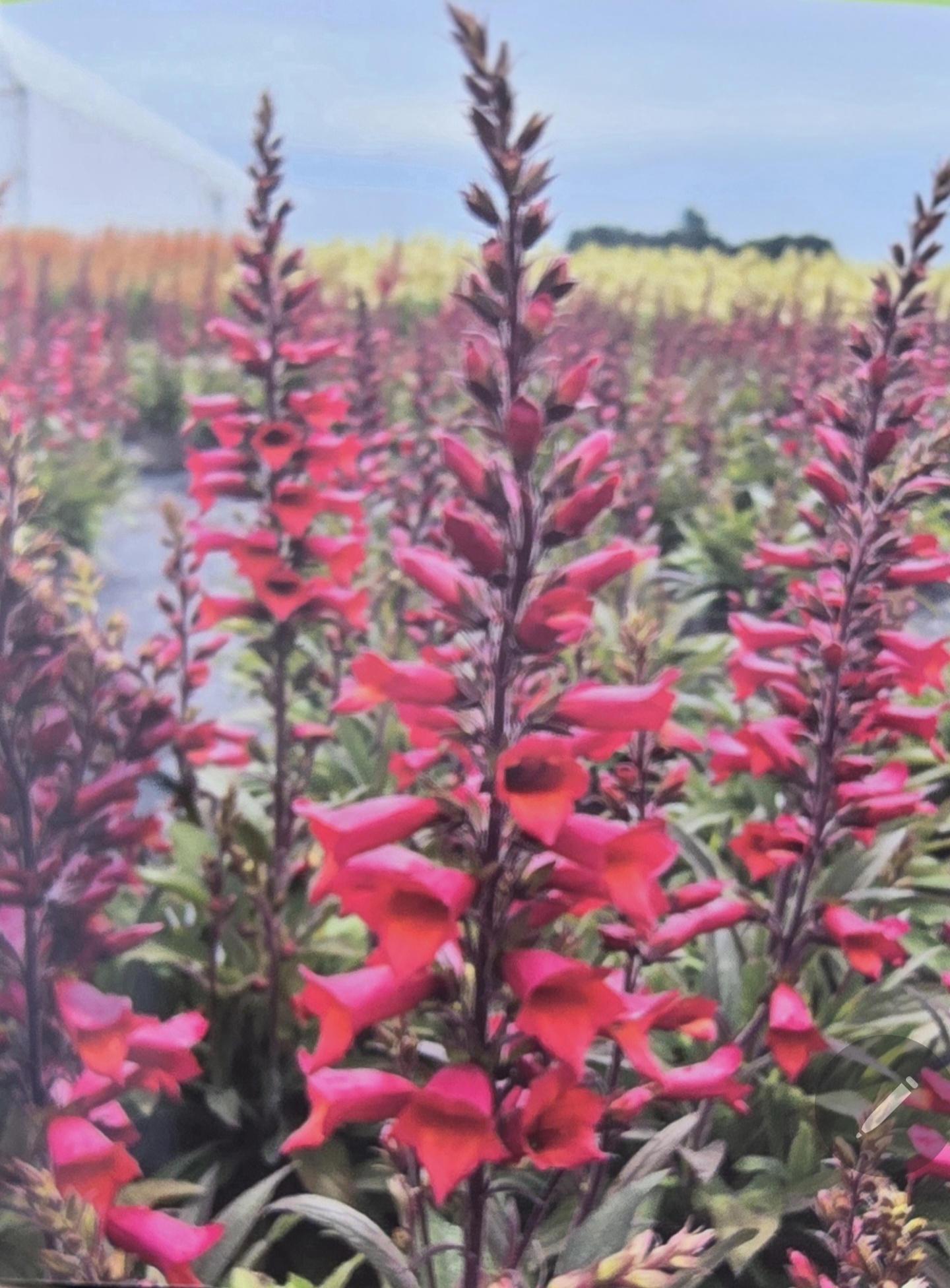
Digitalis ‘illumination rasberry’
€12.50
Frequently Bought Together


Description
Quick Facts
- Common Name: Foxglove ‘Illumination Raspberry’
- Botanical Name: Digitalis ‘Illumination Raspberry’
- Plant Type: Herbaceous perennial / short-lived perennial (often longer-lived than traditional foxgloves)
- Mature Height: 70–100cm
- Mature Spread: 40–60cm
- Flowering Period: June to September (long-flowering)
- Flower Colour: Rich raspberry-pink bells with a softly patterned, lighter throat
- Foliage: Mid-green, slightly glossy leaves; tidy clump-forming habit
- Hardiness: Hardy in UK & Ireland (best in a sheltered spot in colder, exposed gardens)
- Soil Requirements: Moist, well-drained soil; moderately fertile
- Aspect: Full sun to part shade
- Maintenance: Low
Description
Digitalis ‘Illumination Raspberry’ is a foxglove for people who want the magic for longer. Instead of a brief early-summer moment, it flowers on and on—sending up elegant spires of raspberry-pink bells from early summer right through into autumn, especially if you keep it watered and lightly deadheaded.
The flowers are richly coloured and beautifully detailed up close, with a softly patterned throat that gives each bell depth and glow. It has that classic foxglove shape—tall, graceful, and full of movement—but with a more modern, garden-ready habit that sits neatly in borders without flopping or disappearing after one flush.
It’s a brilliant plant for adding height and colour to mixed borders, cottage gardens, and pollinator planting. Bees adore it, and because it keeps flowering, it becomes a steady food source through the season—one of those plants that quietly earns its place.
Caragh Garden Notebook
Planting:
Plant in spring or autumn. Space plants 40–50cm apart to allow for a fuller clump. Choose a spot with moisture-retentive, well-drained soil. Full sun is fine in Irish and UK gardens, but part shade works beautifully too—especially if the soil runs dry in summer.
Plant in spring or autumn. Space plants 40–50cm apart to allow for a fuller clump. Choose a spot with moisture-retentive, well-drained soil. Full sun is fine in Irish and UK gardens, but part shade works beautifully too—especially if the soil runs dry in summer.
Soil Preparation:
Improve the planting area with compost or well-rotted organic matter. Aim for soil that holds moisture but doesn’t sit wet. A yearly mulch helps keep roots cool and reduces summer stress.
Improve the planting area with compost or well-rotted organic matter. Aim for soil that holds moisture but doesn’t sit wet. A yearly mulch helps keep roots cool and reduces summer stress.
Seasonal Care:
Water during dry spells—this is the key to keeping it flowering for months. Deadhead spent spikes to encourage fresh flowering stems. In late autumn, tidy away tired stems; the plant will often come back strongly the following season.
Water during dry spells—this is the key to keeping it flowering for months. Deadhead spent spikes to encourage fresh flowering stems. In late autumn, tidy away tired stems; the plant will often come back strongly the following season.
Pests & Problems:
Watch for slugs and snails on young growth. Good spacing helps airflow and reduces the risk of mildew. Remove any affected leaves promptly.
Watch for slugs and snails on young growth. Good spacing helps airflow and reduces the risk of mildew. Remove any affected leaves promptly.
Design Notes:
Perfect for long-season colour in mixed borders. Gorgeous with roses, salvias, nepeta, astrantia, hardy geraniums, and ornamental grasses. The raspberry tones also sing beside deep purples, soft creams, and silvery foliage.
Perfect for long-season colour in mixed borders. Gorgeous with roses, salvias, nepeta, astrantia, hardy geraniums, and ornamental grasses. The raspberry tones also sing beside deep purples, soft creams, and silvery foliage.
Propagation:
Usually propagated by cuttings/tissue culture for named forms. (Seed-raised plants may not come true.)
Usually propagated by cuttings/tissue culture for named forms. (Seed-raised plants may not come true.)
Related products
-
Digitalis Grandiflora / Foxgloves
€8.50 Select options This product has multiple variants. The options may be chosen on the product page -
Wisteria sinensis Alba’
€30.00 Select options This product has multiple variants. The options may be chosen on the product page -
Geranium ‘Rozanne’
€10.50 Select options This product has multiple variants. The options may be chosen on the product page -
Helleborus orientalis
€25.00 Select options This product has multiple variants. The options may be chosen on the product page