

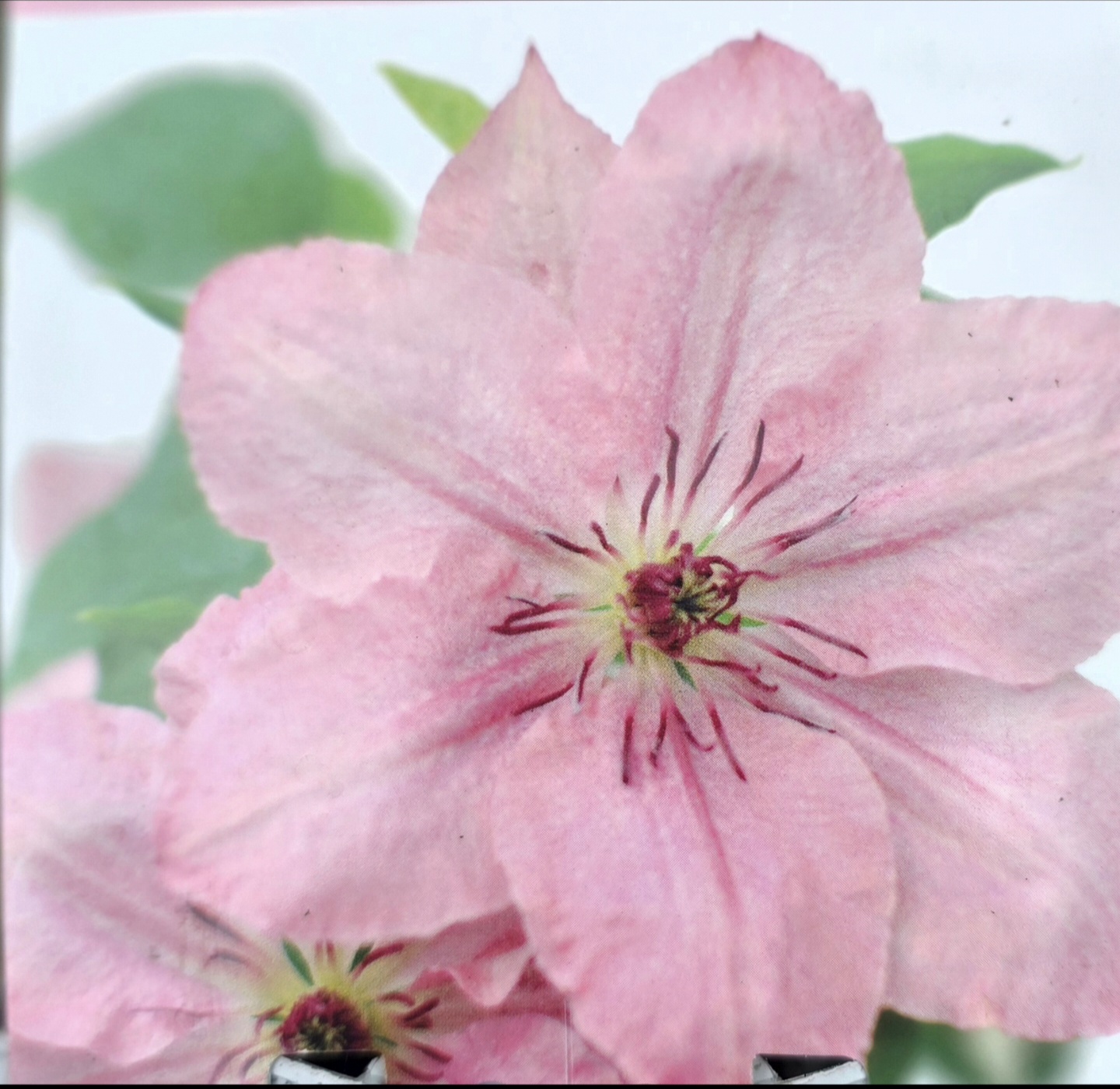
Clematis Raymond Evision ‘Sarah Elizabeth’
€20.00
Frequently Bought Together


Description
Quick Facts
- Common Name: Clematis ‘Sarah Elizabeth’
- Botanical Name: Clematis ‘Sarah Elizabeth’
- Plant Type: Deciduous climbing clematis
- Mature Height: 2.5–4m (with support)
- Mature Spread: 1–1.5m
- Flowering Period: Mid to late summer (often into early autumn)
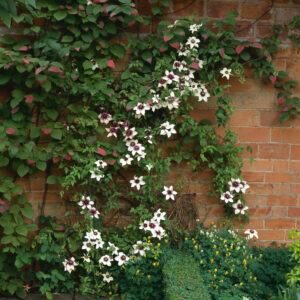
- Flower Colour: Soft to mid pink (often with a lighter central bar) and contrasting stamens
- Hardiness: Hardy in UK & Ireland
- Soil Requirements: Moist, well-drained, fertile soil
- Aspect: Sun to part shade (best flowering with good light; keep roots cool)
- Maintenance: Low (hard prune once a year)
Description
Clematis ‘Sarah Elizabeth’ is a beautifully generous summer-flowering clematis, covered in soft pink blooms that bring a gentle, romantic lift to trellis panels, arches, pergolas and fences. It’s a brilliant way to add height and colour without taking up much ground space—perfect for weaving through shrubs, climbing alongside roses, or turning a plain fence into a flowering wall.
Because it’s a Group 3 clematis, it’s also wonderfully straightforward to care for: you cut it back hard once a year, and it comes away fresh and vigorous, flowering on new growth through the summer months. That makes it a great choice for customers who love clematis but want pruning to be simple and foolproof.
As ever, the clematis rule is the one that really matters: head in the sun, feet in the shade. Keep the roots cool and moist, give it something to climb, and it will do the rest.
Caragh Garden Notebook
Planting:
Plant in spring or autumn. Choose a spot in sun or part shade with a support in place (trellis, wires, obelisk). Dig a generous hole and enrich with compost. Plant the clematis 5–8cm deeper than it sits in the pot to encourage strong shoots from the base. Water well and mulch to keep roots cool.
Plant in spring or autumn. Choose a spot in sun or part shade with a support in place (trellis, wires, obelisk). Dig a generous hole and enrich with compost. Plant the clematis 5–8cm deeper than it sits in the pot to encourage strong shoots from the base. Water well and mulch to keep roots cool.
Soil Preparation:
Clematis love fertile, moisture-retentive but free-draining soil. Improve heavy soil with compost and grit; improve light soil with plenty of organic matter. Mulch annually to conserve moisture and protect the root zone.
Clematis love fertile, moisture-retentive but free-draining soil. Improve heavy soil with compost and grit; improve light soil with plenty of organic matter. Mulch annually to conserve moisture and protect the root zone.
Watering & Feeding:
Water regularly in the first year and during dry spells. Feed in spring with a balanced fertiliser, then again in early summer to support strong flowering. Clematis in pots will need more consistent watering and feeding than those in the ground.
Water regularly in the first year and during dry spells. Feed in spring with a balanced fertiliser, then again in early summer to support strong flowering. Clematis in pots will need more consistent watering and feeding than those in the ground.
Pruning (Clematis ‘Sarah Elizabeth’ — Group 3)
Late winter / early spring (Feb–March):
- Cut all stems back to 20–30cm above ground level.
- Make cuts just above a pair of strong buds.
- Remove any dead or weak stems completely.
This hard prune encourages lots of fresh new shoots from the base, which is exactly where this clematis makes its flowers.
During the season:
- Tie in new growth as it climbs.
- You can deadhead lightly, but it’s not essential.
Pests & Problems:
Watch for slugs/snails on young shoots. Planting slightly deeper and keeping soil evenly moist helps reduce the risk of clematis wilt. Good airflow helps keep foliage clean.
Watch for slugs/snails on young shoots. Planting slightly deeper and keeping soil evenly moist helps reduce the risk of clematis wilt. Good airflow helps keep foliage clean.
Design Notes:
Perfect for trellis panels, arches, pergolas, and scrambling through shrubs. Lovely with roses, salvias, nepeta, and ornamental grasses—anything that enjoys the same sunny, well-fed border conditions.
Perfect for trellis panels, arches, pergolas, and scrambling through shrubs. Lovely with roses, salvias, nepeta, and ornamental grasses—anything that enjoys the same sunny, well-fed border conditions.
Related products
-
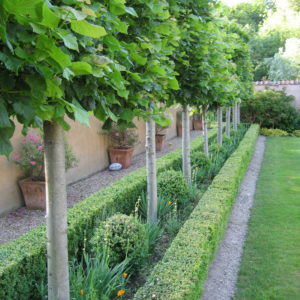
Pyrus Chanticleer Espalier
Price range: €440.00 through €450.00 Select options This product has multiple variants. The options may be chosen on the product page -
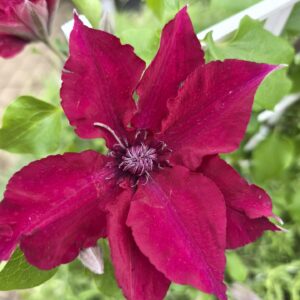
Clematis boulevard ‘nubia’
Price range: €20.00 through €35.00 Select options This product has multiple variants. The options may be chosen on the product page -
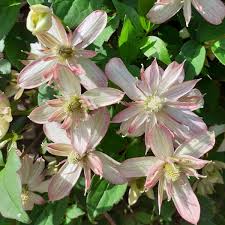
Clematis ‘Marjorie’
€20.00 Select options This product has multiple variants. The options may be chosen on the product page -
Clematis ‘Hybridia Sieboldii’
€20.00 Select options This product has multiple variants. The options may be chosen on the product page