

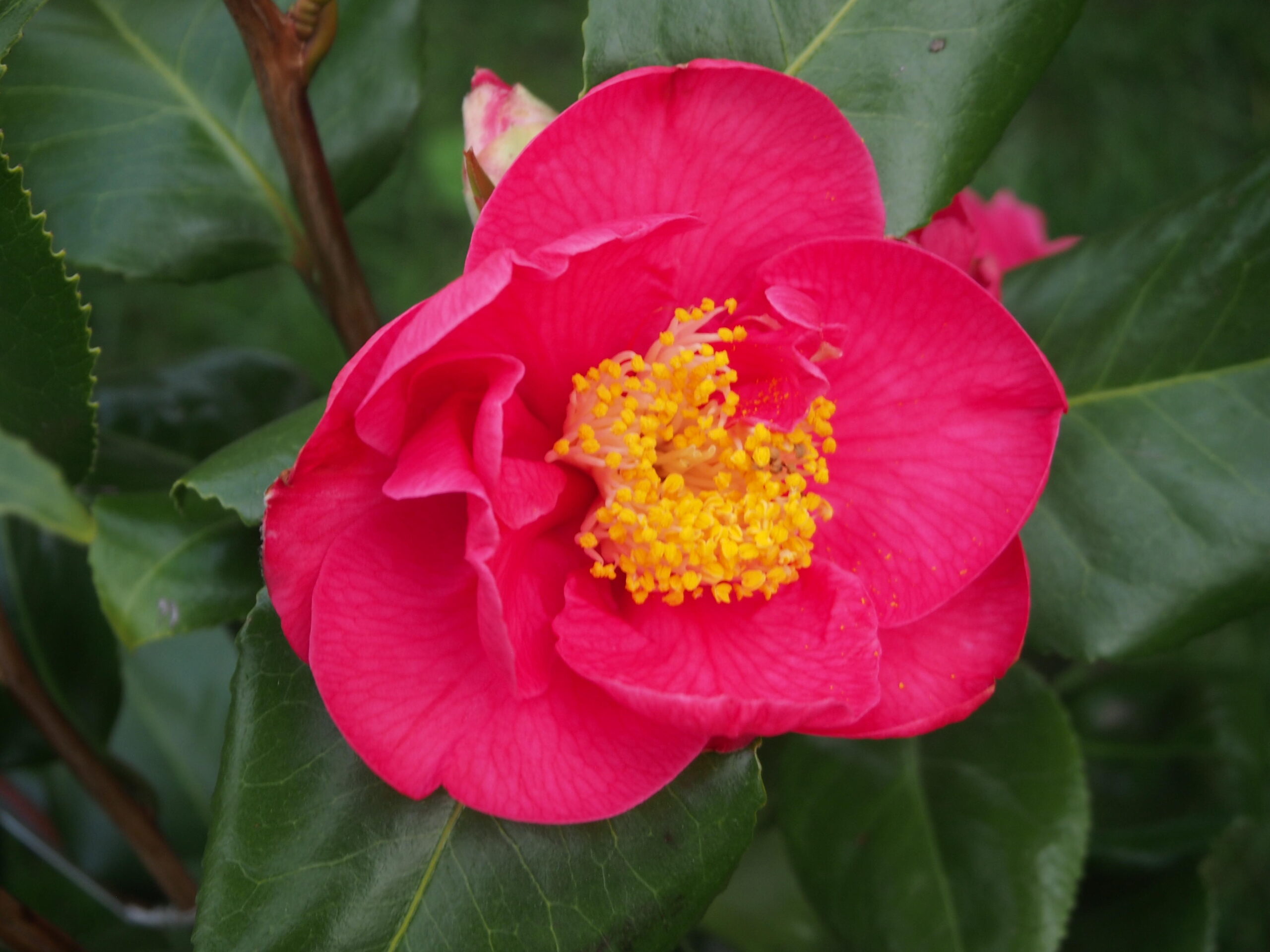
Camellia japonica ‘Dr King’
€45.00
Description
Quick Facts
- Botanical name: Camellia japonica ‘Dr King’ (also written ‘Dr. King’)
- Common name: Japanese camellia
- Type: Evergreen shrub
- Mature height and spread: Around 2.5–4m tall and 1.5–2.5m wide after 10–20 years. Slow growing.
- Flowering period and colour: Late winter to spring (about February to April). Deep red flowers.
- Foliage: Glossy, dark green, leathery leaves, attractive all year round.
- Hardiness: Hardy in Ireland and the UK (around RHS H5, to about -15°C). Flower buds can be damaged by hard frosts.
- Soil: Acidic to neutral, moist but free-draining soil, rich in organic matter. Not suited to chalky or alkaline soil. Grow in ericaceous compost in pots.
- Aspect: Sheltered semi-shade, ideally out of early morning sun so frosted blooms don’t thaw too quickly.
- Maintenance: Low.
Description
A classic evergreen camellia with glossy, dark green leaves and rich, deep red flowers that brighten the garden from late winter into spring. Slow-growing and long-lived, it makes an elegant specimen or border shrub, and also does well in a large container on a sheltered patio. A rewarding plant for acidic soil in a sheltered spot.
Caragh Garden Notebook
Planting Plant in spring or early autumn in acidic, free-draining soil with plenty of leaf mould or ericaceous compost. Dig a hole about twice the width of the pot and keep the top of the rootball level with the surface, as deep planting can reduce flowering. Choose a sheltered spot out of cold winds and early morning sun. In alkaline soil, grow in a large container with ericaceous compost.
Watering Keep the soil evenly moist, particularly from midsummer to autumn when flower buds form. Dry spells at this time are a main cause of bud drop. Use rainwater where possible. Container plants need regular watering.
Feeding Feed with an ericaceous fertiliser in spring after flowering. Mulch each year with leaf mould or composted bark, keeping it clear of the stem.
Seasonal Care and Tidy-Up Spring: Feed, mulch and prune if needed after flowering. Summer: Water regularly, especially in dry spells. This protects next year’s buds. Autumn: Keep watering until the rain returns. Remove fallen petals and leaves. Winter: Protect buds with fleece in hard frosts. Move pots to a sheltered spot.
Division Not applicable. Pruning is only needed to shape or tidy. Prune lightly after flowering in spring, before new growth. Avoid pruning later, as it removes next year’s flower buds.
Pests and Problems
- Bud drop: Caused by irregular watering, dry compost or sudden temperature changes. Keep the soil evenly moist.
- Petal blight: A fungal disease that browns the petals. Remove and dispose of affected flowers and fallen petals.
- Vine weevil: The grubs can damage the roots, particularly in pots. Check containers regularly.
- Scale insects: Look for small sticky bumps on the leaf undersides, and wipe or treat if you see them.
- Yellow leaves: Often a sign of alkaline soil or lack of nutrients.
Design Notes A lovely focal point for a shady, sheltered border, woodland-style garden or large container on a terrace. It pairs well with ferns, hellebores, rhododendrons, hostas and spring bulbs. Deep red flowers show up beautifully against glossy green leaves and pale walls.
Propagation Semi-ripe cuttings in late summer are the usual method, though they can be slow and unreliable for the home gardener. Seed won’t reliably produce a true copy of the cultivar.
Additional information
| Pot Size |
|---|
Related products
-
Catalpa biganoides / Indian Bean Tree
€440.00 Select options This product has multiple variants. The options may be chosen on the product page -
Camellia japonica Parachute Form
€1,800.00 Select options This product has multiple variants. The options may be chosen on the product page -

Camellia japonica Rosso – 1/2 Standard
€550.00 Select options This product has multiple variants. The options may be chosen on the product page -

Camellia japonica Black Lace
Price range: €75.00 through €360.00 Select options This product has multiple variants. The options may be chosen on the product page