

Apollo Jar
€730.00
Description
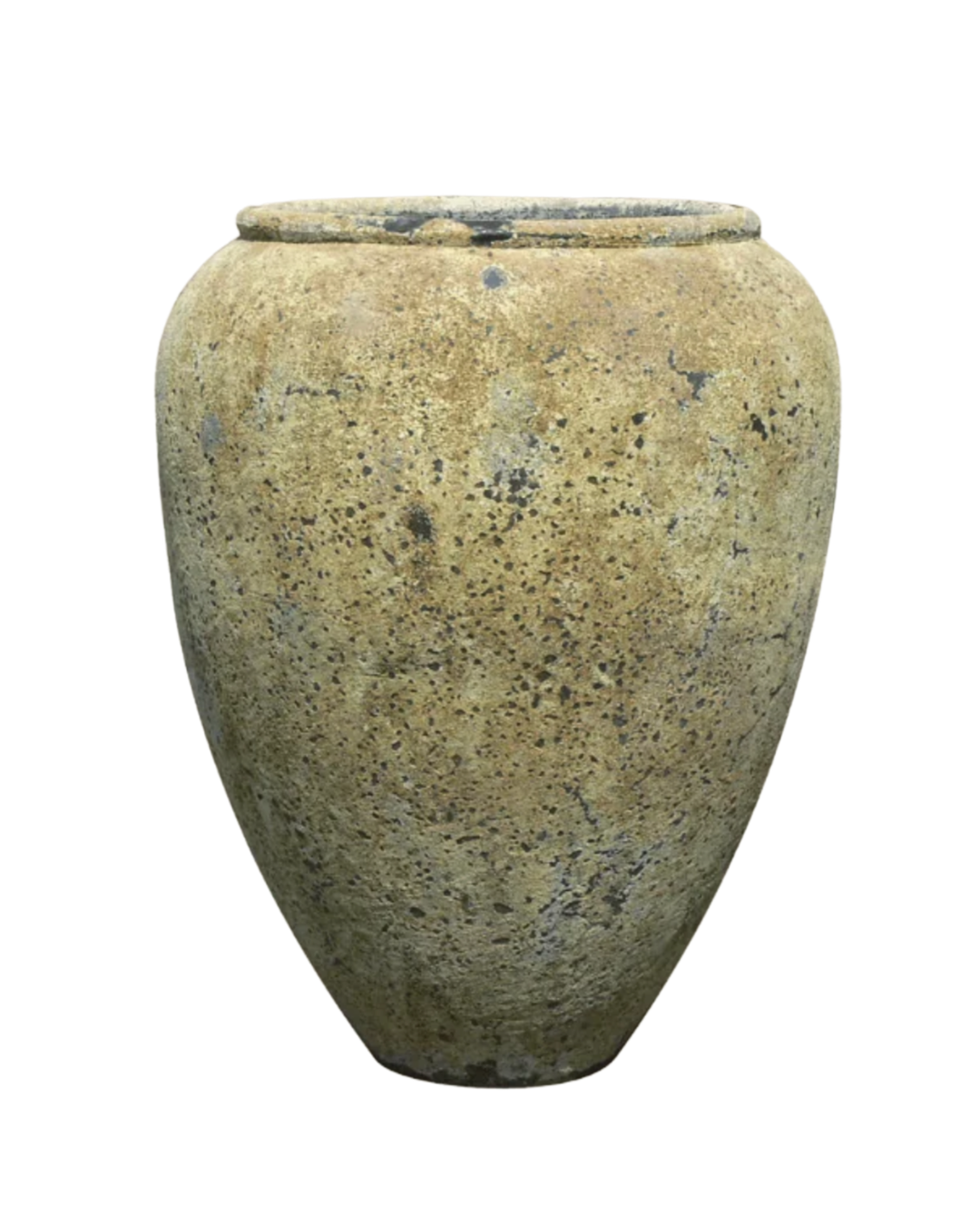
The Apollo is a beautifully balanced jar with a broad, rounded body that widens generously at the shoulder before tapering smoothly towards a narrow base and a neat, lipped rim. Its form is pure and unfussy — a classic olive jar shape that has been made and remade across the Mediterranean for thousands of years, and which feels entirely at home in the garden whether it stands alone or among others. There is a solidity to the Apollo, a quiet confidence in its proportions, that makes it one of those pieces you simply know is right the moment you see it.
The surface is warm and alive. A richly speckled finish in sandy ochre, warm stone and deep charcoal carries the look of aged limestone or weathered sandstone — pitted, marked and beautifully uneven, as though the Apollo has spent years in the sun and wind of a Mediterranean courtyard. The tones shift across the body as the light changes, catching warmth in the ochre and depth in the darker patches, and no two pieces carry quite the same marks. This is a jar that looks as though it has already lived a life, and is all the more beautiful for it.
Warm, rounded and timelessly proportioned — the Apollo brings a natural, sun-warmed character to the garden that feels as though it has always been there.
Why we love it
– Classic olive jar form — broad, rounded and beautifully proportioned
– Warm speckled finish in sandy ochre, stone and deep charcoal tones
– Richly aged, pitted surface with the look of weathered limestone
– A piece of real warmth and presence — equally beautiful planted or empty
– Frost resistant and built for years of outdoor life
– Hand-made — no two pieces exactly alike
Specification
– Collection: Atlantis
– Name: Apollo
– Form: Broad olive jar with rounded shoulder, tapering body and neat lipped rim
– Finish: Speckled, pitted — sandy ochre, warm stone and deep charcoal; aged limestone patina
– Frost resistance: Yes
– Use: Suitable for outdoor use
– Note: Hand-made; each piece is individual
Best for
– A stand-alone focal point on a terrace, path or courtyard
– Mediterranean, coastal and rustic garden schemes
– Grouping with complementary aged and textured jars for a composed, sun-warmed arrangement
– Gardens and spaces that value warmth, natural character and timeless form
– Statement planting or left empty to let the surface speak for itself
What makes this product special
The Apollo is one of those pieces that feels entirely inevitable — a form so perfectly balanced, so naturally suited to the garden, that it is hard to imagine the space without it. The broad, rounded body sits with real confidence, the lipped rim gives it a finished, considered quality, and the warm speckled surface in sandy ochre and charcoal carries exactly the kind of lived-in character that cannot be manufactured or rushed. It is a jar that rewards looking at closely — the pitting, the shifting tones, the marks of the making — and it rewards living with, as it continues to weather and deepen with every season. As with all hand-made pieces, the Apollo you choose is entirely its own — no other will carry exactly the same warmth, the same marks, the same quiet story.
Caragh’s Garden Notebook
The Apollo’s rounded, generous form suits a planting that echoes its warmth and softness — a broad ornamental grass, a trailing Mediterranean herb, or a bold succulent will all sit beautifully within its wide mouth and feel entirely in keeping with its character. Left unplanted, it reads as a piece of sculpture in its own right, the speckled ochre surface catching the light through the day and warming beautifully in the low sun of autumn and winter. The sandy, stone-toned finish sits naturally against terracotta, warm brick, timber and green planting alike, and it looks especially at home grouped with other aged jars and pots of varying heights, where its rounded form brings a soft, anchoring weight to the arrangement. As with all hand-made pieces, treat the dimensions as a guide — the character is always the point. Let it weather in situ, and the Apollo will bring the warmth of the Mediterranean sun to wherever it stands.
Additional information
| Size | 64cm Diameter x 85cm tall |
|---|
Related products
-
Lucia Stone Grey Planters
Price range: €130.00 through €420.00 Select options This product has multiple variants. The options may be chosen on the product page -

Piazza Planter Cubes in Stone Grey
Price range: €220.00 through €835.00 Select options This product has multiple variants. The options may be chosen on the product page -

Weathered Cement Trough Planters
Price range: €398.00 through €650.00 Select options This product has multiple variants. The options may be chosen on the product page -

Lucia Weathered Grey Planters
Price range: €130.00 through €420.00 Select options This product has multiple variants. The options may be chosen on the product page