

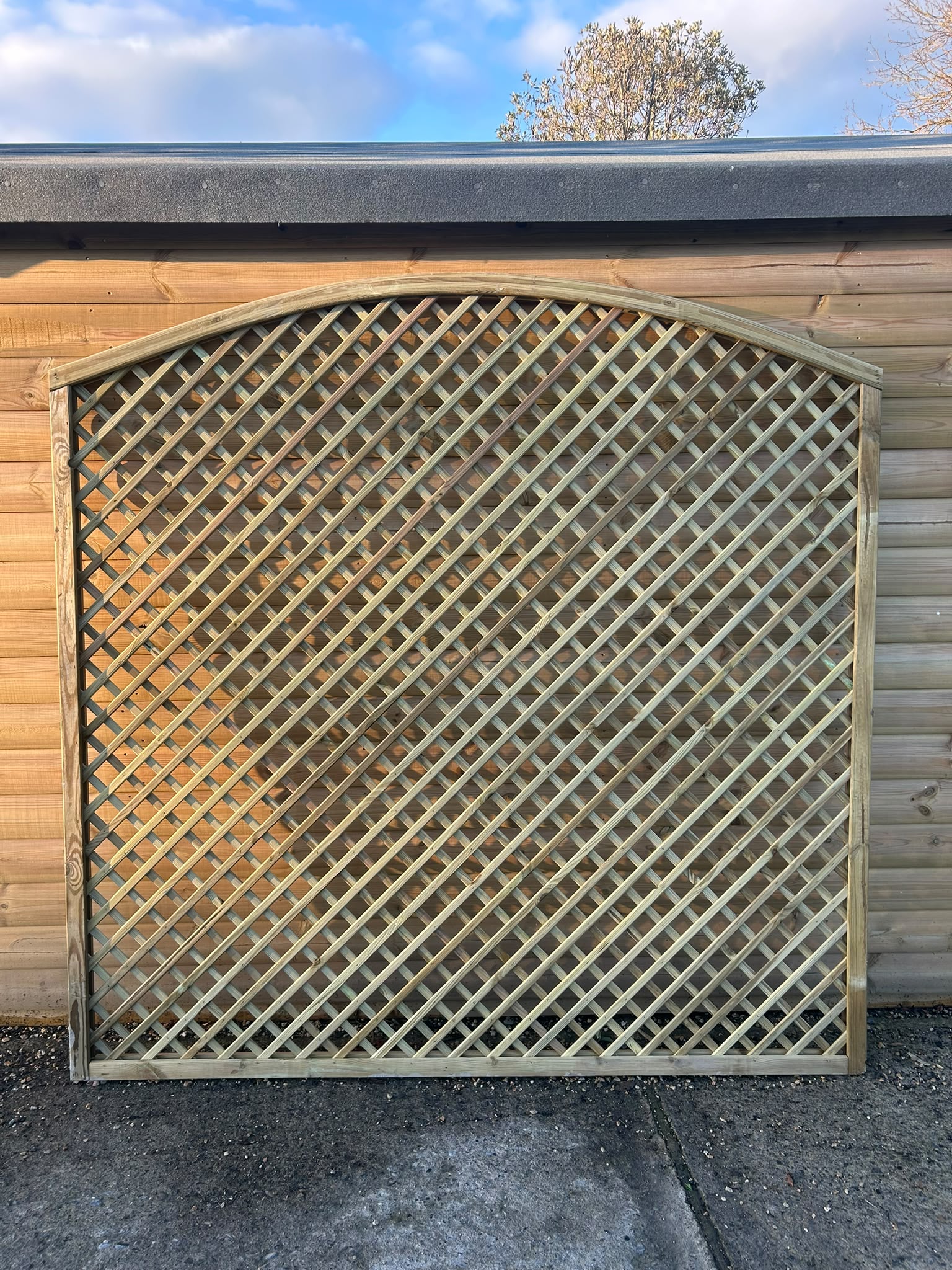
Convex Arch Top Diamond Lattice Panel
€128.00
Description
Quick Facts
– Size: 1800 x 1800mm (6ft x 6ft) at the highest point of the arch
– Height to shoulder: 5ft (1500mm)
– Style: Diamond lattice with a convex arch top
– Colour: Green
– Material: Pressure-treated timber
– Use: Freestanding screening, fence topper, climbing plant support
– Assembly: Supplied as a ready-made panel
Description
A diamond lattice panel with a gently curved, arched top. The open pattern gives you privacy and structure without blocking light or airflow, and the arch adds shape to a straight fence line.
Use it to support climbers like clematis, roses, jasmine and honeysuckle. It also works as a garden divider or a screen for bins and sheds. Because the panel is green, it blends into planting and borders.
Caragh Garden Notebook
Fitting: Fix the panel to sturdy posts set firmly in the ground, using galvanised or exterior-grade screws. If you’re fixing it to the top of a fence, check the posts can take the extra wind load. Lattice lets wind through, but a panel this size still catches it.
Positioning: Choose a spot with good airflow and, if you’re growing climbers, one that suits the plant. Sun-lovers like roses and jasmine need a bright position. Clematis and honeysuckle will cope with more shade.
Choosing Climbers:
- Clematis: Flowers over a long season and is easy to weave through the diamonds.
- Climbing roses: Tie in stems as they grow, as they don’t cling on by themselves.
- Jasmine and honeysuckle: Scented and quick to cover the panel.
- Sweet peas and annual climbers: A good choice for fast, seasonal colour.
Training: Tie in new growth with soft garden twine as it grows, spreading the stems out to cover the lattice. Aim for a fan shape rather than a bunch in one spot, and you’ll get more flowers and fewer tangles.
Looking After the Timber: [Re-treat with a water-based timber preserver or paint every 1–2 years to keep the colour and protect the wood.] Do this in dry weather, ideally before the climbers put on their main growth. Keep the base of the panel clear of soil and mulch where possible, as this helps it last longer.
Seasonal Care & Tidy-Up: In late winter or early spring, prune and tidy your climbers and check the panel for loose fixings or damage. It’s much easier to fix or treat the timber when the plants are cut back.
Pests & Problems: Generally trouble-free. Damp, shaded spots can lead to green algae or surface mould on the timber, so a quick brush down and a fresh coat of treatment will sort it. Slugs and snails may hide in dense foliage, so keep an eye on newly planted climbers.
Design Notes: Works well in a row along a boundary for a rhythmic, cottage-garden look. It also suits a patio edge, a vegetable plot divider, or a backdrop for borders. The arched top looks best with soft, billowing planting like clematis and roses. Pair it with a gravel path or a bench in front to make a feature of it.
Additional information
| Size | 1.8m x 1.8m |
|---|
Related products
-
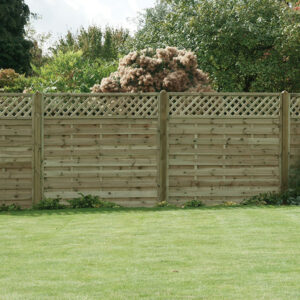
Horizontal Lattice Top Panel fence
€98.00 Select options This product has multiple variants. The options may be chosen on the product page -
Treated Timber 4.8m
Price range: €12.00 through €13.50 Select options This product has multiple variants. The options may be chosen on the product page -
Round Top Picket Board 1.8m x 100 x 22
€3.00 Select options This product has multiple variants. The options may be chosen on the product page -
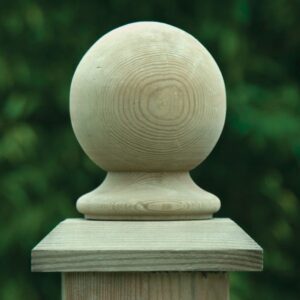
Fence Post Finials
Price range: €4.00 through €4.50 Select options This product has multiple variants. The options may be chosen on the product page