

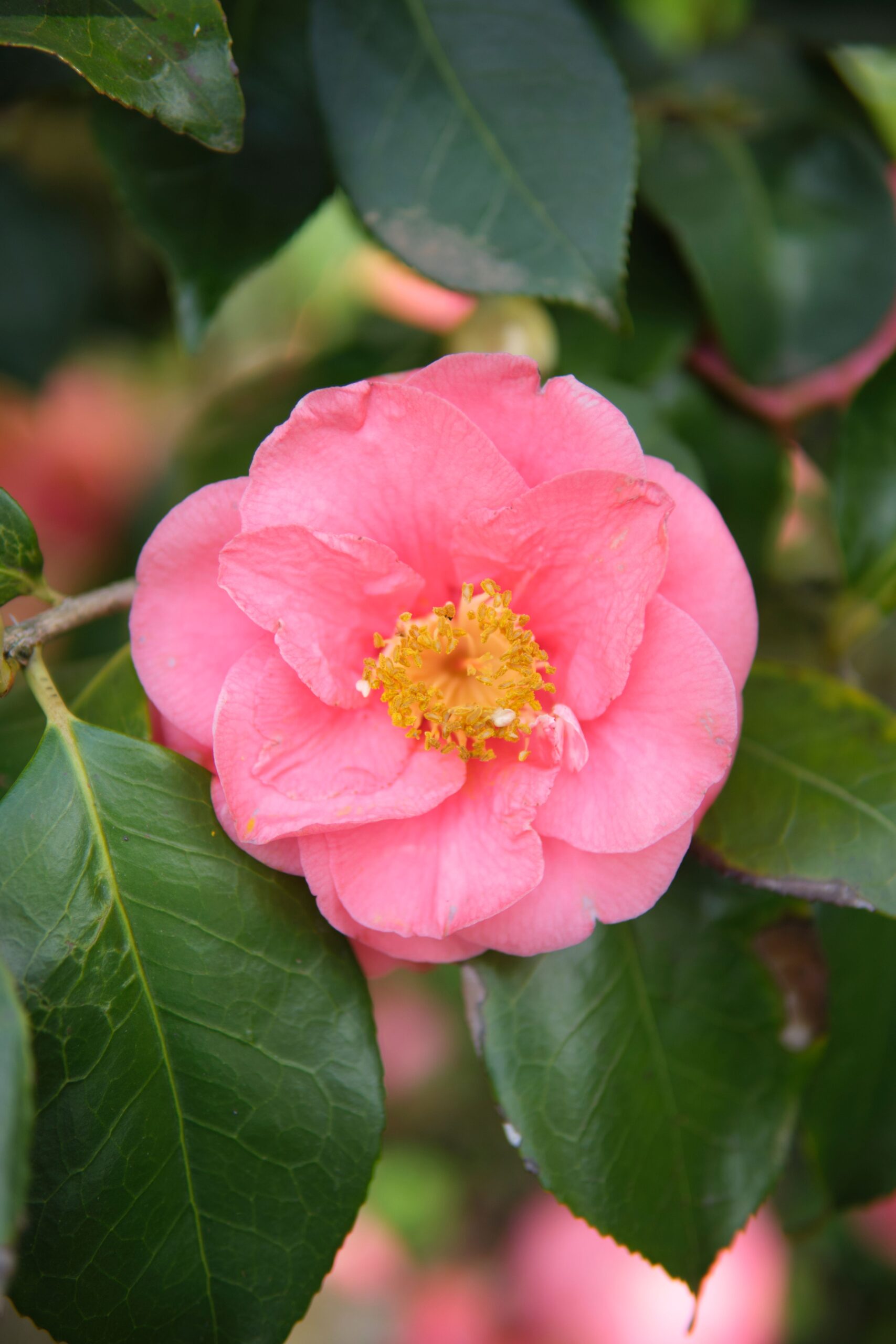
Camellia japonica ‘Spring Festival’
€475.00
Description
Quick Facts
– Botanical Name: Camellia japonica ‘Spring Festival’
– Common Name: Spring Festival Camellia
– Plant Type: Evergreen shrub
– Mature Height: Approx. 2-3m (slow-growing; can be kept smaller)
– Mature Spread: Approx. 1-1.5m
– Growth Rate: Slow to moderate
– Habit: Upright, narrow and compact
– Flowering Period: Late winter to spring (February to April)
– Flower Colour: Small, double, rose-pink flowers
– Foliage Colour: Small, glossy, dark green leaves
– Hardiness: RHS H5 (hardy; shelter flowers from early morning sun after frost)
– Soil Requirements: Moist, well-drained, acidic soil; avoid chalk and lime
– Aspect: Part shade or a sheltered spot; avoid exposure to cold winds and morning sun in frost
– Maintenance: Low
Description
‘Spring Festival’ is a neat, upright camellia with small, glossy, dark green leaves that look smart all year. Its narrow habit takes up very little space, so it suits small gardens, courtyards and containers.
From late winter into spring it is covered in small, double, rose-pink flowers, at a time when the garden needs colour. The flowers are held in good numbers along the stems against the dark foliage.
Compact, tidy and free-flowering, ‘Spring Festival’ is a good camellia for narrow borders and pots.
Caragh Garden Notebook
Planting:
Plant in autumn or spring in moist, well-drained, acidic soil with ericaceous compost or leaf mould worked in. Choose a sheltered spot in light or part shade, away from cold winds and where the flowers will not get early morning sun after a frost. Plant with the top of the root ball level with the soil surface, as planting too deep can reduce flowering. Water in well and mulch with leaf mould or bark. In containers, use ericaceous compost with good drainage.
Watering:
Water regularly through the first two growing seasons. Keep the soil moist in summer and early autumn, when the flower buds form, as dry conditions can cause bud drop. Use rainwater where possible, especially in hard-water areas. Container plants need more frequent watering.
Feeding:
Apply a slow-release ericaceous fertiliser in spring. Avoid feeding after midsummer. An annual mulch of leaf mould or composted bark helps keep the soil acidic and moist.
Seasonal Care & Tidy-Up:
Very little pruning is needed. If required, trim lightly straight after flowering to keep the shape tidy. Avoid hard pruning, as this can remove next year’s buds. Remove faded flowers where practical.
Pests & Problems:
Generally trouble-free. Yellowing leaves usually point to alkaline soil, so use ericaceous compost and rainwater. Bud drop is usually caused by dry roots or sudden temperature changes. Watch for vine weevil in containers and scale insects on the stems.
Design Notes:
A good choice for narrow borders, shady courtyards and large pots near a door, where the late winter flowers can be enjoyed. It pairs well with ferns, hellebores, hostas, Japanese maples and other acid-loving plants.
Propagation:
Take semi-ripe cuttings in late summer, though they can be slow to root. For a well-shaped plant of a good size, buy nursery-grown stock.
Additional information
| Pot Size |
|---|
Related products
-

Juniper Grey Owl
€60.00 Select options This product has multiple variants. The options may be chosen on the product page -
Ceanothus Skylark
€15.00 Select options This product has multiple variants. The options may be chosen on the product page -
Pittosporum tobira ‘Nana’ Ball / Japanese Mock Orange
Price range: €20.00 through €95.00 Select options This product has multiple variants. The options may be chosen on the product page -
Pieris jap. Valley Rose
€20.00 Select options This product has multiple variants. The options may be chosen on the product page