

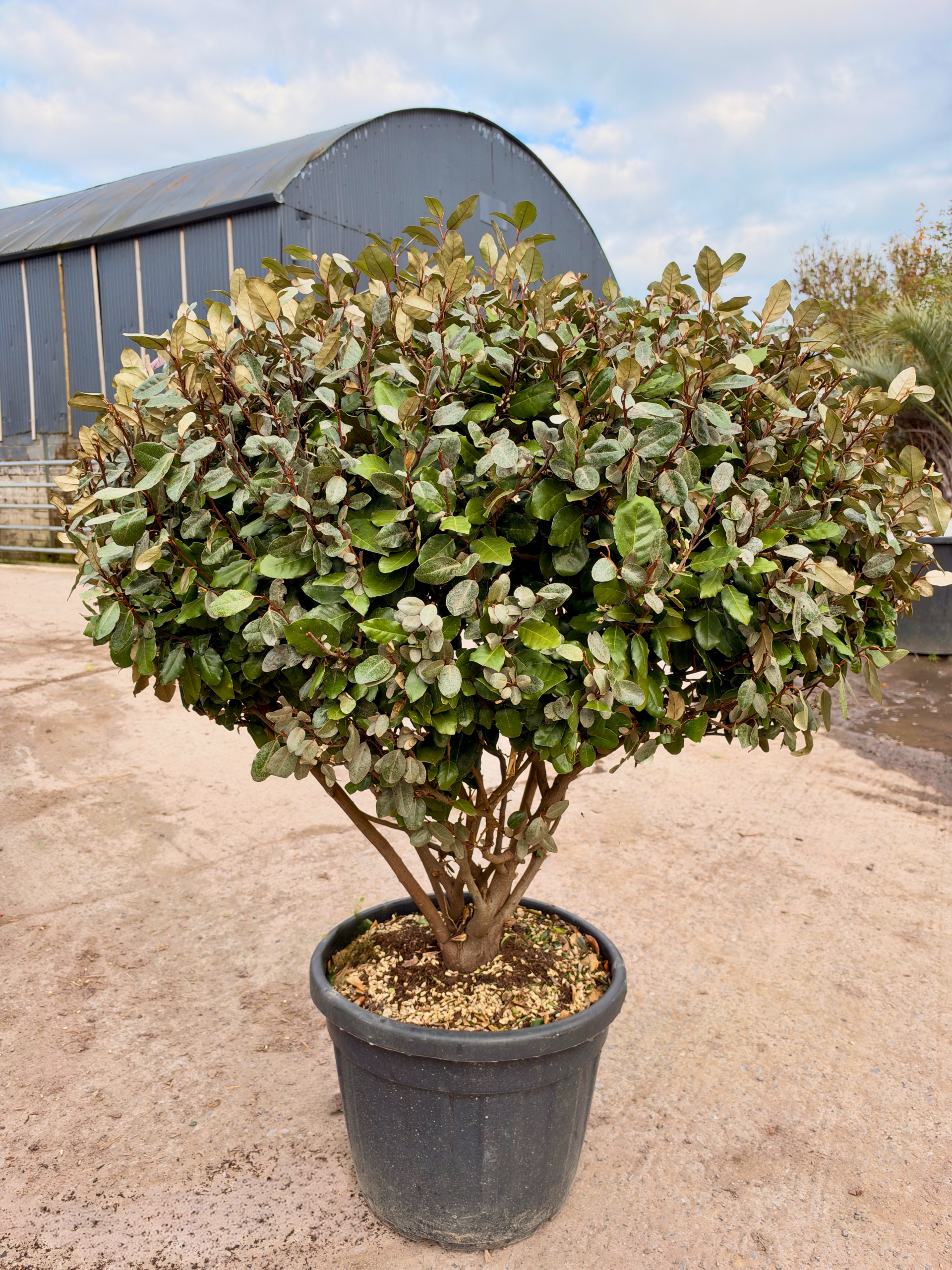
Elaeagnus × submacrophylla
€540.00
Description
Quick Facts
– Botanical Name: Elaeagnus × submacrophylla (syn. Elaeagnus × ebbingei)
– Common Name: Ebbinge’s Silverberry
– Plant Type: Evergreen shrub / hedging plant
– Mature Height: Approx. 2.5-4m (easily kept lower with pruning)
– Mature Spread: Approx. 2.5-4m
– Growth Rate: Fast
– Flowering Period: October to November
– Flower Colour: Tiny, silvery-white bells, with a rich, sweet fragrance
– Fruit: Small orange-red fruits ripening in spring (not always produced)
– Foliage Colour: Leathery leaves, silvery when young, maturing to dark green on top with a silver-scaled underside
– Habit: Large, dense, rounded and bushy
– Hardiness: Fully hardy
– Soil Requirements: Well-drained; tolerates most soils including chalk, sand and clay
– Aspect: Full sun to partial shade; tolerates coastal wind and exposure
– Maintenance: Low: clip once or twice a year if grown as a hedge
Description
Elaeagnus × submacrophylla is a tough, handsome evergreen with a lot to offer. The leathery leaves are silvery when young and mature to deep green above, with a silver underside that flashes in the breeze, so the whole shrub shimmers softly in every season.
In autumn, when little else is in flower, tiny silvery bells open and fill the air with a sweet, rich fragrance that bees love. It grows quickly into a dense, rounded shrub, which makes it a great choice for screening, windbreaks and hedges, and it copes well with coastal winds and difficult soils.
Fragrant, fast and tough as old boots, Elaeagnus is an evergreen that gets on with the job.
Caragh Garden Notebook
Planting:
Plant in autumn or spring in well-drained soil, adding well-rotted compost to the planting hole. Choose a sunny or lightly shaded spot. Plant at the same depth as the pot, firm in gently, water in thoroughly and mulch. For a hedge, space plants at around 60-90cm apart.
Watering:
Water regularly through the first two growing seasons, especially in dry spells. Once established, it is very drought tolerant and needs little extra water.
Feeding:
Little feeding is needed. A balanced general fertiliser or a mulch of well-rotted compost in spring is plenty.
Seasonal Care & Tidy-Up:
Very little pruning is needed. Trim in late spring or summer to shape, or clip hedges once or twice a year. Cut out any shoots that revert to plain green if you are growing a variegated form. Old plants regrow well after hard pruning in spring.
Pests & Problems:
Generally trouble-free. Honey fungus can occasionally affect established plants, and leaf spot may appear in wet seasons. Waterlogged soil is the main risk, so good drainage matters.
Design Notes:
Elaeagnus is a first-class choice for evergreen screening, informal hedging and shelter planting, especially in exposed or coastal gardens. The silvery foliage lifts dark green backdrops, and the autumn fragrance is a lovely bonus near a path or seating area. It also makes a good backdrop for borders and a useful screen for bins, sheds and boundaries.
Propagation:
Take semi-hardwood cuttings in late summer. For reliable form, source nursery-grown plants.
Additional information
| Pot Size |
|---|
Related products
-

Juniper Grey Owl
€60.00 Select options This product has multiple variants. The options may be chosen on the product page -
Nandina Firepower
€105.00 Select options This product has multiple variants. The options may be chosen on the product page -
Hebe Sutherlandii
€8.50 Select options This product has multiple variants. The options may be chosen on the product page -

Choisya ternata – Mexican Orange Blossom
Price range: €9.50 through €22.00 Select options This product has multiple variants. The options may be chosen on the product page