

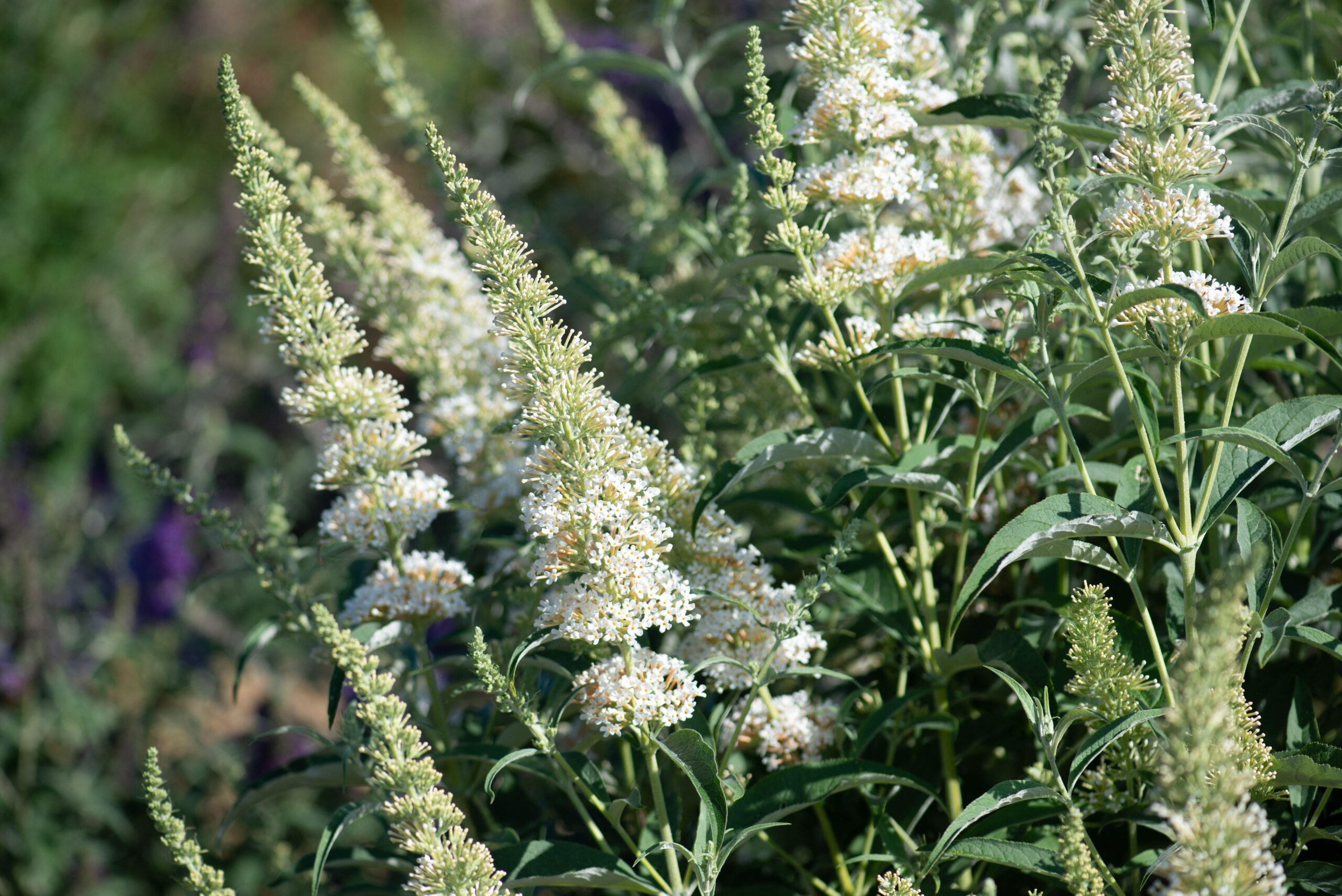
Buddleja ‘Candy Little White’
€20.00
Description
Quick Facts
- Botanical name: Buddleja davidii Candy Little White (also spelt Buddleia)
- Common name: Compact white butterfly bush
- Type: Deciduous (semi-evergreen in mild winters) compact shrub
- Mature height and spread: Around 80–100cm tall and 60–80cm wide. Compact and bushy.
- Flowering period and colour: White, honey-scented flower spikes from July to October.
- Foliage: Narrow, soft grey-green leaves, paler on the undersides.
- Hardiness: Hardy in Ireland and the UK (about RHS H5, to roughly -15°C). Can be cut back by hard frosts, but usually recovers.
- Soil: Any reasonably well-drained soil, including poor or chalky ground. Dislikes waterlogging.
- Aspect: Full sun. Tolerates light shade but flowers best in sun.
- Maintenance: Low. An annual hard prune keeps it neat and flowering well.
Description
A neat, compact butterfly bush that gives you the long summer flowering of a buddleja without the size. Slender white flower spikes smell lightly of honey and carry on from midsummer into autumn, set against soft grey-green foliage. A good choice for pots, small borders and sunny patios, and a firm favourite with bees and butterflies.
Caragh Garden Notebook
Planting Plant in spring or autumn in a sunny, free-draining spot. Dig a hole about twice the width of the pot, mix in a little compost on poor soil, and keep the top of the rootball level with the soil. Firm in gently and water well. In pots, use a loam-based compost with plenty of drainage.
Watering Water regularly in the first season until established. After that it copes well with dry spells. Container plants need watering more often through summer, but never let them sit in water.
Feeding Little feeding is needed in the ground. A general slow-release fertiliser in spring helps, especially in pots. Too much feed gives leafy growth at the expense of flowers.
Seasonal Care and Tidy-Up Spring: Prune hard (see below) once the worst frosts have passed. Summer: Deadhead faded spikes regularly to encourage more flowers and reduce seeding. Autumn: Leave the old stems in place over winter for protection. Winter: Pots benefit from a sheltered position in severe cold.
Division Not applicable. Pruning is the key task. Cut stems back hard in late winter to early spring (typically February to March), leaving a low framework about 15–30cm from the ground. This keeps the plant compact and flowering well, as it flowers on new growth.
Pests and Problems
- Capsid bugs and caterpillars: Occasional leaf nibbling, usually minor.
- Aphids: Can appear on soft new growth. Usually tolerated, or washed off.
- Poor drainage: The main cause of losses, particularly in winter. Choose a free-draining position.
- Seeding: Buddleja can self-seed in the wild. Deadhead promptly and avoid planting beside natural habitats.
Design Notes Lovely at the front of a sunny border, or in large pots by the door or on a terrace. It pairs well with lavender, nepeta, salvias, ornamental grasses and blue-flowered plants. White flowers lighten a mixed border and show up well in the evening.
Pollinators Rich in nectar, so popular with bees, butterflies and hoverflies through late summer.
Propagation Softwood cuttings in summer or hardwood cuttings in autumn root fairly easily. Named cultivars may be plant-variety protected, so check before propagating to sell.
Additional information
| Pot Size |
|---|
Related products
-

Carpinus betulus Fastigiata / Upright Hornbeam
Price range: €170.00 through €750.00 Select options This product has multiple variants. The options may be chosen on the product page -
Betula Jacquemontii / Himalayan Birch
Price range: €180.00 through €600.00 Select options This product has multiple variants. The options may be chosen on the product page -
Quercus rubra / Red Oak
Price range: €150.00 through €450.00 Select options This product has multiple variants. The options may be chosen on the product page -
Catalpa biganoides / Indian Bean Tree
€440.00 Select options This product has multiple variants. The options may be chosen on the product page