

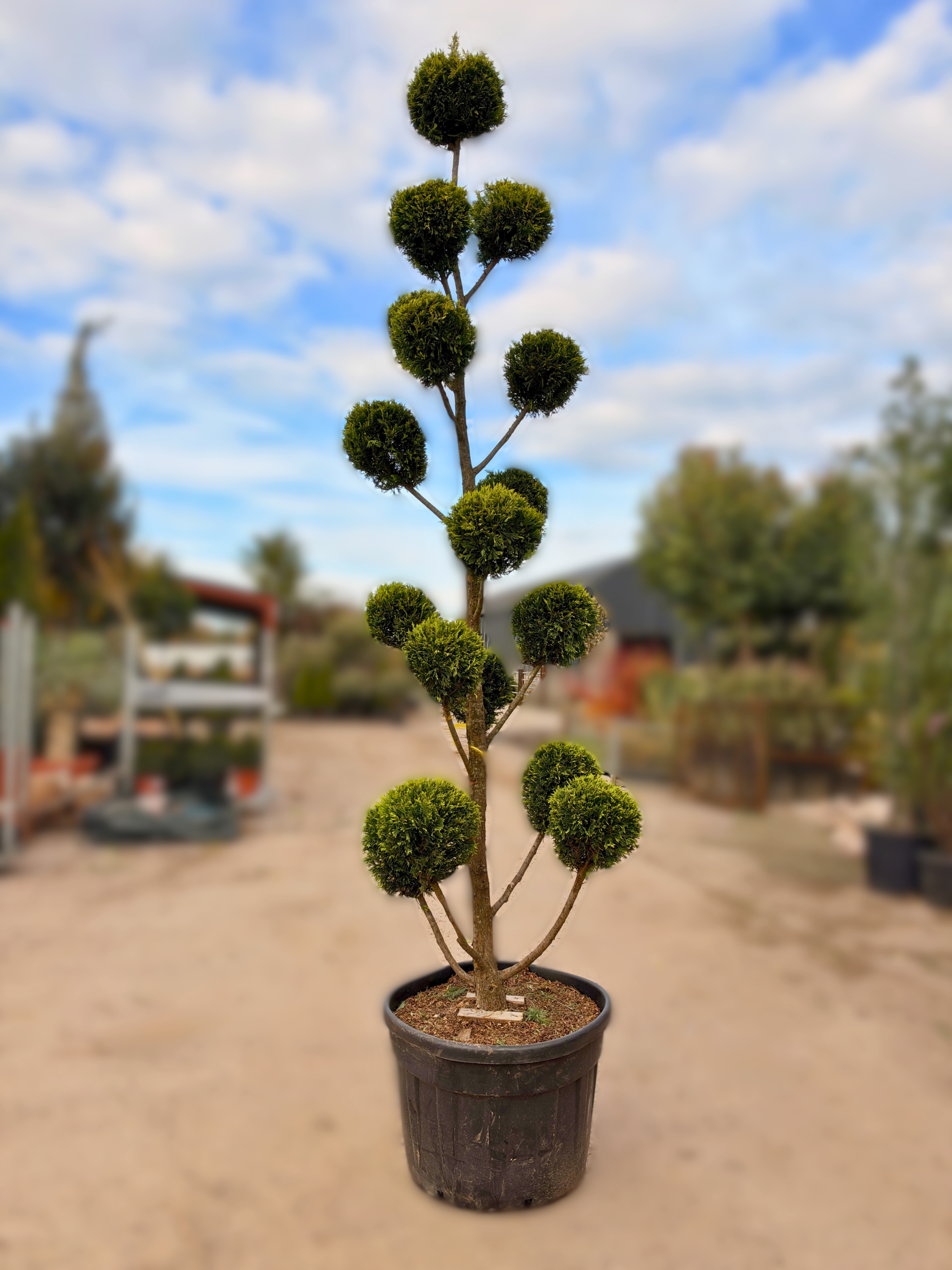
Cupressocyparis leylandii ‘Gold Rider’: Clipped Topiary
€995.00
Description
Quick Facts
– Botanical Name: × Cuprocyparis leylandii ‘Gold Rider’ (syn. Cupressocyparis leylandii ‘Gold Rider’)
– Common Name: Golden Leyland Cypress ‘Gold Rider’
– Plant Type: Evergreen conifer, clipped topiary
– Form: Three clipped balls on a clear stem
– Mature Height: Approx. 1.5-2m as a clipped topiary (a free-growing tree reaches 15m+, so regular clipping is essential)
– Foliage Colour: Bright golden-yellow, in soft, feathery, flattened sprays
– Habit: Dense and tightly clipped; the foliage fills out the ball shapes evenly
– Growth Rate: Fast, so it needs regular clipping to hold its shape
– Hardiness: Fully hardy
– Soil Requirements: Moist, well-drained, reasonably fertile; tolerates most soils but dislikes waterlogging
– Aspect: Full sun for the best golden colour; tolerates light shade
– Maintenance: Moderate: clip two to three times a year in the growing season
Description
Cupressocyparis leylandii ‘Gold Rider’ in its three-ball form is a smart, sculptural evergreen that brings structure and a splash of sunshine to the garden in every season. Three neatly clipped balls of soft golden-yellow foliage are stacked along a clear stem, giving a tidy, architectural look that suits both traditional and contemporary settings.
The golden colour glows in sunshine and holds well through winter, when so much of the garden has gone quiet. It looks wonderful against dark green hedging, a painted wall or a gravel courtyard, and a pair makes a lovely, symmetrical statement either side of a front door or gate.
Golden, tidy and full of character, ‘Gold Rider’ is a topiary that lifts a space all year round.
Caragh Garden Notebook
Planting:
Plant in autumn or spring in moist, well-drained soil, adding well-rotted compost to the planting hole. Choose a sunny, open position, as the golden colour is at its best in good light and can turn greener in shade. Plant at the same depth as the pot, firm in gently and water in thoroughly. Stake the stem for the first year or two so the balls stay upright and balanced. In a container, use a loam-based compost and make sure the pot drains freely.
Watering:
Water regularly through the first two growing seasons, especially in dry spells. Leylandii dislikes drying out completely, and drought can cause browning of the foliage. In containers, check the compost often and never allow it to dry out, particularly in summer.
Feeding:
Apply a balanced general fertiliser or slow-release conifer feed in spring. Container plants benefit from a liquid feed every few weeks through the growing season to keep the foliage dense and golden.
Seasonal Care & Tidy-Up:
Clip two to three times a year, from late spring to late summer, cutting only into the soft, green, current-season growth to keep the balls neat and round. Little and often works better than one hard cut. Never cut back into old, brown wood, as it will not regrow and will leave permanent bare patches. Remove any shoots that appear on the clear stem as they appear.
Pests & Problems:
Generally healthy in the right position. Waterlogged soil is the main risk and can lead to root rot, which shows as browning foliage and general decline. Cypress aphids and winter wind or drought browning can appear occasionally. Wear gloves when clipping, as the foliage can irritate sensitive skin.
Design Notes:
A three-ball topiary is a classic way to add year-round structure and a touch of formality. Use a pair either side of a doorway, gate or steps, or place one as a focal point in a gravel garden, courtyard or border. The golden colour contrasts beautifully with dark green, burgundy and blue-toned planting, and it looks equally smart in a large container on a sunny terrace.
Propagation:
Named conifers are propagated from cuttings by specialist nurseries. For reliable colour and a well-formed topiary shape, always source nursery-grown plants.
Additional information
| Pot Size |
|---|
Related products
-
Thuja occidentalis
Price range: €65.00 through €150.00 Select options This product has multiple variants. The options may be chosen on the product page -
Cotoneaster ‘Cornubia’
Price range: €220.00 through €320.00 Select options This product has multiple variants. The options may be chosen on the product page -
Chamaecyparis lawsoniana ‘Yvonne’
€95.00 Select options This product has multiple variants. The options may be chosen on the product page -
Acer Princeton Gold / Maple Princeton Gold
Price range: €120.00 through €180.00 Select options This product has multiple variants. The options may be chosen on the product page