

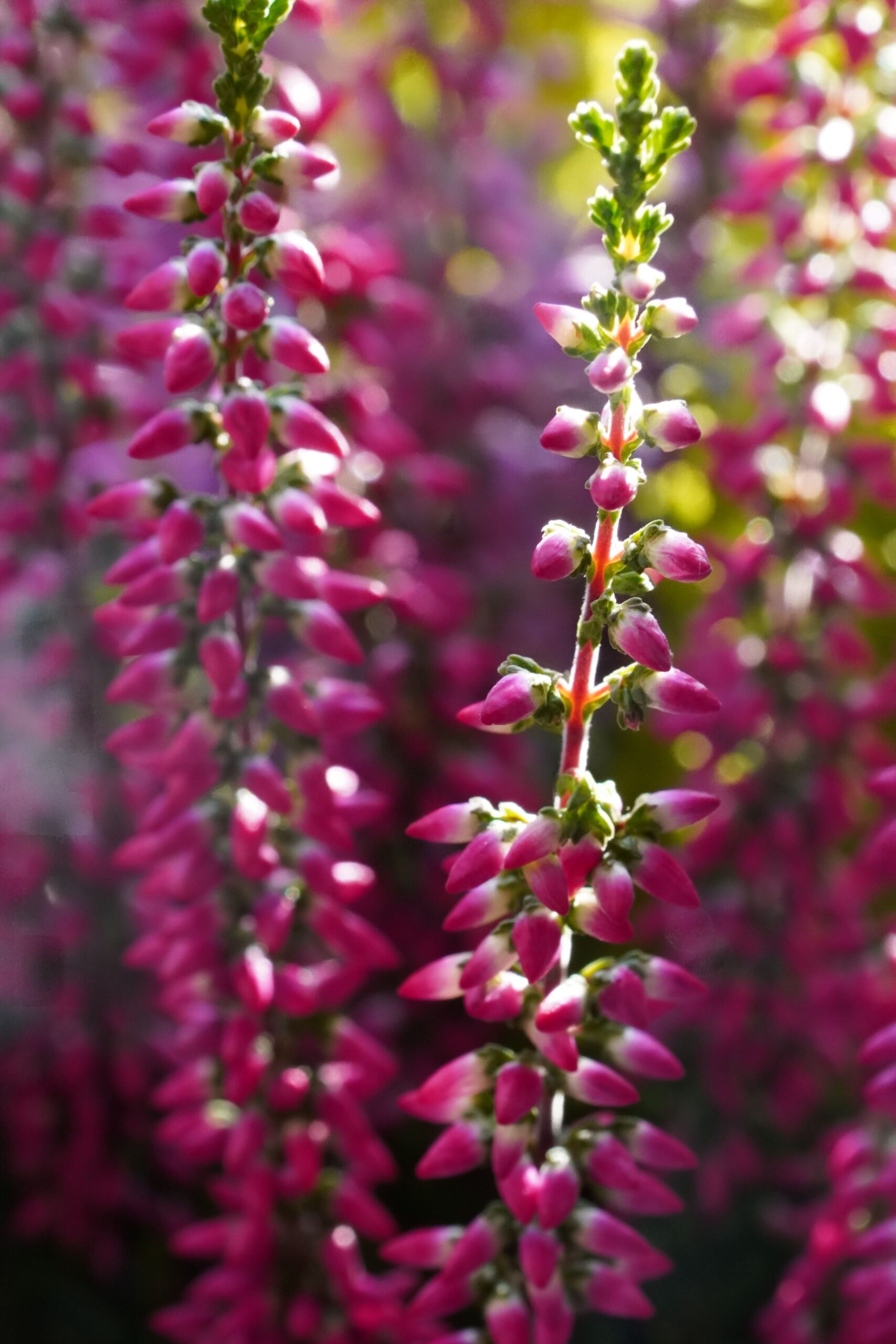
Calluna vulgaris ‘Allegro’
€5.95
Description
Quick Facts
– Botanical Name: Calluna vulgaris ‘Allegro’
– Common Name: Ling Heather / Common Heather ‘Allegro’
– Plant Size: 1 litre
– Plant Type: Evergreen dwarf shrub
– Mature Height: 30–40cm
– Mature Spread: 40–50cm
– Flowering Period: August to November — a long and generous late-season display
– Flower Colour: Deep ruby-red flower spikes — rich, warm, and vibrant
– Foliage: Dark green, fine, scale-like foliage; attractive and evergreen through every season
– Habit: Low, spreading, compact mound
– Aspect: Full sun
– Soil: Acidic, moist, well-drained; ericaceous compost essential
– Hardiness: Fully hardy in Ireland & the UK
– Awards: RHS Award of Garden Merit (AGM)
– Maintenance: Very low — clip lightly after flowering to keep compact
Description
Calluna vulgaris ‘Allegro’ is one of the most richly coloured and reliably generous of the ling heathers — a low, spreading mound of dark green foliage that erupts into deep ruby-red flower spikes from August right through to November. At a time when much of the garden is winding down, ‘Allegro’ is at its peak: bold, warm, and covered in colour, bringing a late-season intensity that few other low-growing plants can match.
It is also one of the most accommodating of heathers — compact, self-contained, and genuinely easy once planted in the right conditions. In a heather garden, a rockery, at the front of an acid border, or massed in a drift across a sunny bank, it builds a carpet of colour and structure that holds through every season. The dark green foliage is attractive even out of flower, and through winter the spent flower spikes take on warm russet tones that add a further quiet season of interest.
Low, compact, generous, and deeply coloured — a heather of real character.
Caragh Garden Notebook
Planting:
Plant in spring or early autumn into acidic, moist, well-drained soil — ericaceous compost is essential, as heathers will not thrive in neutral or alkaline conditions. A position in full sun gives the richest flower colour and the most compact, dense habit; shade will reduce both flowering and the quality of the foliage. Remove the plant from its pot and plant at the same depth, firming in gently around the roots. For a ground-cover planting or heather garden, space plants at around 40–45cm for a dense, knitted effect within two to three seasons. Water in thoroughly after planting.
Watering:
Water consistently through the first growing season while the plant establishes. Once settled, ‘Allegro’ is reasonably tolerant of drier conditions but performs best with consistent moisture in well-drained, acidic soil. In containers and hanging baskets, water regularly through the growing season — heathers in pots dry out quickly and should never be allowed to dry out completely. Avoid hard tap water in areas with alkaline water; collected rainwater is the better choice for watering heathers in the long term.
Feeding:
Feed with an ericaceous fertiliser in spring to support healthy growth and rich flower colour. An annual topdress of ericaceous compost around the base in spring maintains the soil acidity the plant needs. Avoid general-purpose or alkaline fertilisers, which will cause the foliage to yellow and the plant to decline.
Pruning:
Clip lightly with shears immediately after flowering, in late autumn or early spring, removing the spent flower spikes and about a third of the previous season’s growth. This keeps the plant compact and prevents it from becoming woody and bare at the base over time. Do not cut back into old, woody stems — heathers do not reliably regrow from bare old wood, so light, regular trimming from an early age is far preferable to occasional hard cutting.
Pests & Problems:
Generally very trouble-free. The most common cause of poor performance is soil pH — in neutral or alkaline soil, ‘Allegro’ will yellow and decline; ericaceous compost and rainwater watering are the most reliable preventatives. In very heavy, waterlogged soils, the plant will also struggle; good drainage is as important as the right pH. Otherwise, heathers are largely pest-free and extremely low-maintenance.
Design Notes:
The deep ruby-red of ‘Allegro’ makes it one of the most richly coloured of the ling heathers, and it is at its most effective when used in generous drifts — a mass of the same variety creates a bold sweep of colour that reads beautifully from a distance. Combine with other heathers in contrasting colours — white, pink, and purple — for a traditional heather garden effect; plant alongside dwarf conifers for a classic combination of textures; or use it at the front of an acid shrub border alongside rhododendrons, azaleas, and pieris, where the acidic conditions it shares with those plants make it a natural companion. In a container or trough with ericaceous compost, it brings late-season colour to a terrace or patio with very little effort.
Additional information
| Pot Size |
|---|
Related products
-
Buddleja Snow White
€25.00 Select options This product has multiple variants. The options may be chosen on the product page -
Hydrangea paniculata Polar Bear
€25.00 Select options This product has multiple variants. The options may be chosen on the product page -
Cornus alba ‘Sibirica’
Price range: €30.00 through €50.00 Select options This product has multiple variants. The options may be chosen on the product page -

Phormium Pink Stripe
Price range: €20.00 through €45.00 Select options This product has multiple variants. The options may be chosen on the product page