

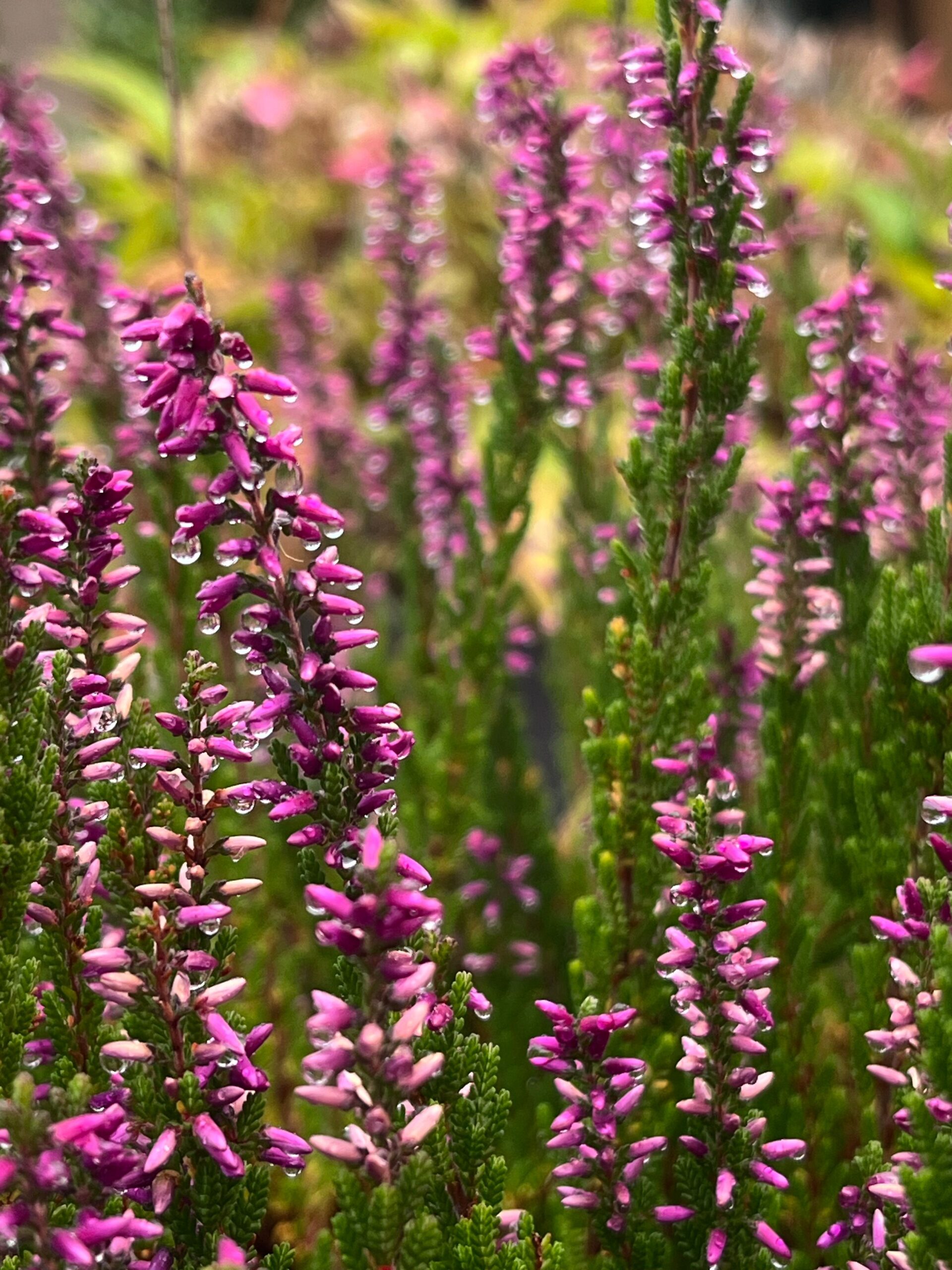
Calluna vulgaris ‘Lena’
€5.95
Description
Quick Facts
– Botanical Name: Calluna vulgaris ‘Lena’
– Common Name: Ling Heather ‘Lena’
– Plant Type: Evergreen dwarf shrub
– Mature Height: 20–30cm
– Mature Spread: 35–45cm
– Flowering Period: August to October
– Flower Colour: Soft mauve-pink flower spikes — warm, gentle, and freely produced
– Foliage: Fine, scale-like foliage in mid-green; neat and evergreen year-round
– Habit: Low, spreading, compact mound
– Aspect: Full sun
– Soil: Acidic, moist, well-drained; ericaceous compost essential
– Hardiness: Fully hardy in Ireland & the UK
– Maintenance: Very low — clip lightly after flowering
Description
Calluna vulgaris ‘Lena’ is a soft, warm-toned heather that bridges the gap between the deep richness of the ruby varieties and the clean brightness of the whites — its mauve-pink flower spikes carry a gentle warmth that sits beautifully in any heather collection and complements almost everything planted alongside it. From August through to October, the compact mound of mid-green foliage is covered in a generous flush of warm colour that glows softly in the low light of the autumn garden.
Like all the best heathers, ‘Lena’ is as reliable as it is easy — once settled in the right acidic, well-drained conditions it asks for very little and gives back a long season of colour, neat year-round foliage, and the quiet dependability that makes the heather family such a staple of the late-season garden.
Warm, soft, and entirely dependable — a heather that ties a collection together with the gentlest of touches.
Caragh Garden Notebook
Planting:
Plant in spring or early autumn into acidic, moist, well-drained soil with ericaceous compost. Full sun gives the richest flower colour and the most compact, healthy habit. Plant at the same depth as the pot, firm in gently around the roots, and water in thoroughly. For a heather garden or ground-cover planting, space at around 35–40cm to allow the mounds to knit together naturally over two to three seasons. In containers, use a quality ericaceous compost with good drainage.
Watering:
Water consistently through the first growing season while the plant establishes. Once settled, ‘Lena’ manages well with natural rainfall in well-drained, acidic soil and requires little supplementary watering in an Irish garden. In containers, water regularly and never allow the compost to dry out completely. In areas with alkaline tap water, collected rainwater is preferable — maintaining the correct soil pH is the single most important factor in the long-term health of all ericaceous plants.
Feeding:
Feed with an ericaceous fertiliser in spring to support healthy growth and warm, generous flowering. An annual topdress of ericaceous compost around the base maintains the acidic conditions the plant needs. Avoid general-purpose or lime-rich fertilisers entirely.
Pruning:
Clip lightly with shears after flowering — in late autumn or early spring — removing the spent flower spikes and approximately a third of the previous season’s growth. This keeps the mound compact and prevents woodiness at the base. Light, regular trimming from the start always produces the healthiest and best-presented heather plants; never cut back into bare, old wood.
Pests & Problems:
Entirely trouble-free in the right conditions. Yellowing foliage is almost always a sign of incorrect soil pH — too alkaline — and is addressed with ericaceous compost and rainwater watering. Good drainage is equally essential; waterlogged conditions will cause decline regardless of pH.
Design Notes:
The soft mauve-pink of ‘Lena’ makes her one of the most versatile of the ling heathers — a tone that works as a harmonious bridge between whites and deep reds in a mixed heather planting, and equally beautiful in a drift of her own. Combine with ‘Allegro’ in deep ruby and ‘Tamara’ or ‘Hilda’ in white for a classic three-way heather combination that covers the full colour range of the late-season garden; plant alongside dwarf conifers and acid-loving shrubs for a traditional heather garden scheme; or use in a container with ericaceous compost for a warm, softly coloured autumn display on a sunny terrace. The mauve-pink tone catches the low September and October light with particular beauty — a heather that gives more than it asks at the most rewarding time of the year.
Additional information
| Pot Size |
|---|
Related products
-

Senecio Angel Wings
€25.00 Select options This product has multiple variants. The options may be chosen on the product page -
Physocarpus opulifolius Red Baron
Price range: €20.00 through €35.00 Select options This product has multiple variants. The options may be chosen on the product page -
Geranium Wargrave Pink
€8.50 Select options This product has multiple variants. The options may be chosen on the product page -
Cornus alba ‘Sibirica’
Price range: €30.00 through €50.00 Select options This product has multiple variants. The options may be chosen on the product page