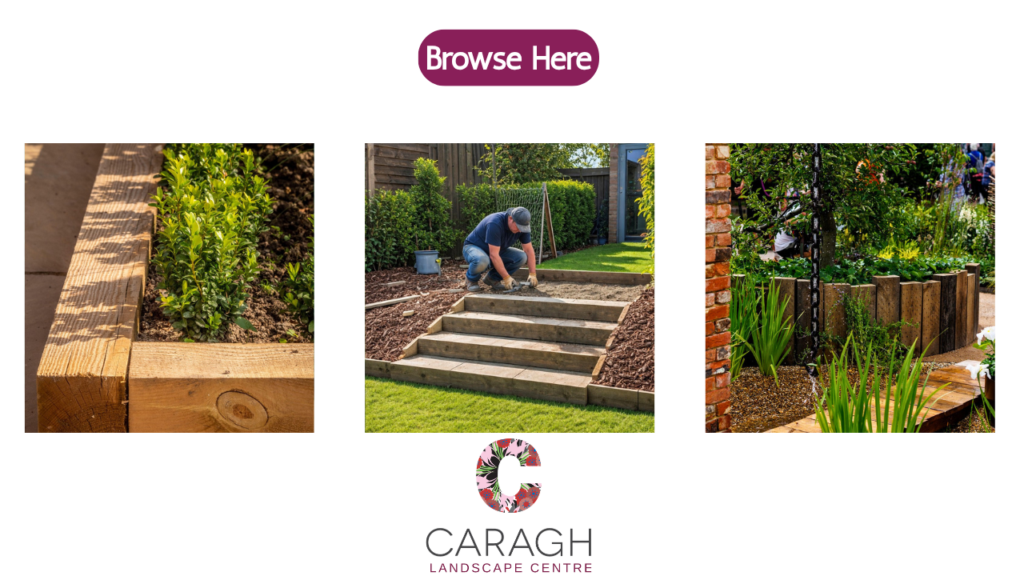

 And now that we’ve opened the Caragh Landscape Centre, we can help with the bones of the garden as well as the planting. Our 2.4m timber sleepers are available to order online, for click and collect, or for local delivery where we can accommodate it.
What exactly is a timber sleeper?
A timber sleeper is a substantial rectangular length of wood used as a building block in the garden. The name comes from the heavy railway timbers people traditionally reused in landscaping, but today the term is used much more broadly for purpose-sized landscaping timbers.
The brown timber sleepers available from Caragh measure 2.4m long with a 200mm x 100mm profile. That generous size is what gives them their strength and visual presence. Lay one flat and it creates a broad, low edge; turn it on its side and it gives you more height; cut it into sections and it can be used vertically for a completely different look.
Caragh Garden Notebook tip: Decide which face you want to see before you work out quantities. The same 200 x 100mm sleeper can create either a low, wide edge or a taller, narrower one.
Why sleepers work so well in Irish gardens
A good garden needs a balance of softness and structure. Planting brings colour, movement and life; the hard landscaping gives it shape. Timber sits very happily between the two.
- It feels natural beside lawns, gravel, stone and planting.
- It can look equally at home in a contemporary garden or a country one.
- Its strong proportions make a project feel intentional, even when the build itself is very simple.
- The warm brown finish works beautifully with clipped evergreens, ornamental grasses and looser perennial planting.
And, perhaps most importantly, sleepers are wonderfully versatile. You can solve several different garden problems with the same honest material.
Five lovely, practical ways to use timber sleepers
1. Build raised beds that are easier to tend
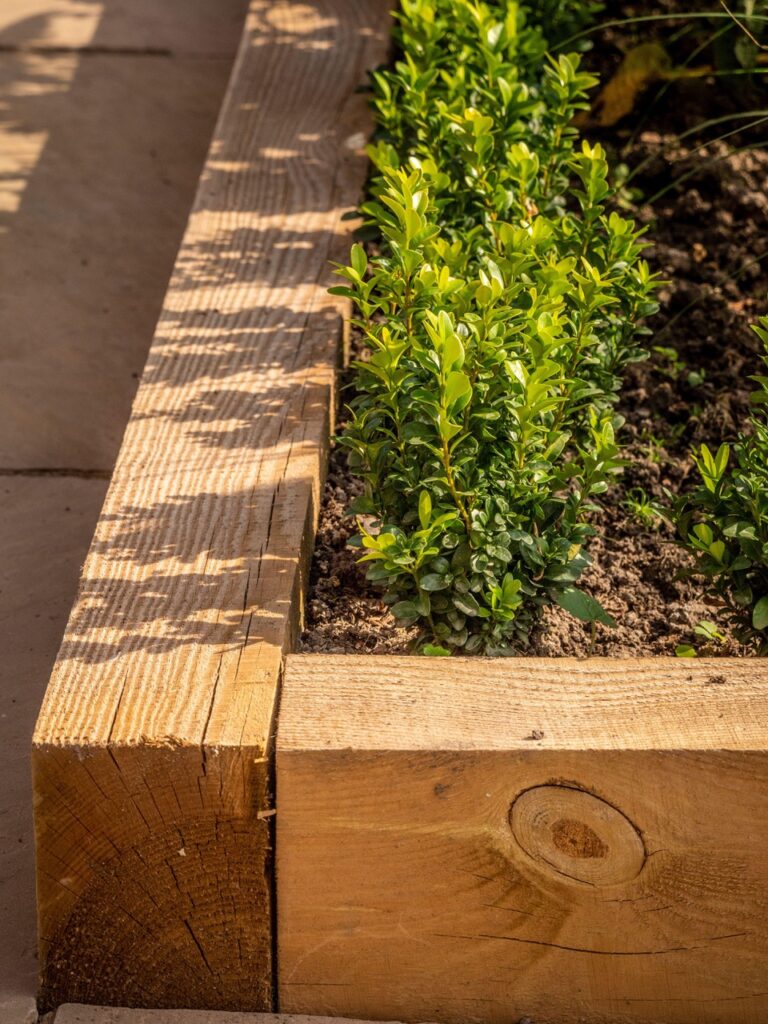
Raised beds are probably the use most people think of first, and for good reason. Sleepers create a deep, substantial frame for vegetables, herbs, cut flowers or ornamental planting. They bring the soil closer to you, give the bed a clear shape and can help turn an awkward corner into something genuinely useful.
If you are planning a vegetable bed, go a little deeper than you think you need. Roots appreciate the extra soil, and a generous bed is much easier to fill with layered planting. Before lining a food-growing bed, ask us about the most suitable arrangement for the timber and plants you have chosen.
2. Give borders and paths a clean edge
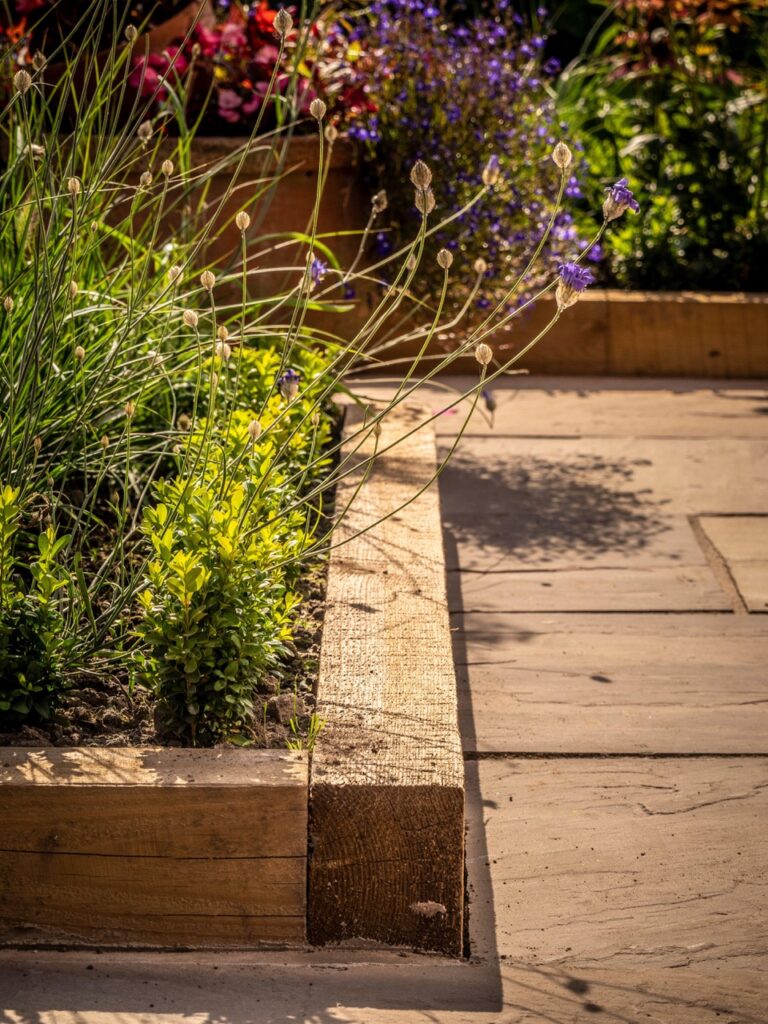
A crisp edge makes an enormous difference to how a garden feels. One course of sleepers can keep soil and mulch off a path, separate gravel from lawn, or create a calm line around a densely planted bed.
The trick is not to make the timber the star of the show. Use it to frame the planting, then allow soft foliage to spill over in places. Lavender, grasses, hardy geraniums and low evergreen shapes all soften the line beautifully.
3. Make steps and changes of level feel deliberate
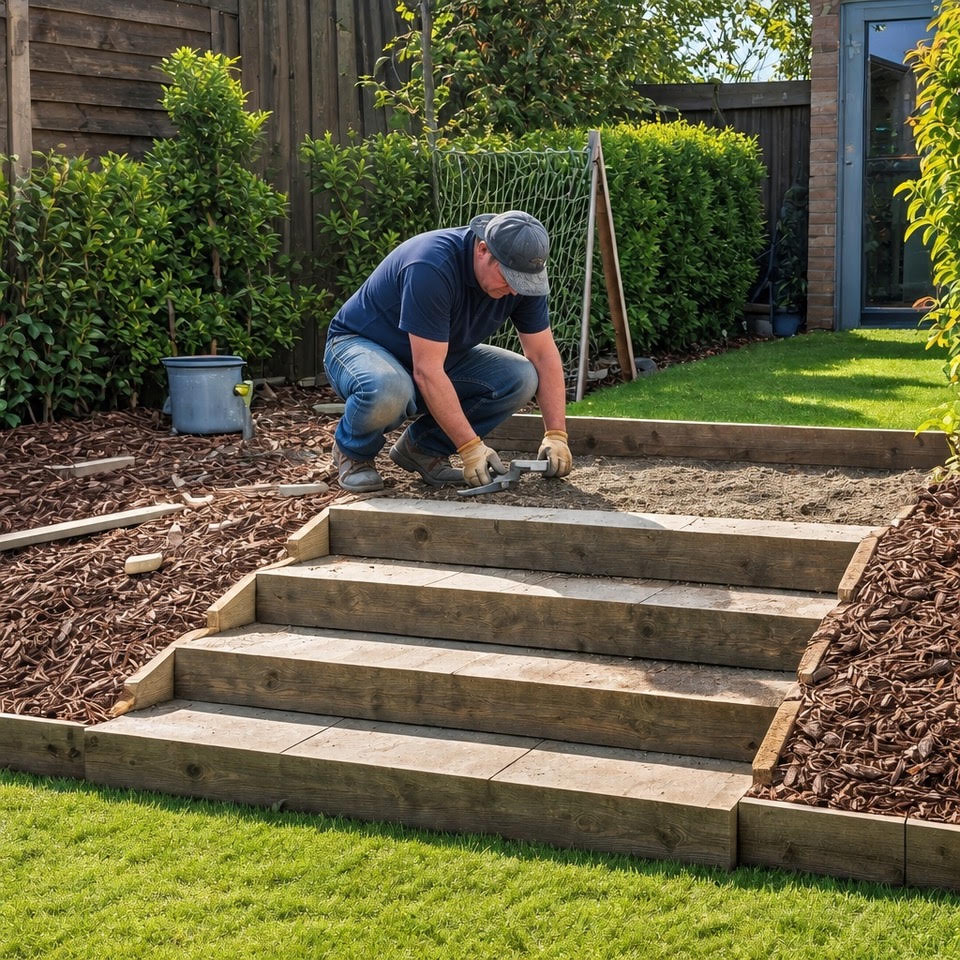
On a sloping site, sleepers can turn an awkward route into a clear journey through the garden. They can form the risers of steps, hold gravel or paving in place, and help connect one level to the next without the formality of a fully paved staircase.
This is one of those jobs where the preparation matters more than the timber. Each step needs a firm, level base, secure fixings and a consistent, comfortable rise. If the steps will carry regular foot traffic, or if you are holding back a significant amount of ground, ask an experienced landscaper to build or check the structure.
4. Create low retaining walls and garden terraces
Sleepers are brilliant for dividing a slope into useful planted levels. A low retaining edge can create a deeper border, stop soil washing onto a path and make a garden much easier to plant.
But soil is heavy, especially after an Irish winter of rain. A retaining build needs more than sleepers stacked on top of one another: plan for proper support, suitable fixings and drainage behind the timber. The taller the wall or the more ground it holds, the more important professional advice becomes.
5. Turn them upright for a more sculptural finish
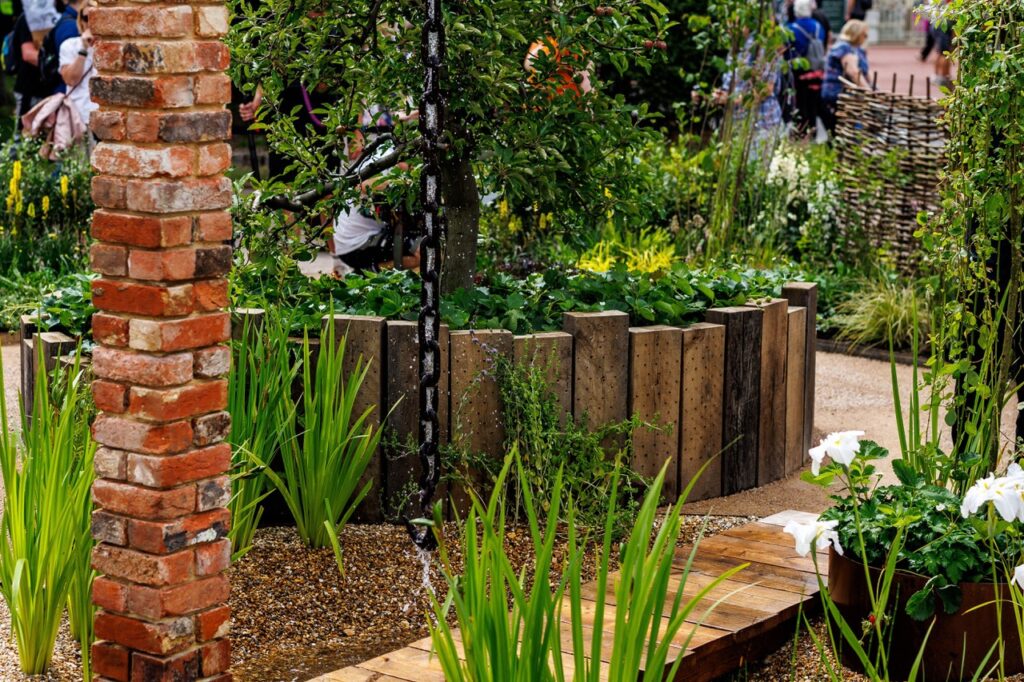
Sleepers do not always have to run horizontally. Cut into different lengths and installed vertically, they can create a rhythmic edge around a raised bed, a curved boundary, or a strong contemporary feature within softer planting.
I particularly like this treatment when the tops are allowed to vary slightly. It feels designed, but not too perfect, and the planting can weave in and out of the timber rather than sitting behind one long straight line.
How to plan your sleeper project
The finished result may look simple, but a little planning at the beginning will save you a great deal of lifting, cutting and changing your mind later.
- Start with the job. Are you holding soil, defining an edge, creating a step or simply adding a feature? The answer determines the base, orientation and fixing method.
- Measure the finished area. Sketch the overall length, width and height, then divide those measurements by the usable 2.4m sleeper length. Remember that cuts, corners and joins affect quantities.
- Prepare a firm, level base. Sleepers laid onto uneven or soft ground will move, no matter how carefully they are joined. The right base will depend on the project and soil conditions.
- Use fixings made for the job. Sleeper screws, brackets, stakes or supporting posts may all be appropriate. A decorative border and a retaining wall do not need the same fixing detail.
- Give water somewhere to go. Drainage is essential behind retaining edges and around steps. Prolonged trapped moisture is hard on both the structure and the planting.
- Plan the planting at the same time. Think about which plants will soften corners, trail over edges or repeat along the timber so the structure and planting feel like one scheme.
A practical note: A 2.4m sleeper is bulky and heavy. Plan access before delivery or collection, and have two people available to move and position it safely. Wear suitable gloves, eye protection and other protective equipment when cutting or fixing timber.
The planting that makes sleepers look their best
The brown finish of these sleepers is warm rather than orange, so it sits quietly with most garden palettes. For a crisp, architectural look, pair it with low clipped hedging, ferns and strong evergreen shapes. For something looser, use ornamental grasses, lavender, verbena, salvias and soft mounding perennials that will spill over the edge.
The loveliest schemes usually repeat a small number of plants. The sleeper gives you the line; the planting breaks it gently. That contrast is what makes the whole thing feel settled.