

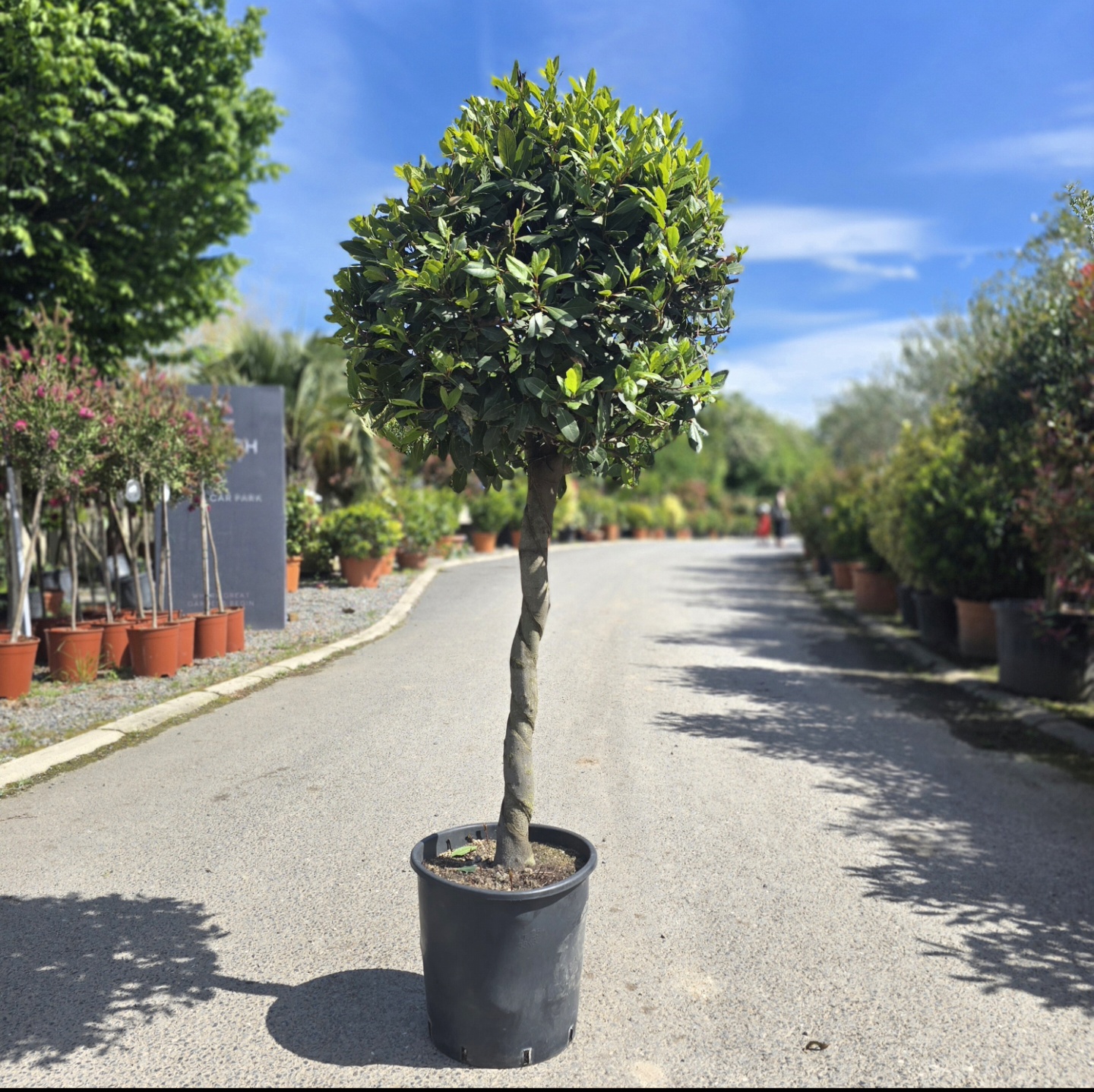
Laurus nobilis half standard – twisted stem
€350.00
Frequently Bought Together

Description
Quick Facts
- Botanical Name: Laurus nobilis
- Common Name: Bay Laurel / Bay Tree
- Plant Type: Evergreen tree, trained half standard
- Form: Half standard with a twisted stem and clipped head
- Mature Height: Typically maintained at 1.5–2.5m (depending on pot size and pruning)
- Mature Spread: 60–120cm (kept compact with clipping)
- Flowering Period: Spring (flowers are small and subtle)
- Flower Colour: Pale yellow-green
- Foliage Colour: Deep glossy green, aromatic leaves
- Hardiness: Hardy in Ireland & the UK in a sheltered spot (protect from severe cold/wind)
- Soil Requirements: Free-draining soil/compost
- Aspect: Sun to part shade; sheltered from cold winds
- Maintenance: Low–moderate (clip to shape)
Description
A half standard bay is one of the easiest ways to make an entrance feel elegant — evergreen, glossy, and beautifully structured all year round. This specimen has an extra layer of character, with a twisted stem that gives it a sculptural, one-off feel even before you notice the perfectly clipped head. It’s practical too: bay is wonderfully resilient, and you can snip a few leaves for cooking whenever you pass.
Caragh Garden Notebook
Planting (in the ground):
Choose a sheltered spot with good drainage. Dig a generous hole, improve with compost, and plant at the same level as the pot. Water well and mulch, keeping mulch away from the trunk.
Choose a sheltered spot with good drainage. Dig a generous hole, improve with compost, and plant at the same level as the pot. Water well and mulch, keeping mulch away from the trunk.
Planting (in a pot):
Bay is ideal for containers. Choose a heavy pot for stability and use a free-draining mix (quality compost plus grit). Ensure drainage holes are clear and avoid letting the pot sit in water.
Bay is ideal for containers. Choose a heavy pot for stability and use a free-draining mix (quality compost plus grit). Ensure drainage holes are clear and avoid letting the pot sit in water.
Watering:
Water regularly in the first season. In pots, water when the top few centimetres of compost feel dry. Reduce watering in winter, but don’t let it dry out completely.
Water regularly in the first season. In pots, water when the top few centimetres of compost feel dry. Reduce watering in winter, but don’t let it dry out completely.
Feeding:
Feed in spring and again in early summer with a balanced fertiliser (or a slow-release feed for pots). A top-dress of fresh compost each spring helps keep container plants thriving.
Feed in spring and again in early summer with a balanced fertiliser (or a slow-release feed for pots). A top-dress of fresh compost each spring helps keep container plants thriving.
Pruning & shaping:
Clip lightly once or twice a year to maintain a neat head (late spring and late summer are ideal). Remove any shoots from the stem to keep the half standard form clean. Avoid hard pruning in late autumn, which can encourage soft growth going into winter.
Clip lightly once or twice a year to maintain a neat head (late spring and late summer are ideal). Remove any shoots from the stem to keep the half standard form clean. Avoid hard pruning in late autumn, which can encourage soft growth going into winter.
Winter care (Ireland & UK):
Bay is hardy, but container plants are more exposed. In very cold weather, move pots to a sheltered spot (against a wall, under cover) and consider fleece protection during severe frosts. Cold, drying winds can scorch leaves, so shelter is key.
Bay is hardy, but container plants are more exposed. In very cold weather, move pots to a sheltered spot (against a wall, under cover) and consider fleece protection during severe frosts. Cold, drying winds can scorch leaves, so shelter is key.
Pests & Problems:
Keep an eye out for scale insects on stems and leaf undersides. Good airflow and not overwatering helps prevent most issues.
Keep an eye out for scale insects on stems and leaf undersides. Good airflow and not overwatering helps prevent most issues.
Design Notes:
Perfect for front doors, patios, terraces, and courtyard gardens — especially striking as a pair to frame an entrance. Looks beautiful with gravel, stone, corten, and Mediterranean planting (lavender, rosemary, thyme), or used to bring structure to a classic formal scheme.
Perfect for front doors, patios, terraces, and courtyard gardens — especially striking as a pair to frame an entrance. Looks beautiful with gravel, stone, corten, and Mediterranean planting (lavender, rosemary, thyme), or used to bring structure to a classic formal scheme.
Related products
-

Laurus nobilis Cones
€650.00 Select options This product has multiple variants. The options may be chosen on the product page -
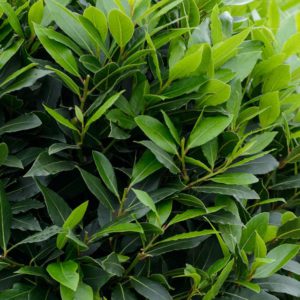
Laurus nobilis / Bay Laurel
Price range: €17.50 through €320.00 Select options This product has multiple variants. The options may be chosen on the product page -
Pyrus Chanticleer Espalier
Price range: €440.00 through €450.00 Select options This product has multiple variants. The options may be chosen on the product page -
Crataegus Pauls Scarlet / Red Hawthorn
Price range: €45.00 through €240.00 Select options This product has multiple variants. The options may be chosen on the product page