

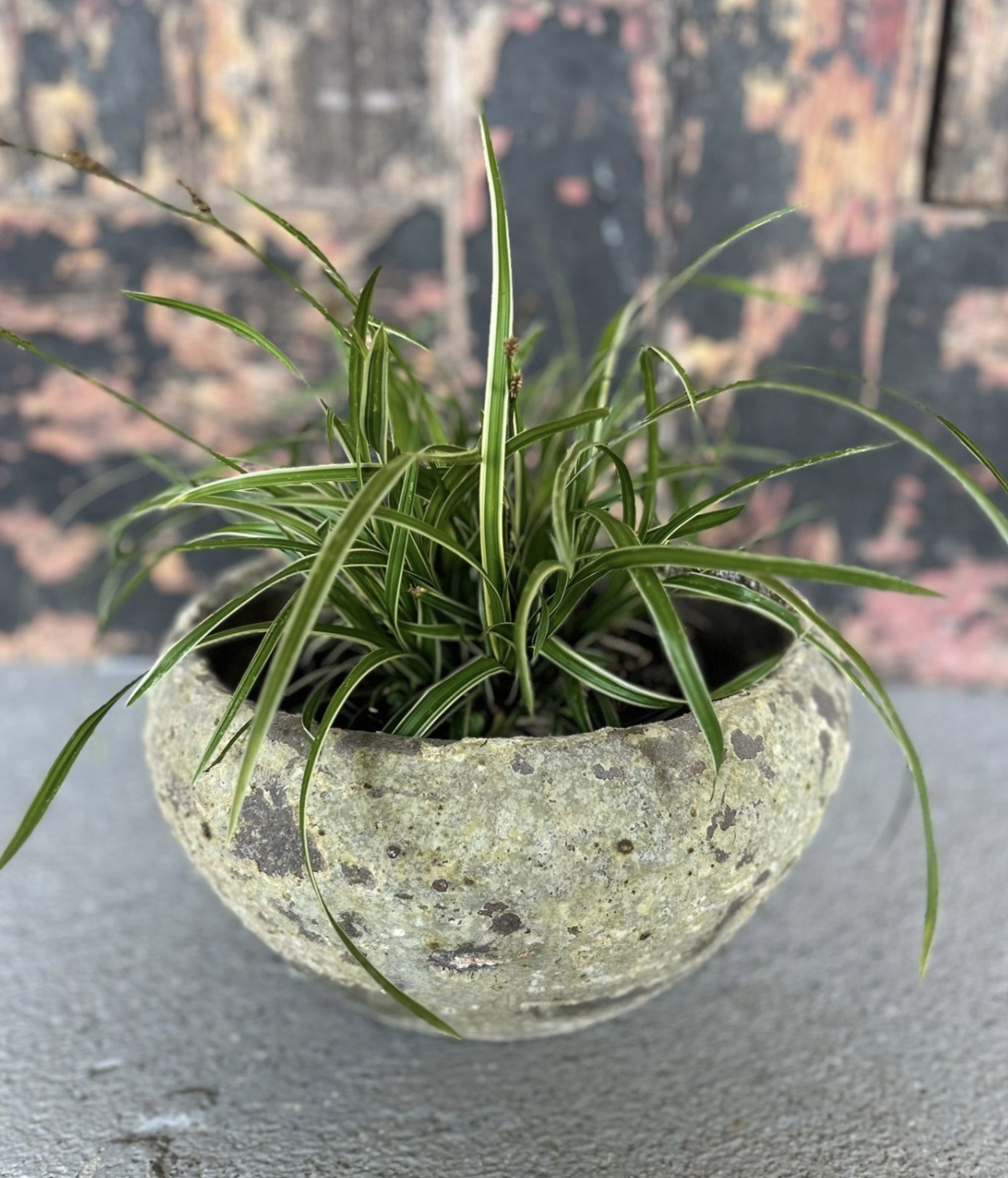
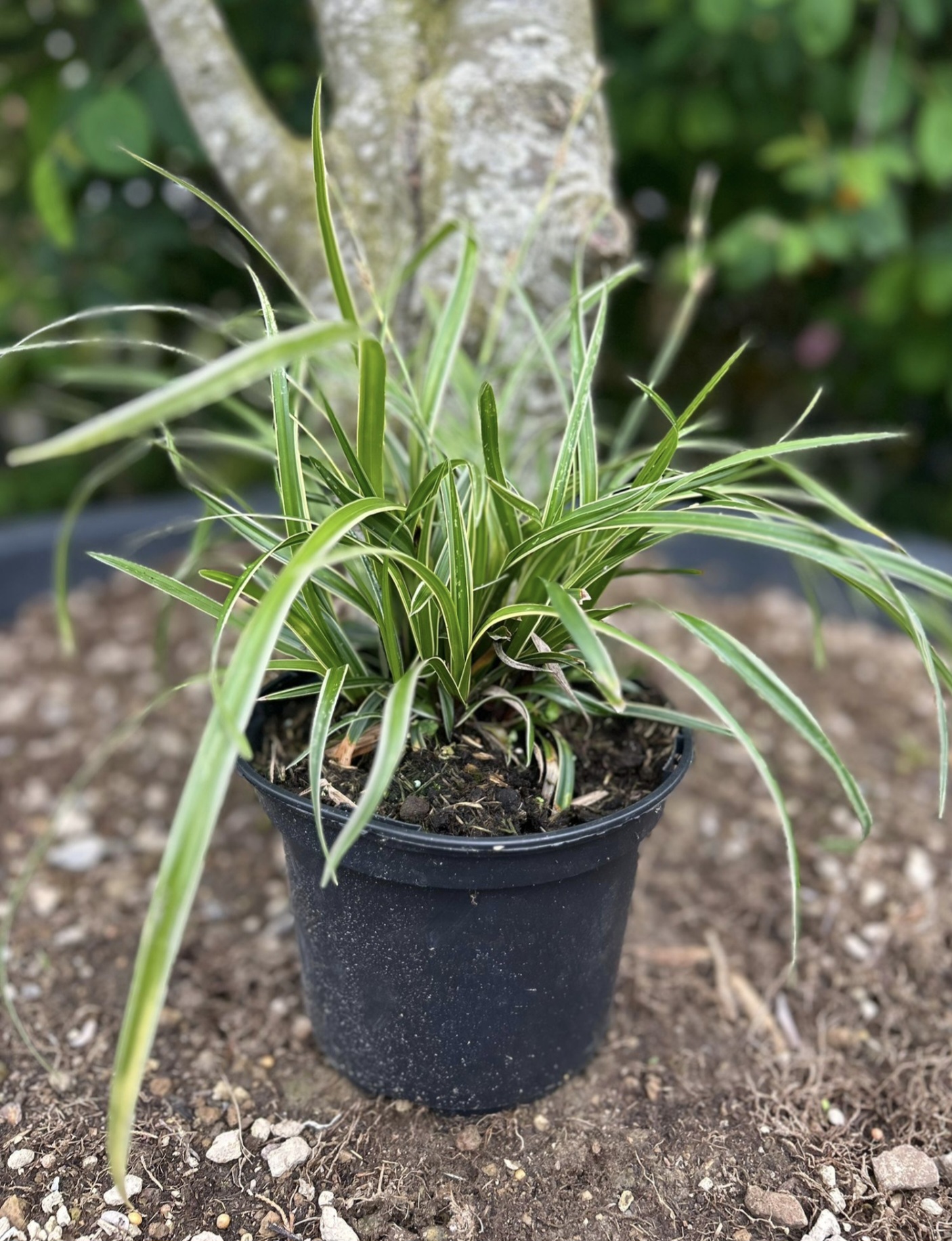
Carex ‘ice dance’
€9.50
Frequently Bought Together

Description
Quick Facts
- Botanical Name: Carex morrowii ‘Ice Dance’
- Common Name: Variegated Sedge
- Plant Type: Evergreen ornamental grass (sedge)
- Mature Height: 25–40cm
- Mature Spread: 40–60cm
- Flowering Period: Spring (flowers are subtle)
- Flower Colour: Brownish, inconspicuous
- Foliage Colour: Green leaves with crisp creamy-white margins
- Hardiness: Very hardy in Ireland & the UK
- Soil Requirements: Moist, well-drained soil (tolerates heavier soils once established)
- Aspect: Part shade to shade (also copes with sun if soil stays moist)
- Maintenance: Low
Description
Carex ‘Ice Dance’ is one of the best plants for brightening shade — a neat, arching mound of green-and-cream foliage that looks fresh all year round. It’s evergreen, reliable, and quietly hardworking, softening edges and filling gaps without ever feeling heavy. Perfect for underplanting, containers, and creating a calm, textured “carpet” through a border.
Caragh Garden Notebook
Planting:
Plant in spring or autumn into well-prepared soil, or pot into a quality compost with good drainage. Space plants to allow them to knit together over time, and water well to settle in.
Plant in spring or autumn into well-prepared soil, or pot into a quality compost with good drainage. Space plants to allow them to knit together over time, and water well to settle in.
Watering:
Water regularly in the first season. Once established it’s fairly forgiving, but it looks best with consistent moisture — especially in sunnier positions or in pots.
Water regularly in the first season. Once established it’s fairly forgiving, but it looks best with consistent moisture — especially in sunnier positions or in pots.
Feeding:
A spring mulch of compost is usually plenty. In containers, a light slow-release feed in spring will keep foliage looking strong.
A spring mulch of compost is usually plenty. In containers, a light slow-release feed in spring will keep foliage looking strong.
Seasonal Care & Tidy-Up:
In late winter or early spring, comb through the clump with gloved hands (or give it a light trim) to remove tired leaves and refresh the shape. Avoid cutting it right down hard like some grasses — a gentle tidy is best.
In late winter or early spring, comb through the clump with gloved hands (or give it a light trim) to remove tired leaves and refresh the shape. Avoid cutting it right down hard like some grasses — a gentle tidy is best.
Division (to keep plants vigorous):
Divide every 3–4 years in spring if clumps become crowded, or if you want to spread it through the garden.
Divide every 3–4 years in spring if clumps become crowded, or if you want to spread it through the garden.
Pests & Problems:
Generally trouble-free. In very wet winters, ensure drainage is reasonable to avoid thinning. Slugs can occasionally hide in dense clumps but rarely cause major damage.
Generally trouble-free. In very wet winters, ensure drainage is reasonable to avoid thinning. Slugs can occasionally hide in dense clumps but rarely cause major damage.
Design Notes:
Brilliant as an edging plant, underplanting for shrubs and trees, and for weaving through hostas, ferns, heucheras, and hydrangeas. It’s also gorgeous repeated in drifts to create a bright, calming ribbon through part shade borders, and it works beautifully in pots for year-round structure.
Brilliant as an edging plant, underplanting for shrubs and trees, and for weaving through hostas, ferns, heucheras, and hydrangeas. It’s also gorgeous repeated in drifts to create a bright, calming ribbon through part shade borders, and it works beautifully in pots for year-round structure.
Related products
-
Buddleja Black Knight
€12.50 Select options This product has multiple variants. The options may be chosen on the product page -
Catalpa biganoides / Indian Bean Tree
€440.00 Select options This product has multiple variants. The options may be chosen on the product page -

Quercus rubra / Red Oak
€225.00 Select options This product has multiple variants. The options may be chosen on the product page -
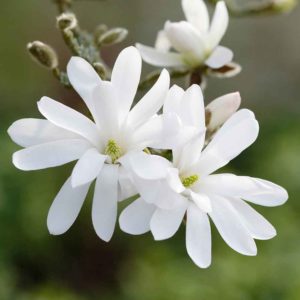
Magnolia stellata
€65.00 Select options This product has multiple variants. The options may be chosen on the product page