
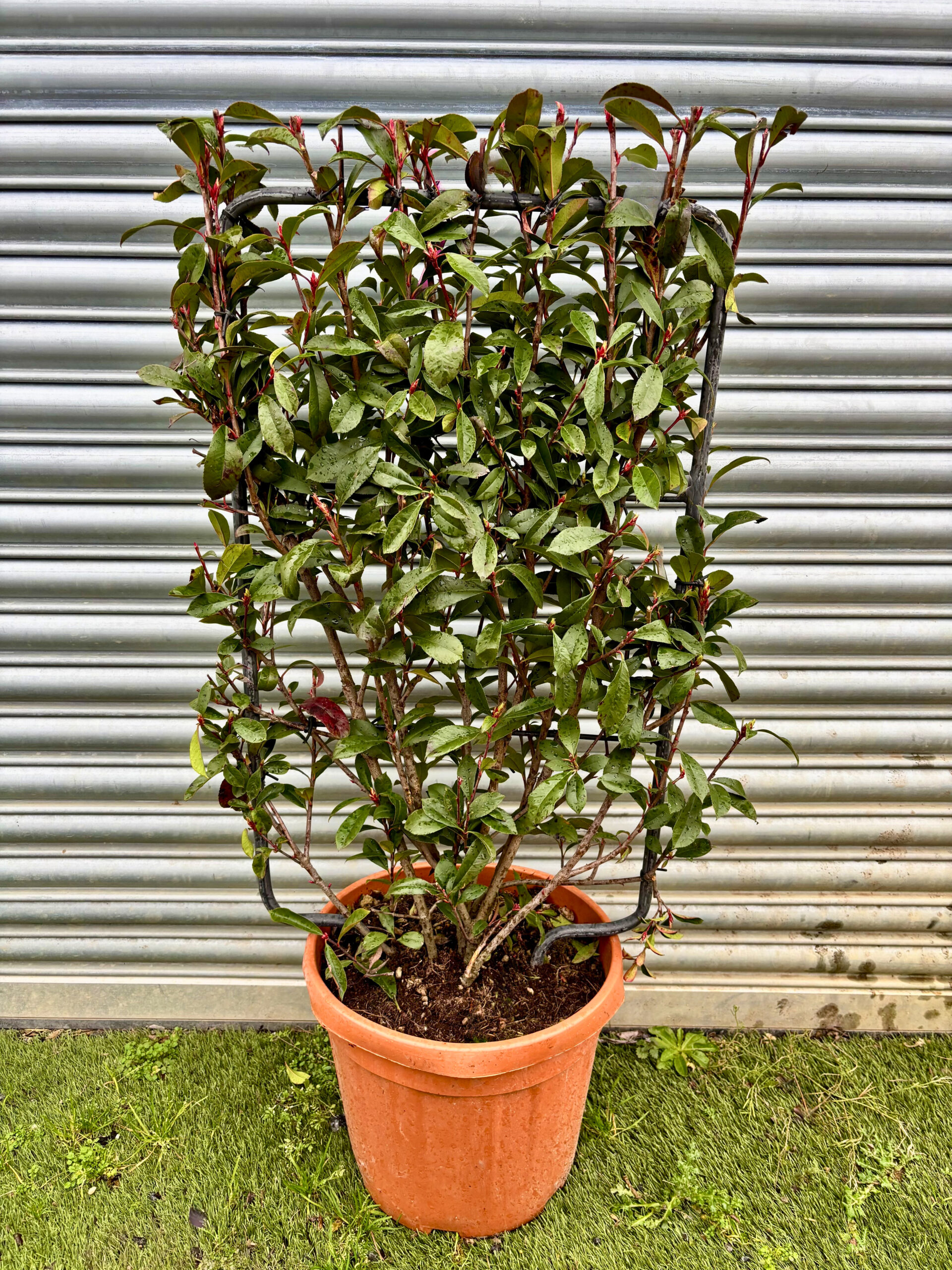
Photinia red robin ‘compacta’ Espalier
€120.00
Frequently Bought Together

Description
Quick Facts
- Common Name: Compact Red Robin (Espalier)
- Botanical Name: Photinia × fraseri ‘Red Robin Compact’
- Plant Type: Evergreen shrub, trained form (espalier)
- Mature Height: 1.8–2.5m+ (trained height depends on frame; kept to size with pruning)
- Mature Spread: 1.2–2m (trained width depends on the tiers)
- Foliage Colour: Glossy green mature leaves with vivid red new growth
- Season of Interest: Year-round structure; strongest red flush in spring (often again after trimming)
- Hardiness: Hardy in UK & Ireland; best in a sheltered spot away from harsh winds
- Soil Requirements: Moist, well-drained soil; adaptable, but dislikes waterlogging
- Aspect: Full sun to part shade (best red colour in sun)
- Maintenance: Low–moderate (light pruning to keep tiers crisp)
Description
Photinia ‘Red Robin Compact’ in espalier form gives you everything people love about Red Robin—those glossy leaves and that bright, confident red flush—but with a cleaner, more architectural silhouette. Trained flat against a frame, it creates a living screen that feels smart and intentional, perfect for adding privacy without taking up precious space.
Because it’s the compact form, growth is a little tighter and more manageable, making it ideal for smaller gardens, patios, and narrow borders where you still want evergreen structure. In spring, new growth emerges a vivid red, then settles to glossy green. With a light trim after the first flush, you’ll often encourage a second wave of red—so the colour returns just when you’re ready for it.
Use it to soften a wall, define a boundary, or create a green backdrop for roses and perennials. It’s one of those plants that makes a garden feel “finished” all year round.
Caragh Garden Notebook
Planting:
Plant in spring or autumn. Choose a sunny or lightly shaded position with some shelter from strong winds (wind can scorch new red growth). Prepare the soil well, digging a generous hole and mixing in compost. Plant at the same depth as in the pot, firm in, water thoroughly, and mulch to conserve moisture (keep mulch away from the stem).
Plant in spring or autumn. Choose a sunny or lightly shaded position with some shelter from strong winds (wind can scorch new red growth). Prepare the soil well, digging a generous hole and mixing in compost. Plant at the same depth as in the pot, firm in, water thoroughly, and mulch to conserve moisture (keep mulch away from the stem).
If planting against a wall or fence, leave a small gap for airflow and access, and ensure the frame/support wires are secure before planting.
Soil Preparation:
Best in moist, well-drained soil. Improve heavy clay with compost and a little grit to prevent winter waterlogging. In very light soils, add organic matter to hold moisture.
Best in moist, well-drained soil. Improve heavy clay with compost and a little grit to prevent winter waterlogging. In very light soils, add organic matter to hold moisture.
Watering:
Water regularly in the first year, especially in dry spells. Espalier plants can dry out a little faster (especially near walls), so keep an eye on moisture in warm weather.
Water regularly in the first year, especially in dry spells. Espalier plants can dry out a little faster (especially near walls), so keep an eye on moisture in warm weather.
Training & Pruning (for crisp tiers + more red):
- Trim after the spring flush (late spring/early summer) to maintain the espalier shape and encourage fresh red regrowth.
- A light second trim in late summer can keep it neat.
- Tie in new shoots to the frame as needed to maintain the tiered structure.
- Avoid hard cutting into old wood; regular, lighter pruning keeps it dense and leafy.
Pests & Problems:
Generally easy. Watch for leaf spot (more common in damp, still conditions). Good airflow, avoiding overhead watering, and removing any affected leaves helps keep plants looking their best.
Generally easy. Watch for leaf spot (more common in damp, still conditions). Good airflow, avoiding overhead watering, and removing any affected leaves helps keep plants looking their best.
Design Notes:
Ideal for privacy screening, framing patios, lining pathways, or creating a living “wall” of evergreen colour. Looks gorgeous with underplanting of lavender, salvias, nepeta, or grasses—anything that softens the base and lets the red flush shine.
Ideal for privacy screening, framing patios, lining pathways, or creating a living “wall” of evergreen colour. Looks gorgeous with underplanting of lavender, salvias, nepeta, or grasses—anything that softens the base and lets the red flush shine.
Customers also purchased...
-

Caragh Nurseries Multi-Purpose Compost
€8.00 Select options This product has multiple variants. The options may be chosen on the product page
Related products
-
Photinia Red Robin Cubed Head
€600.00 Select options This product has multiple variants. The options may be chosen on the product page -

Prunus Novita Standard Espalier
Price range: €600.00 through €650.00 Select options This product has multiple variants. The options may be chosen on the product page -
Carpinus betulus Standard Espalier
Price range: €400.00 through €450.00 Select options This product has multiple variants. The options may be chosen on the product page -

Photinia serr. ‘Corallo’ 1/2 Standard
€220.00 Select options This product has multiple variants. The options may be chosen on the product page