
Field-Grown Trees in Ireland: From Our Fields to Your Garden
Field-grown trees in Ireland are at the very heart of what we do here at Caragh Nurseries, and every autumn we’re reminded just how much time, patience and care goes into growing them. Everything seems to lead up to one particular week in October. Hopefully it’s one of those bright, chilly mornings when there’s a little bite in the air, the fields are quieter and the first signs of dormancy are beginning to appear.
It’s the beginning of our lifting season, one of the busiest and most important times of our year.
Across our 75 acres of field production, the work becomes both highly practical and rather personal. Because every tree we’re preparing to lift has been years in the making.
And when you consider where those trees began, it’s quite something to see how far they’ve come.
Growing Field-Grown Trees in Ireland Takes Time and Patience
There’s no rushing a beautiful tree.
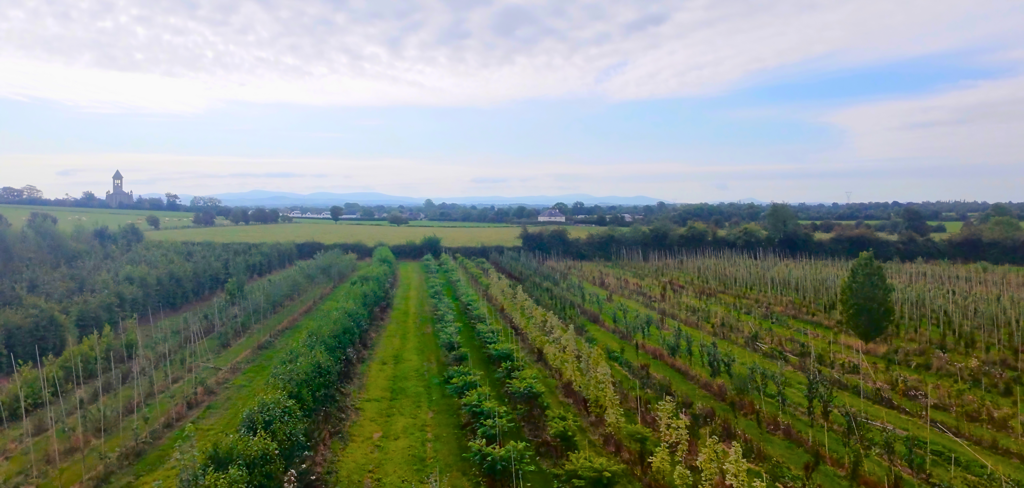
Many of ours begin as very young plants, known as whips, which we carefully plant into our nursery fields. At that stage, they’re little more than slender stems, and it’s hard to imagine the substantial trees they’ll eventually become. And then we wait.
Of course, we don’t simply leave them to get on with things. There’s an enormous amount of work happening in the background, but growing trees is very much a waiting game.
Even our quickest-growing field crops will generally spend at least three years with us, while others remain in the fields considerably longer.
During that time, we’re regularly checking, pruning, feeding where needed and carefully managing their growth.
We also undercut or lift and transplant trees and hedging at appropriate stages of production. This helps develop a healthy, well-branched root system and gives plants the space they need for light, air circulation and continued growth.
It’s the kind of work that doesn’t always get noticed, but it’s what helps produce the trees we’re proud to send out into people’s gardens. Patience really is a virtue in this business.
Our 75 Acres of Field-Grown Trees in Ireland
Our field production is spread across two beautiful locations in County Kildare.
35 acres in Caragh, where our nursery story began, and 40 acres in Castlekeely, affectionately known to us as Dolores’.
Different fields have different soil conditions, growing environments and characteristics, and all of these play a part in how we manage our trees and hedging.
Across both sites, our aim is exactly the same: to grow strong, healthy trees, shrubs and hedging that will go on to establish beautifully in real gardens.
Because ultimately, that’s what matters to us.
We don’t grow trees simply to look good standing in a nursery field. We grow them to become part of someone’s garden, landscape or home for many years to come.
The People Behind Our Field-Grown Trees
This is probably the part we’re proudest of.
Caragh has always been built around people who genuinely care about what they’re growing, and there’s an enormous amount of experience behind every tree that leaves our fields.
Ian: A Lifetime Spent Growing Trees

Ian has more than 30 years of experience in horticulture, particularly in growing trees.
He started working in his family’s nursery when he was just a young lad, so you could almost say trees have always been part of his life.
After graduating in horticulture, he went on to work at one of the UK’s most established and respected tree nurseries in Herefordshire, gaining invaluable experience in specialist tree production.
Ian has exceptionally high standards, and anyone who’s worked alongside him will know that he expects the same from the rest of us.
We certainly feel those expectations at times!
But it all comes from a genuine passion for growing the very best trees we can.
Olivier and Our Production Team
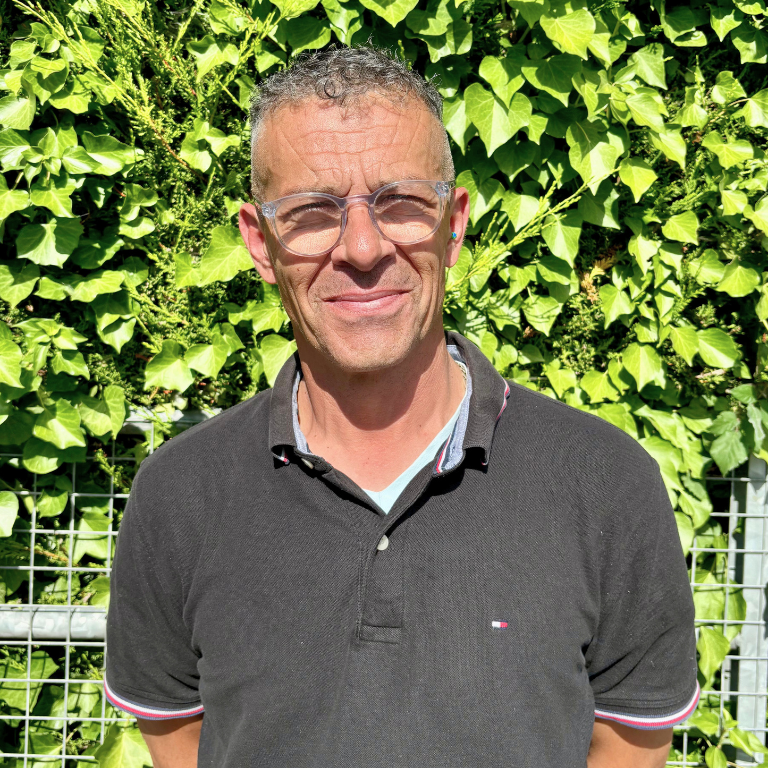
Then there’s Olivier, our production manager, and the wonderful team who help bring everything together in the fields.
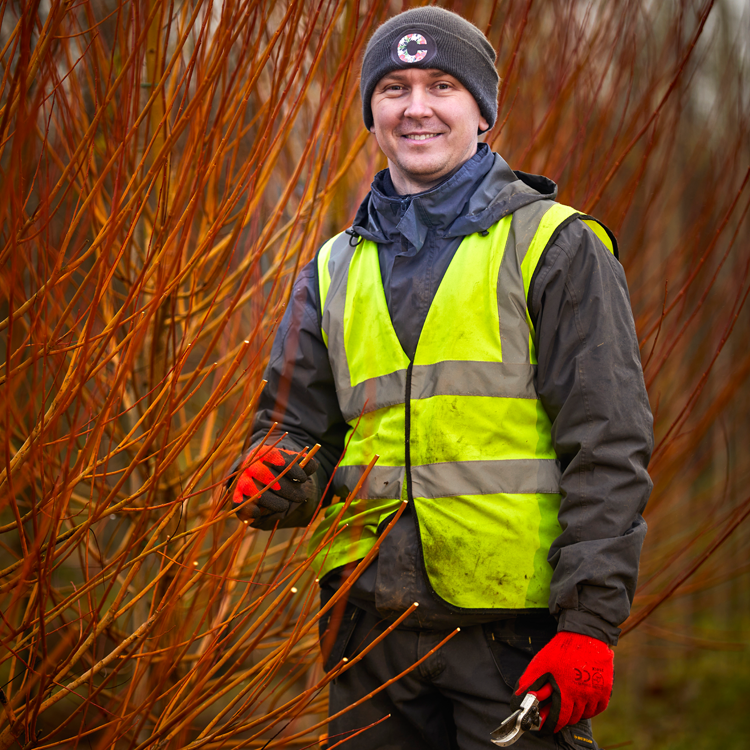
Alongside our team leaders, including Andrii, our master pruner, and Oran, they oversee the careful work that goes into growing, shaping and preparing our trees throughout the year.
There’s pruning to be done, roots to be managed, growing conditions to be watched and endless decisions about when a tree is ready for its next stage.
It’s hands-on, skilled work, and so much of it comes down to experience and knowing the plants you’re working with.
We’re incredibly fortunate to have a team that cares as much about the trees as we do.
What Makes Our Field-Grown Trees Special?
We often say that great trees begin long before they’re ready to be sold. For us, the difference comes down to a few very simple things.
Time and patience. We give our field-grown trees the time they need to develop naturally rather than rushing them through production.
Careful pruning and shaping. Regular attention both above and below ground helps us encourage healthy root development and a balanced shape.
Looking after young plants. In their early years, our trees need an enormous amount of care. We sometimes joke that we treat them like babies, but there’s a little truth in it.
Experience and knowledge. Our team brings together decades of horticultural experience, with a willingness to keep learning and improving.
Thoughtful innovation. We’re always exploring ways of working more efficiently and sustainably, from cleaner energy options to smarter technology, but only where those improvements genuinely benefit the quality of our plants and the way we grow them.
There’s a lovely balance between traditional nursery knowledge and being open to new ideas. We think both are important.
How We Lift Rootballed Trees at Caragh Nurseries
By the time October arrives, preparations for lifting are well underway.
Machinery is checked, blades are sharpened, the teams are organised and there’s a real sense of anticipation around the nursery.
Rootballed lifting generally begins first, once the trees are ready and the weather and soil conditions allow.
It’s a precise and physical process.
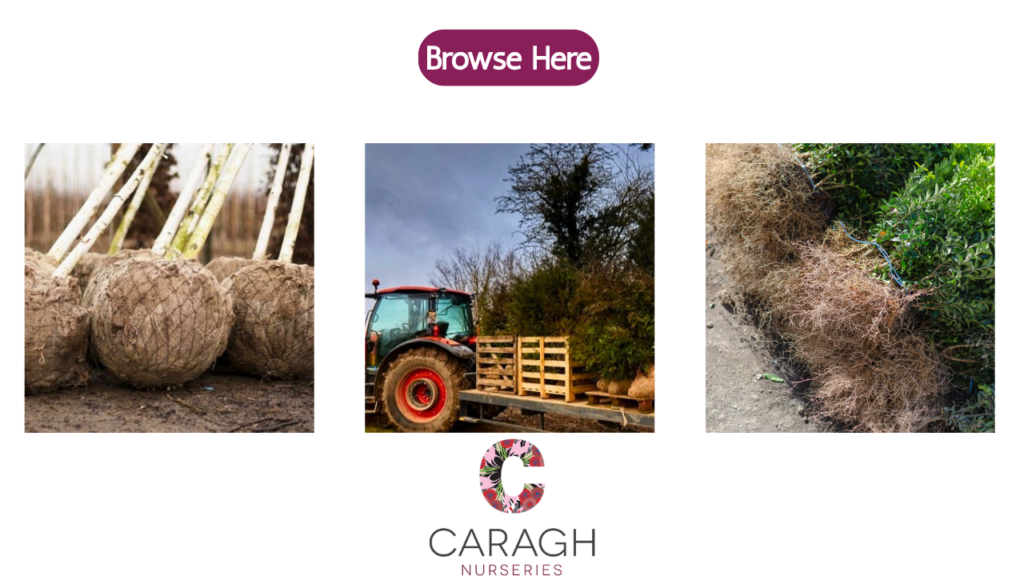
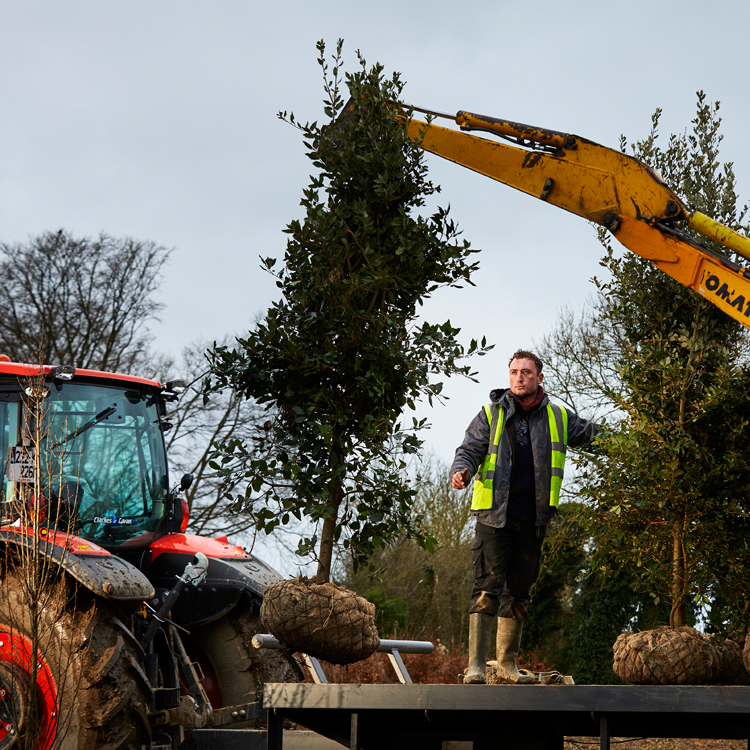
Unlike bare-root trees, rootballed specimens are lifted with a carefully measured ball of soil around their roots.
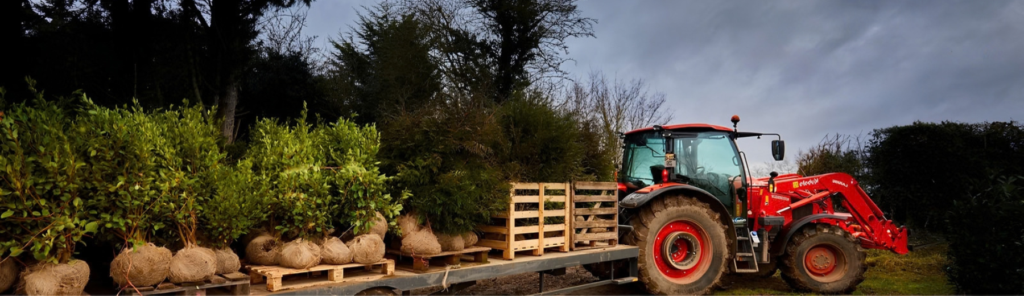
Specialist lifting machinery helps us retain and secure that soil, protecting the root system as the tree is lifted from the field.
The rootball is then carefully wrapped, commonly in hessian and sometimes with additional wire support, so it remains intact during handling and transport.
Why Keeping the Rootball Intact Matters
A well-formed rootball helps protect the roots and reduces disturbance while a tree is moved from the nursery to its new home.
We always advise customers to handle the rootball carefully and follow the planting instructions supplied with their tree.
Natural hessian is generally designed to break down in the soil, although any wire, ties or wrapping should be managed according to the materials used and the planting guidance for that particular tree.
The important thing is keeping the rootball stable and avoiding unnecessary disturbance to the roots.
How We Lift Bare-Root Trees and Hedging
A little later in the season, usually during the first week or two of November, our attention also turns to bare-root lifting.
This is when deciduous trees and hedging have moved into dormancy and are ready to be lifted without their surrounding soil.
Typical bare-root stock includes:
- Trees in sizes from around 6–8cm up to 10–12cm girth.
- Beech (Fagus sylvatica).
- Hornbeam (Carpinus betulus).
- Whitethorn and other native hedging varieties.
The timing is particularly important.
Bare-root trees are carefully lifted, with the soil removed from around the roots, and then protected to prevent those roots from drying out. Because there isn’t a ball of soil surrounding them, bare-root plants are generally much lighter and easier to handle. They’re also a wonderfully economical choice, particularly for longer stretches of hedging or planting several smaller trees.
But the key to success is good timing, careful handling and prompt planting.
Healthy Soil: Where Every Great Tree Begins
If there’s one thing years of growing trees has taught us, it’s that healthy soil makes such a difference.
It’s the foundation of everything we do.
Over the years, we’ve spent a great deal of time trialling and developing different growing mixes, looking for something that would support healthy root development and moisture retention without becoming excessively wet during the winter months.
That’s how Caragh Multipurpose Compost came about.
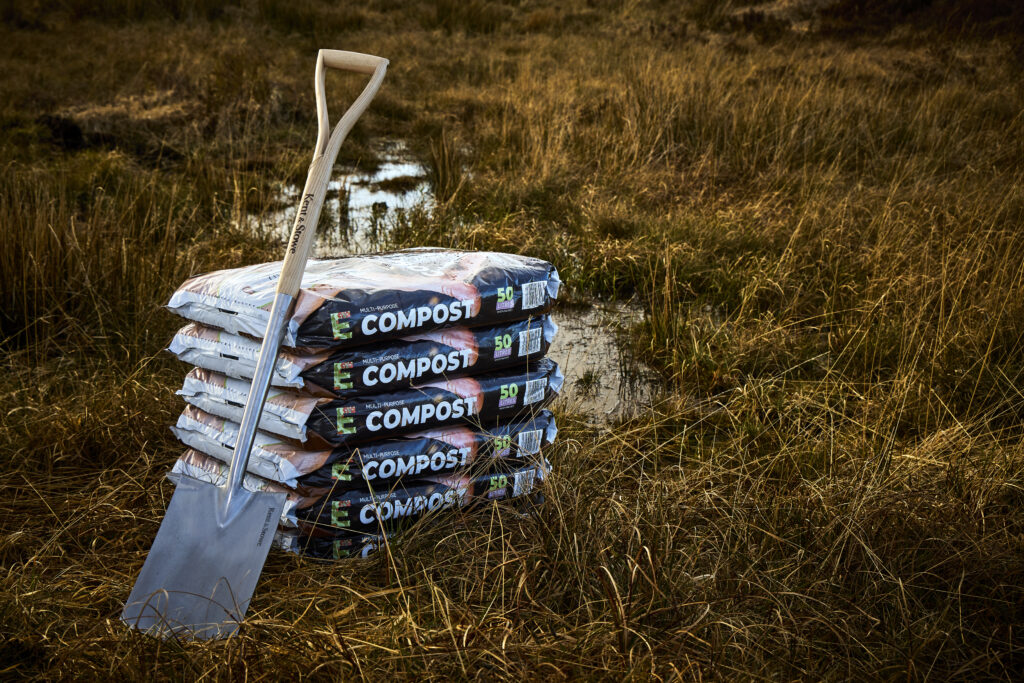
We created it because we wanted a blend we could trust for our own tree potting, and it’s something we’re now delighted to share with our customers.
Our compost contains a balanced blend of natural minerals and nutrients, including nitrogen, phosphorus and potassium, as well as magnesium, calcium, manganese, iron and zinc.
We’ve also included humic and fulvic acids, along with natural Irish seaweed.
Of course, good compost is only one part of successful planting. Suitable drainage, the right planting depth and proper aftercare are equally important.
But starting with a healthy growing environment is something we believe very strongly in.
From Our Fields to Your Garden
There’s something special about seeing a tree that began as a tiny whip in our fields finally make its way into someone’s garden.
We know how many years of work have gone into it, how many times it’s been pruned, checked, shaped and cared for, and how much effort our team has put into helping it grow. And while lifting season is one of our busiest times of year, it’s also one of the most rewarding.
Because for us, a tree leaving the nursery isn’t really the end of its story.
It’s the beginning of a new one.
If you’re planning to plant trees or hedging this autumn or winter and would like a little advice on choosing between bare-root and rootballed, or simply finding the right tree for your garden, please do get in touch.